

St. Leo the Great Church Rededicated in Demopolis, Alabama
On March 12, 2021, The Most Reverend Steven J. Raica, JCD, Bishop of the Diocese of Birmingham, joined the Very Reverend Justin L. Ward, STL and the people of St. Leo the Great Parish in Demopolis to solemnly dedicate their new altar and freshly renovated church.
by Michael F. Tamara
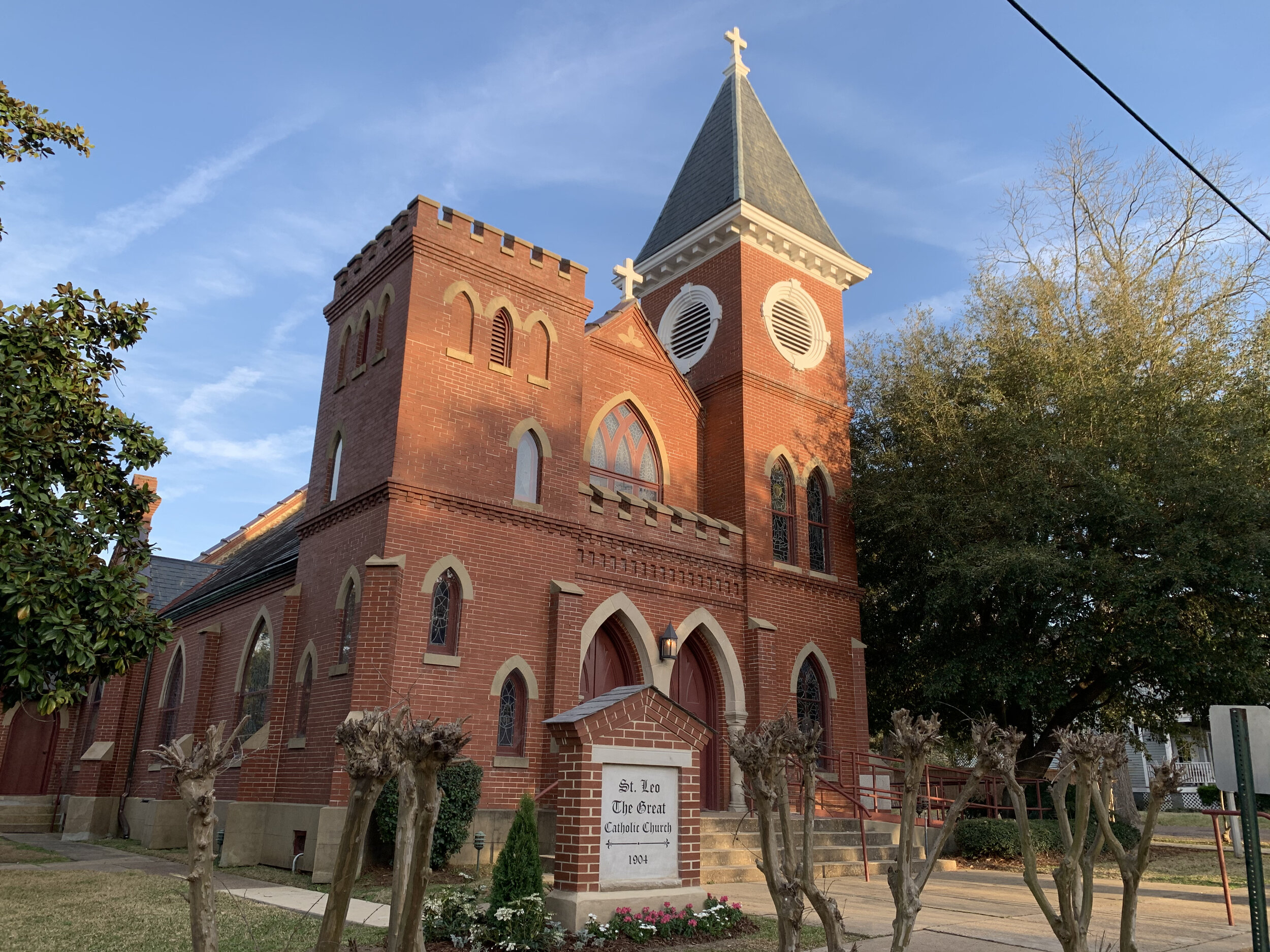
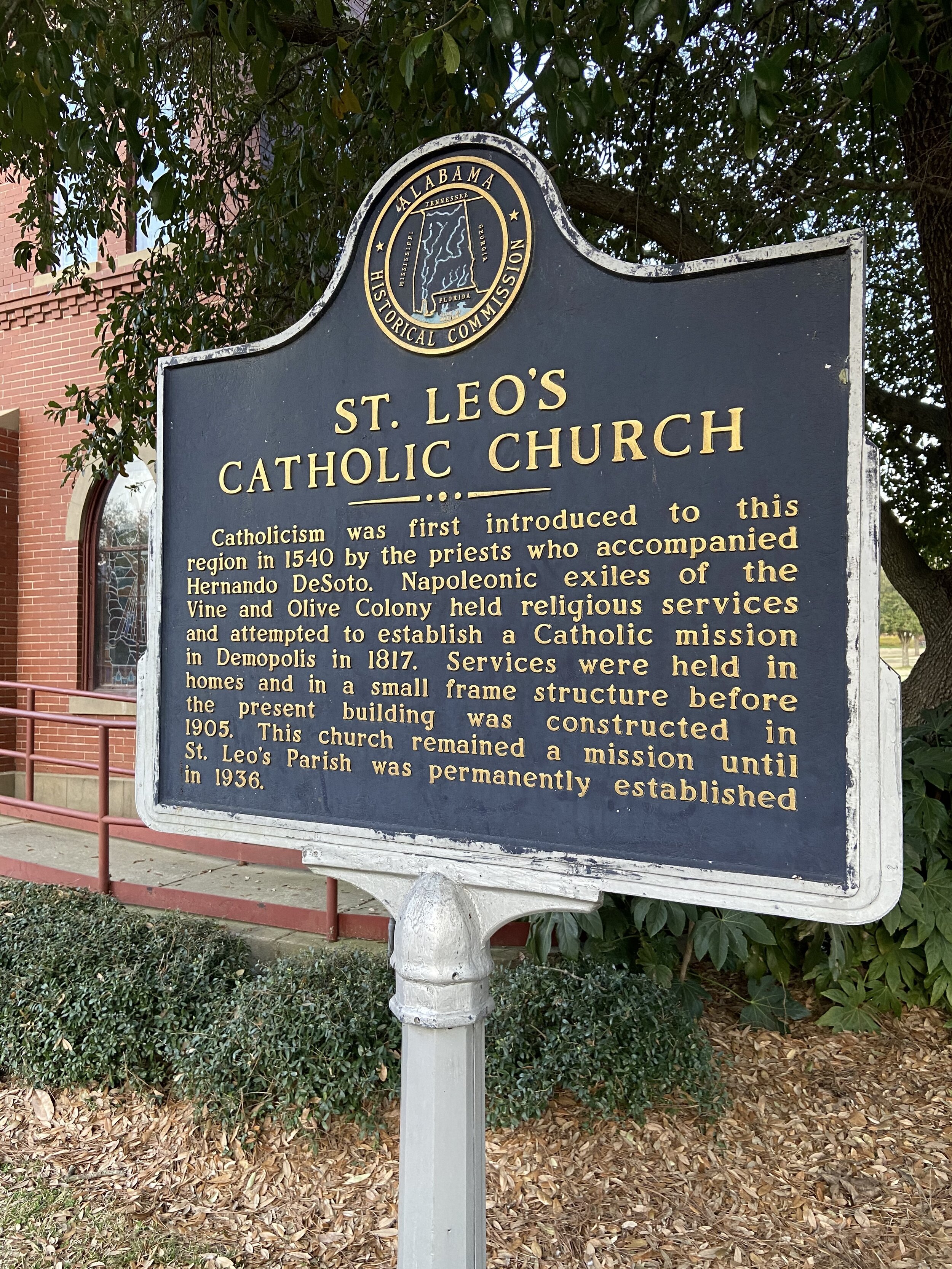
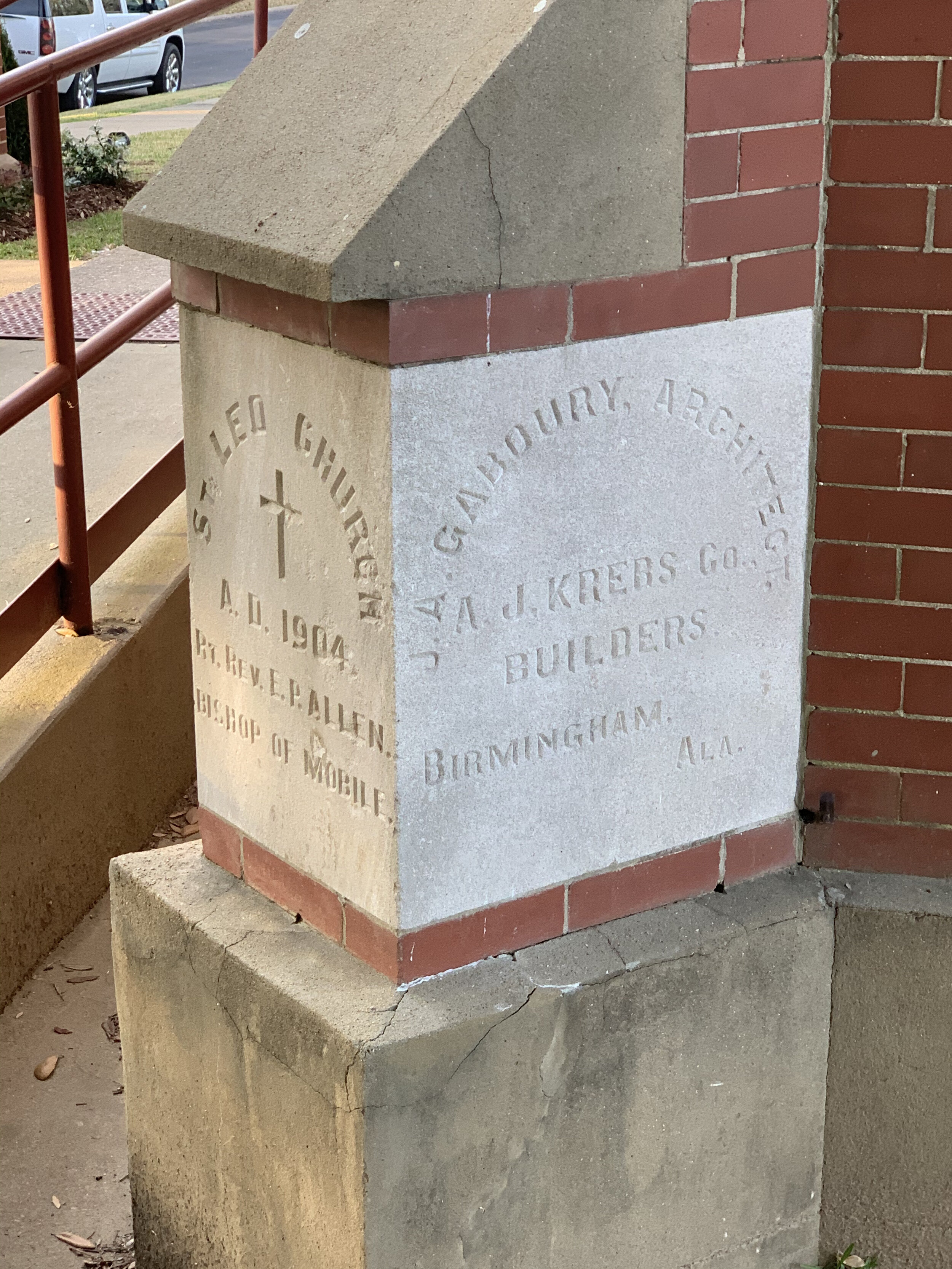
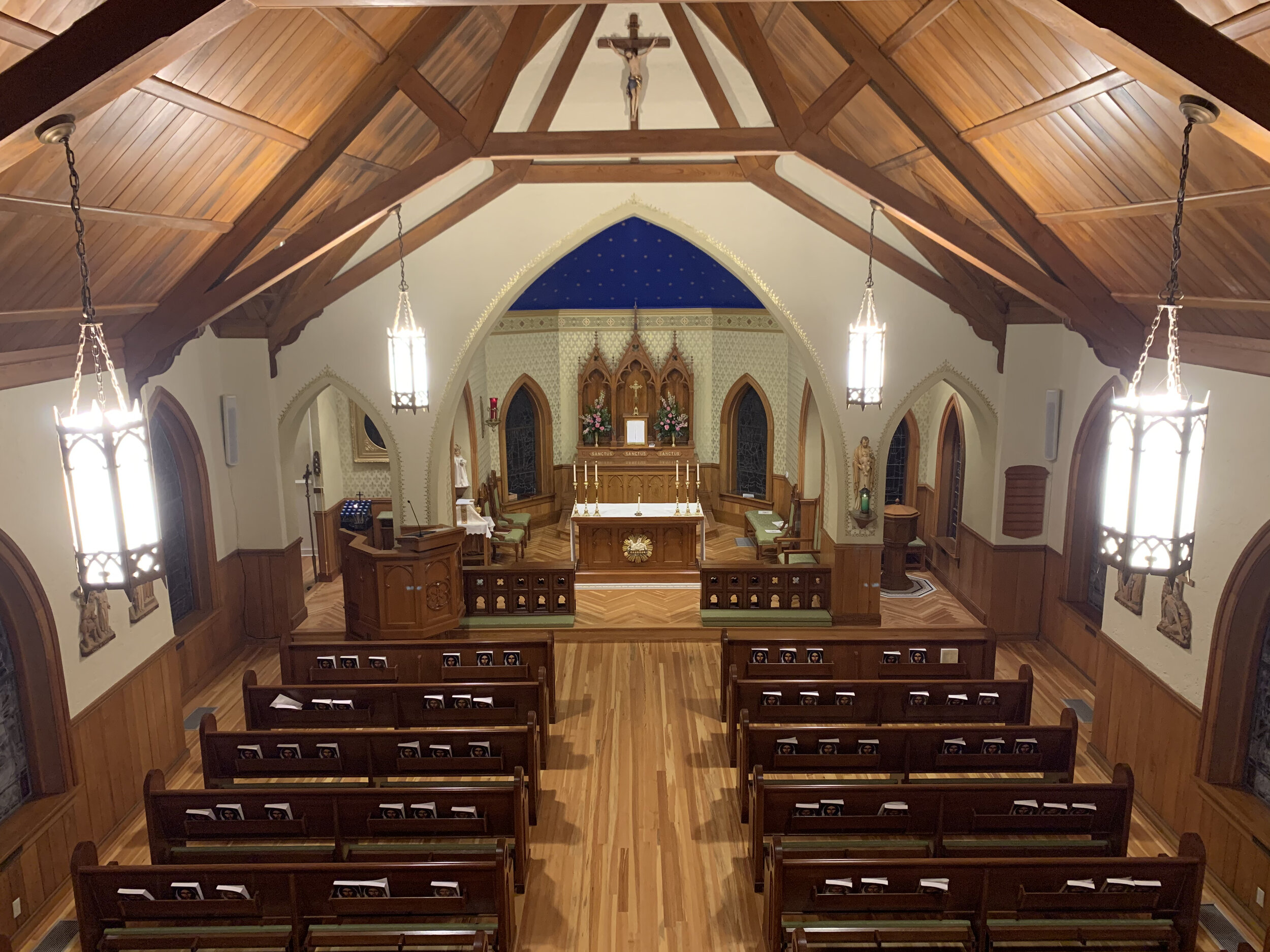
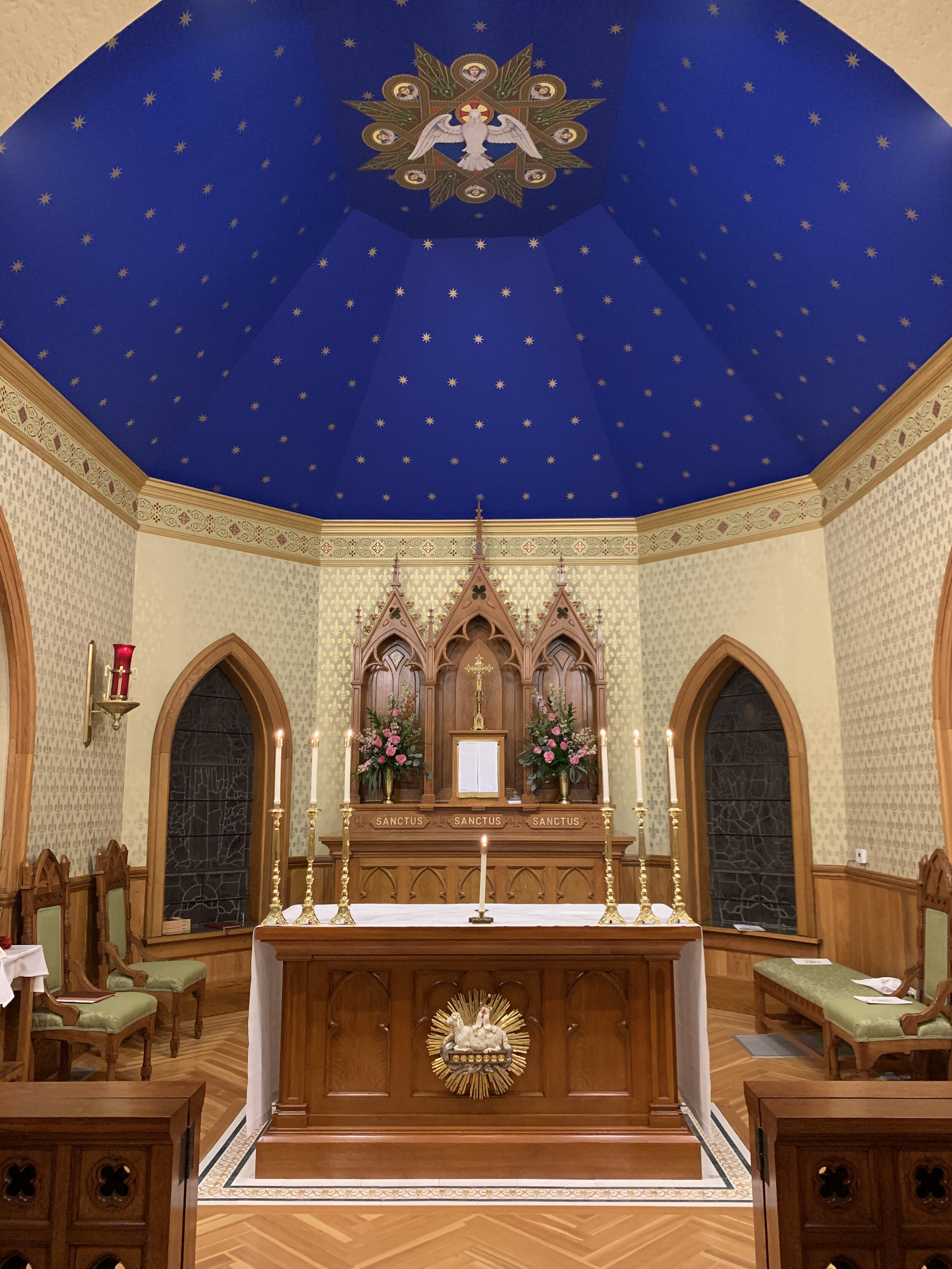
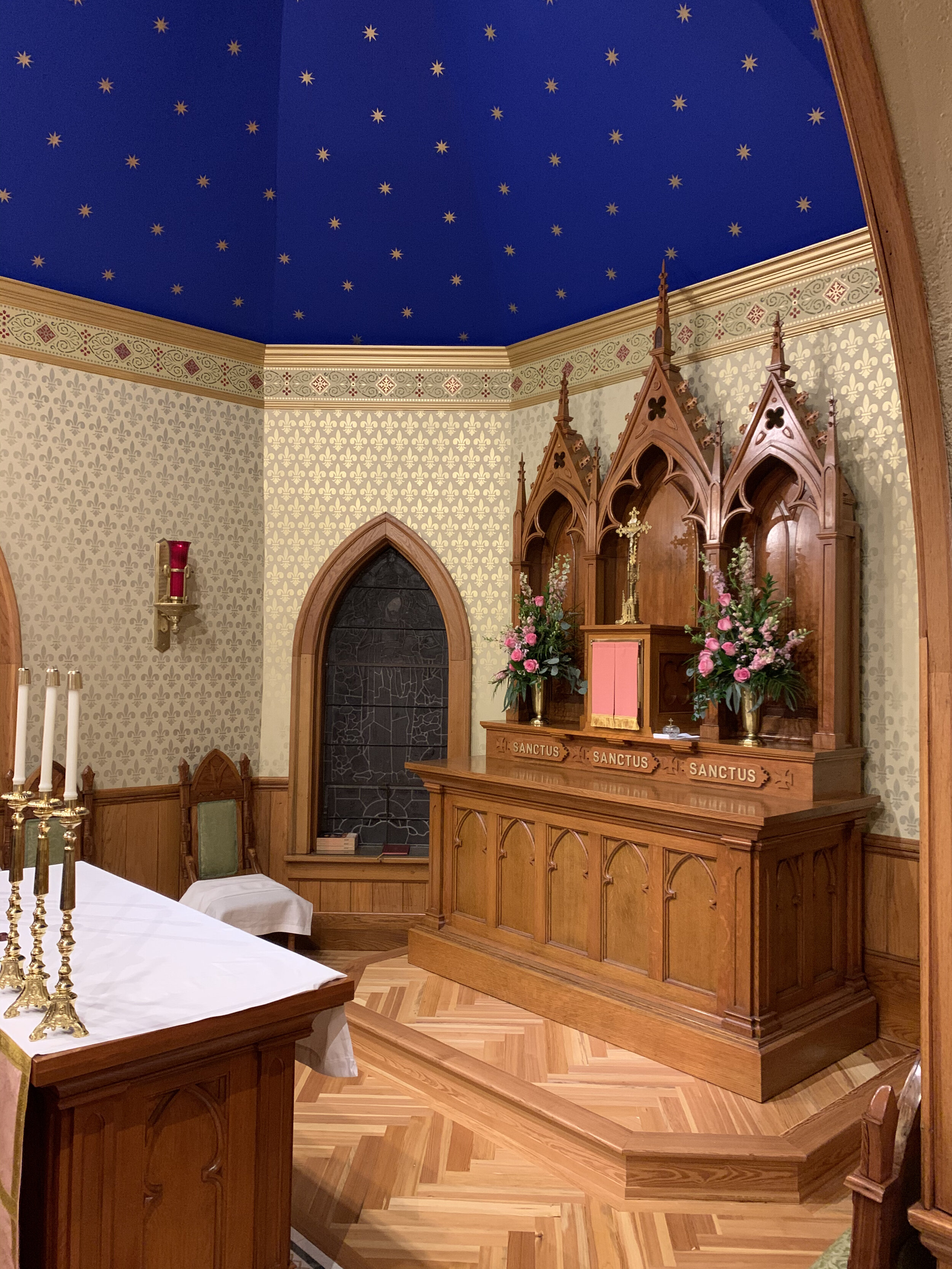
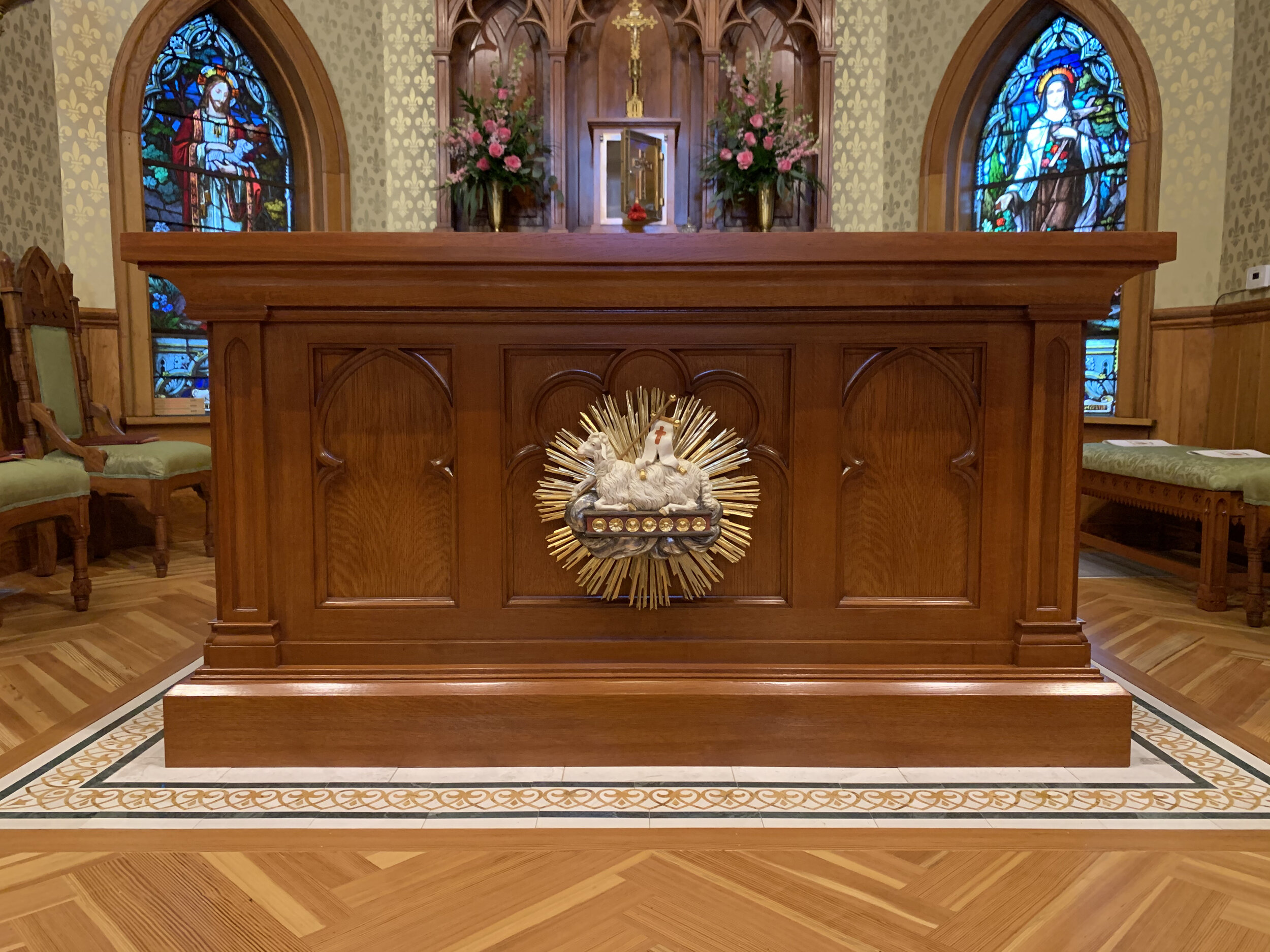
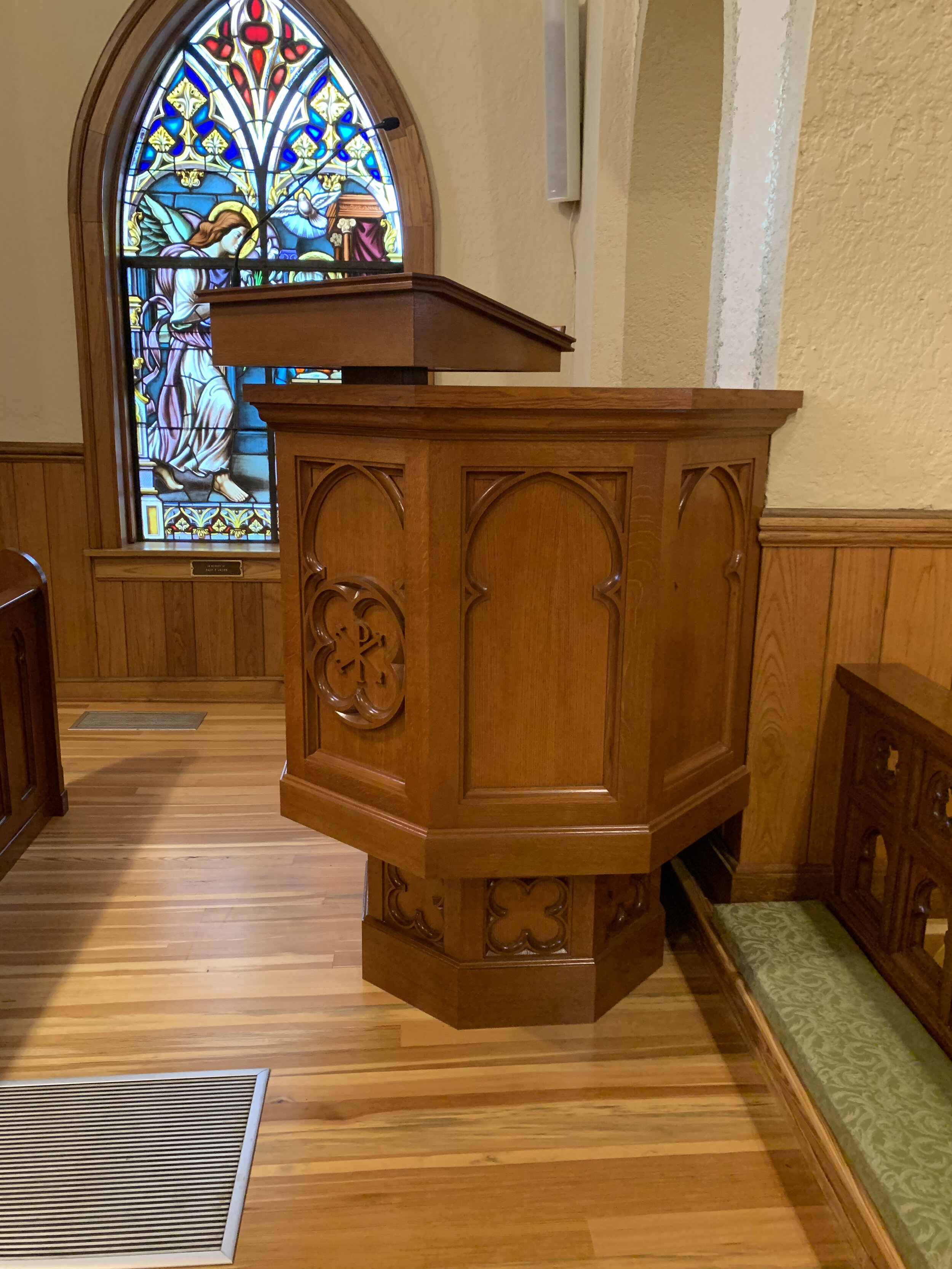
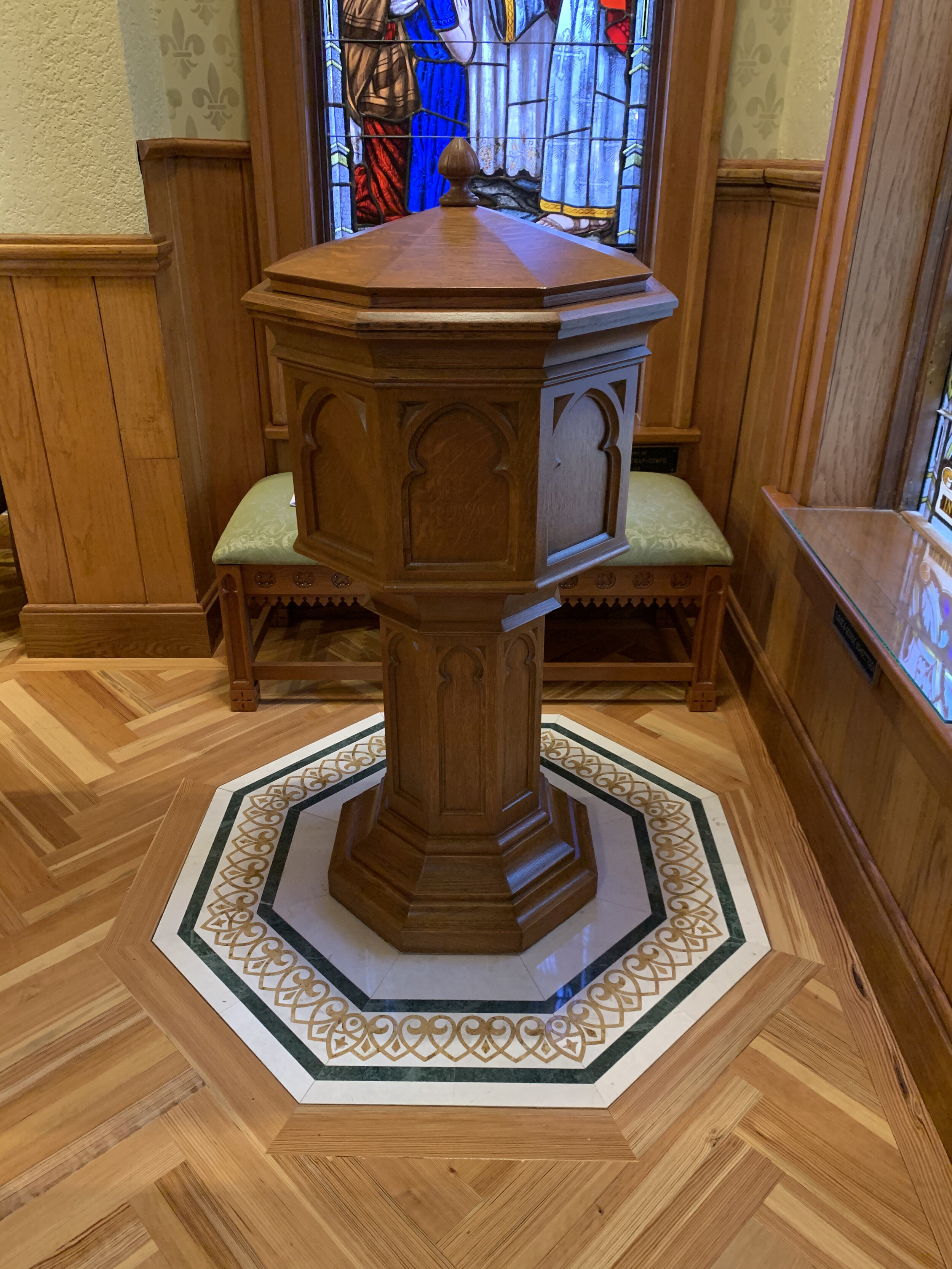
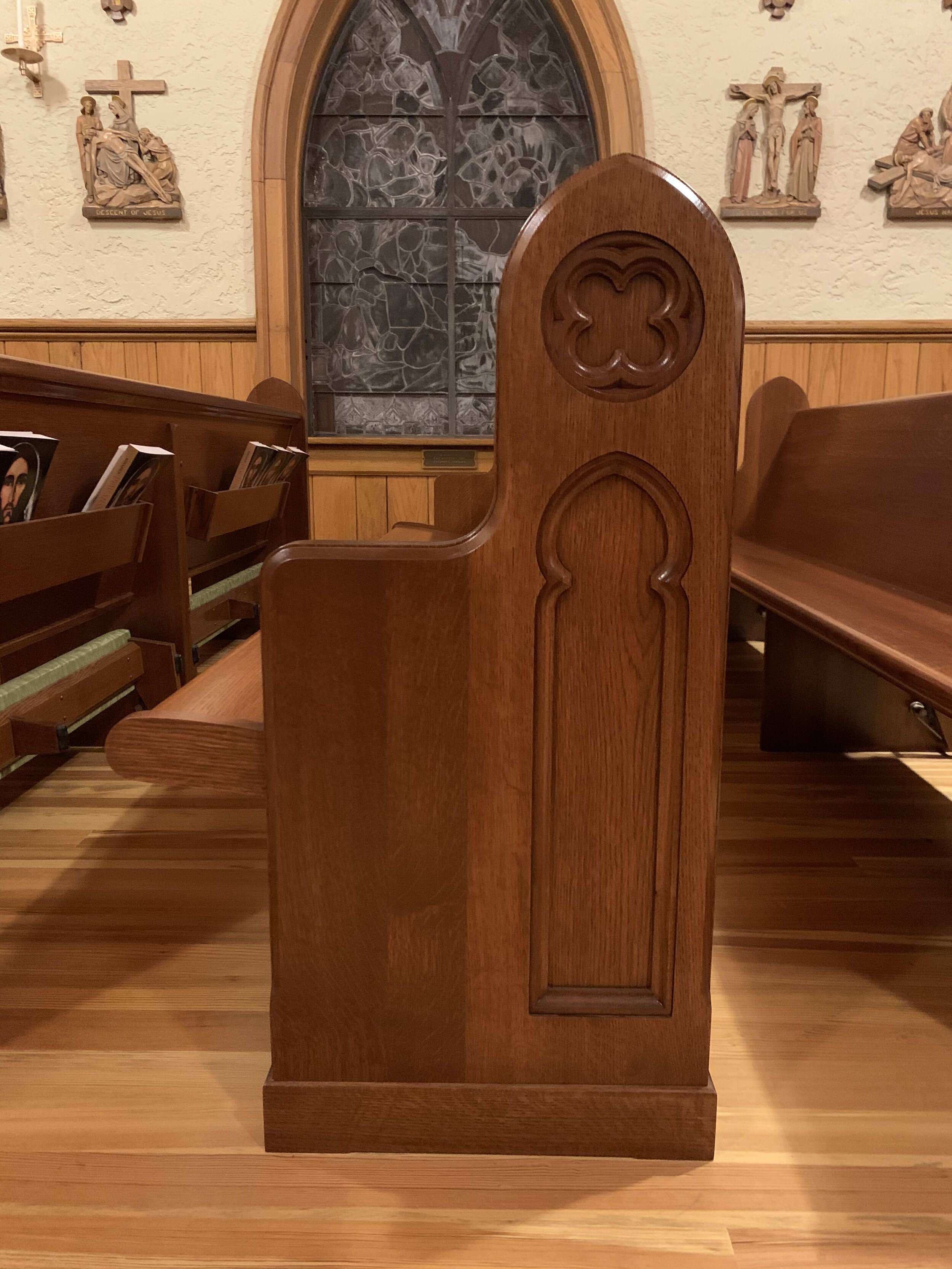
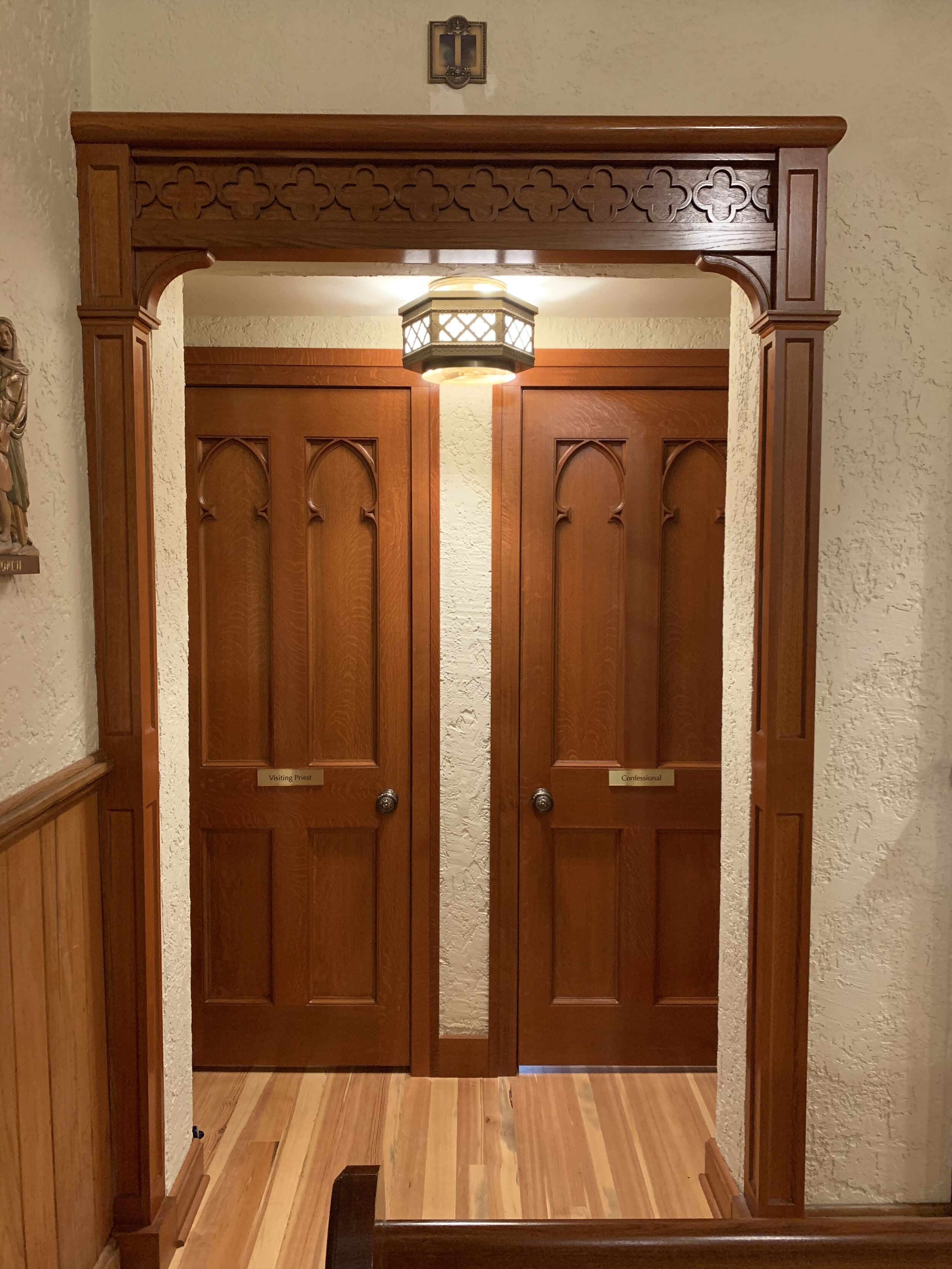
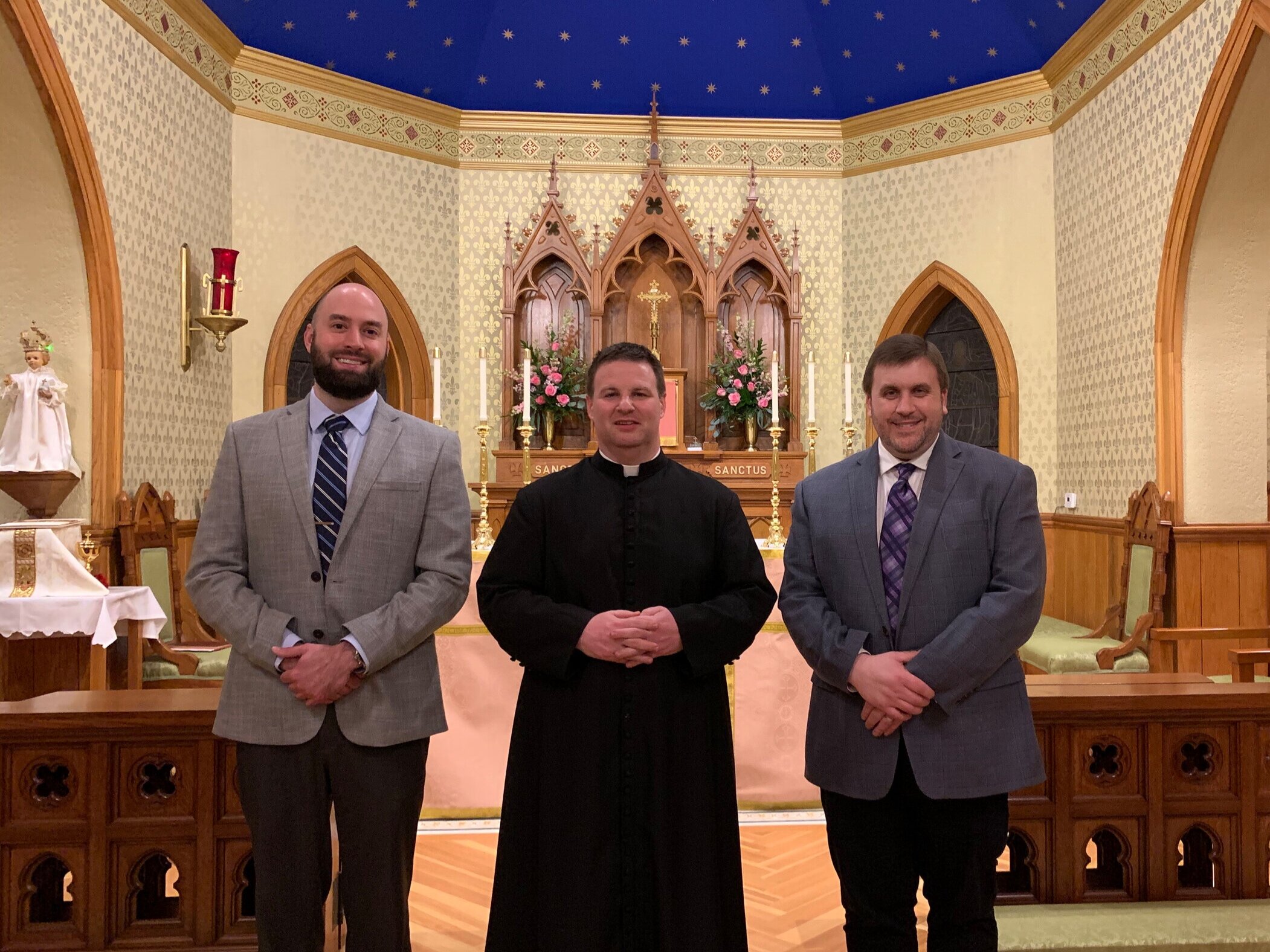
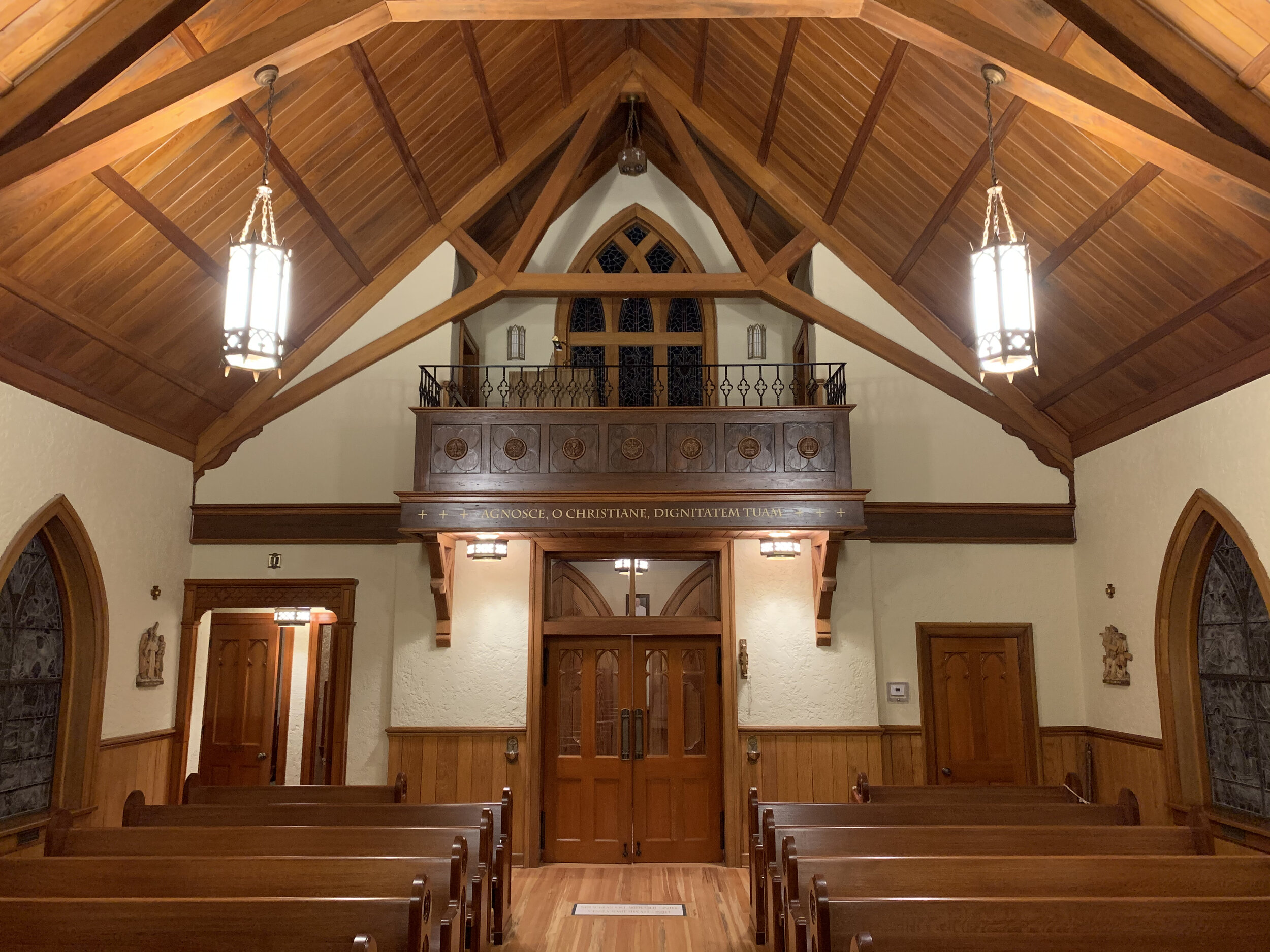
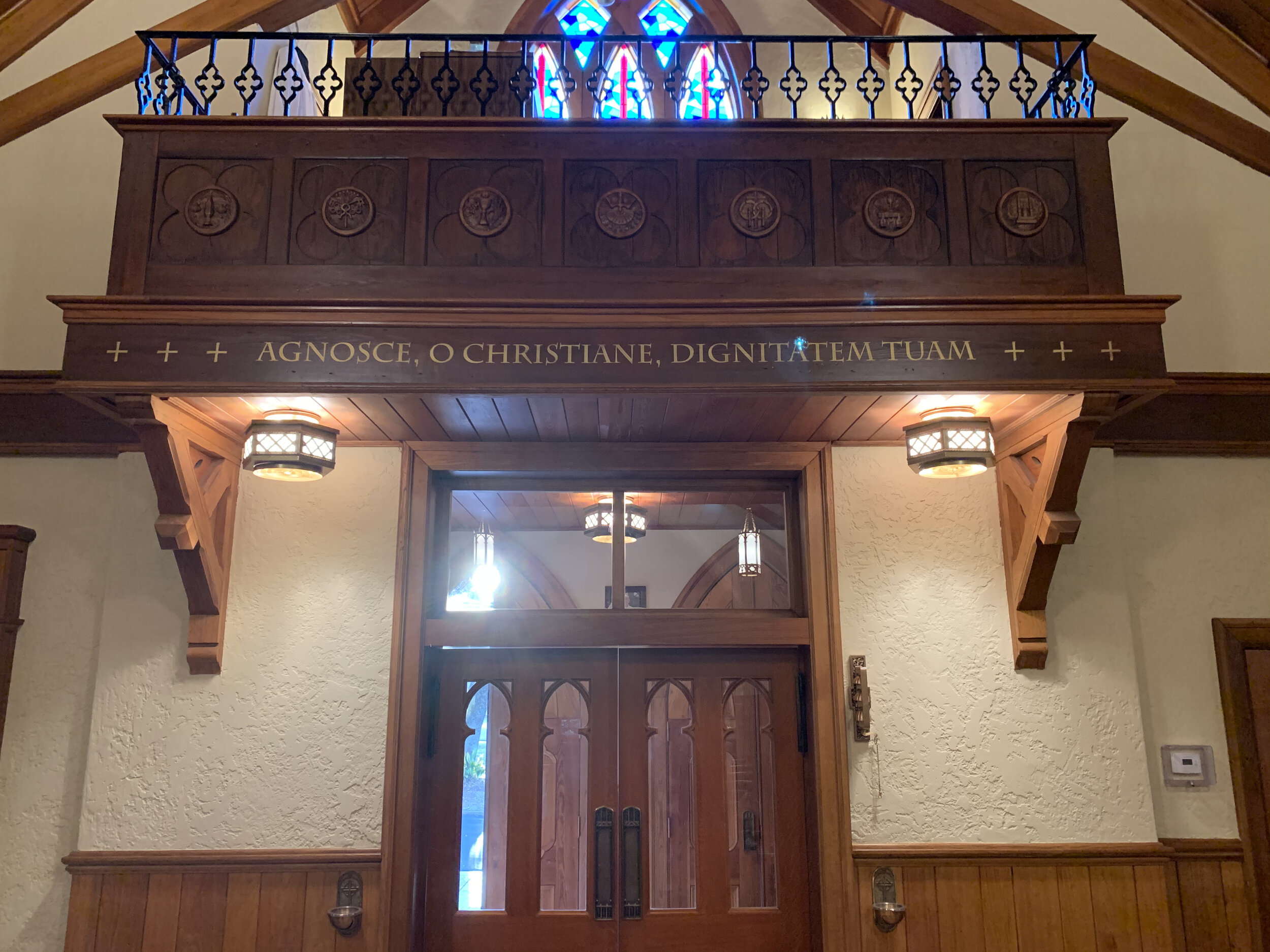
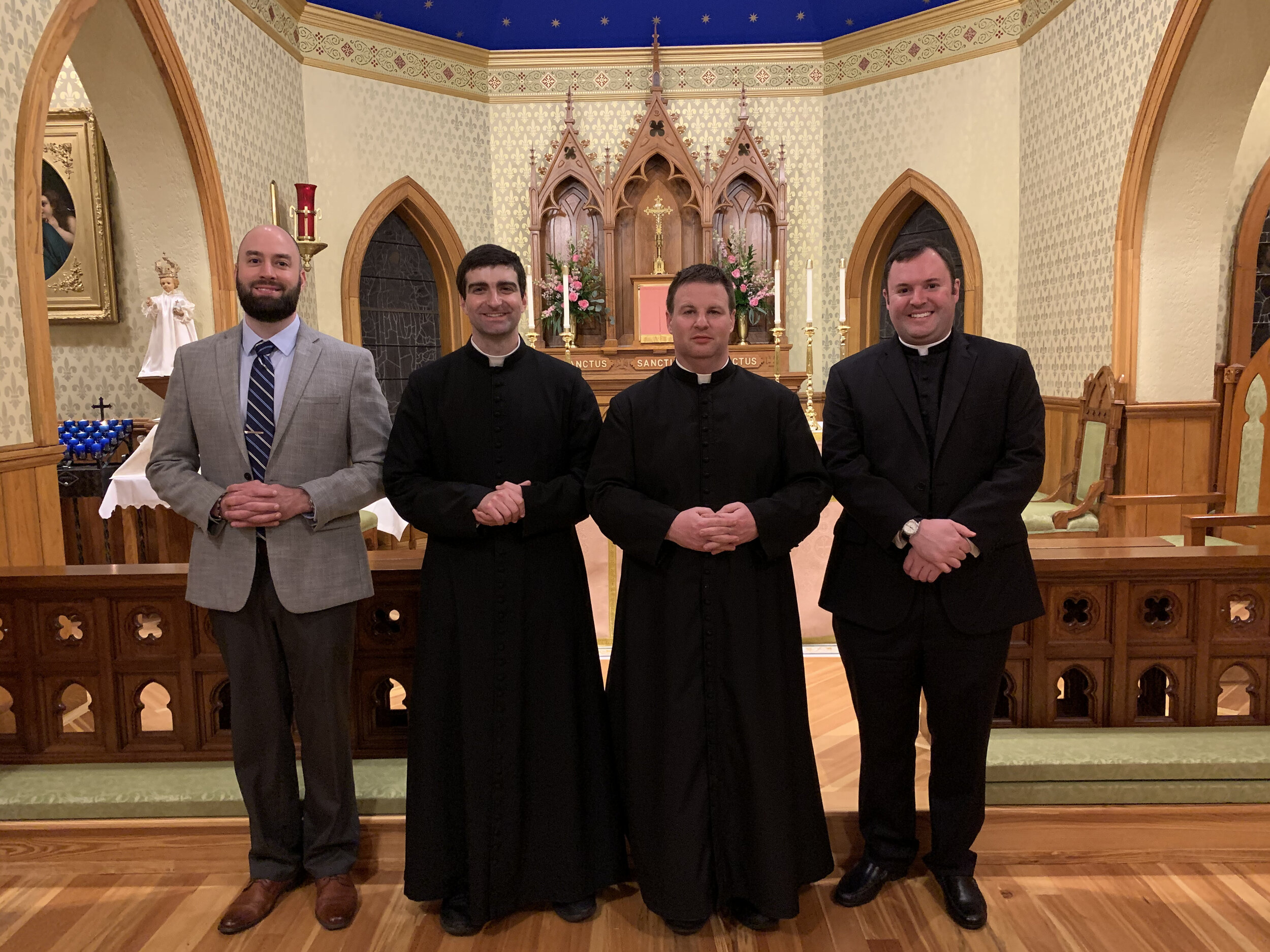
On March 12, 2021, The Most Reverend Steven J. Raica, JCD, Bishop of the Diocese of Birmingham, joined the Very Reverend Justin L. Ward, STL and the people of St. Leo the Great Parish in Demopolis to solemnly dedicate their new altar and freshly renovated church. Bishop Emeritus Robert Baker was also present for the occasion, along with several other priests and seminarians.
The Solemn Pontifical Mass marked the culmination of a year of efforts, led by Fr. Ward in his role as Parochial Administrator, to renovate the interior of the 1905 neo-Gothic church, the integrity of which had been gradually diminished over decades, starting with a fire, and continuing with subsequent piecemeal modifications and the simple ravages of time. The project sought to recover a more coherent expression of the beauty of the sacred mysteries of the liturgy and to restore aesthetic consistency in the art and architecture.
Studio io provided the overall vision, liturgical design, and conceptual furniture design. Murals by Jericho designed and executed the decorative paint scheme and managed the construction process, with New Holland Church Furnituredeveloping and crafting the new interior wooden furnishings.
Prior to the renovation, mid-century wood paneling ran floor to ceiling in the sanctuary, with presider and server chairs and a modern-style resurrected Christ statue on the back wall only recently having been replaced by a tabernacle stand and traditional crucifix. Wall-to-wall red carpet covered the floors, and the interior was whitewashed save for stained wood wainscoting and the original rich wooden beam ceiling.
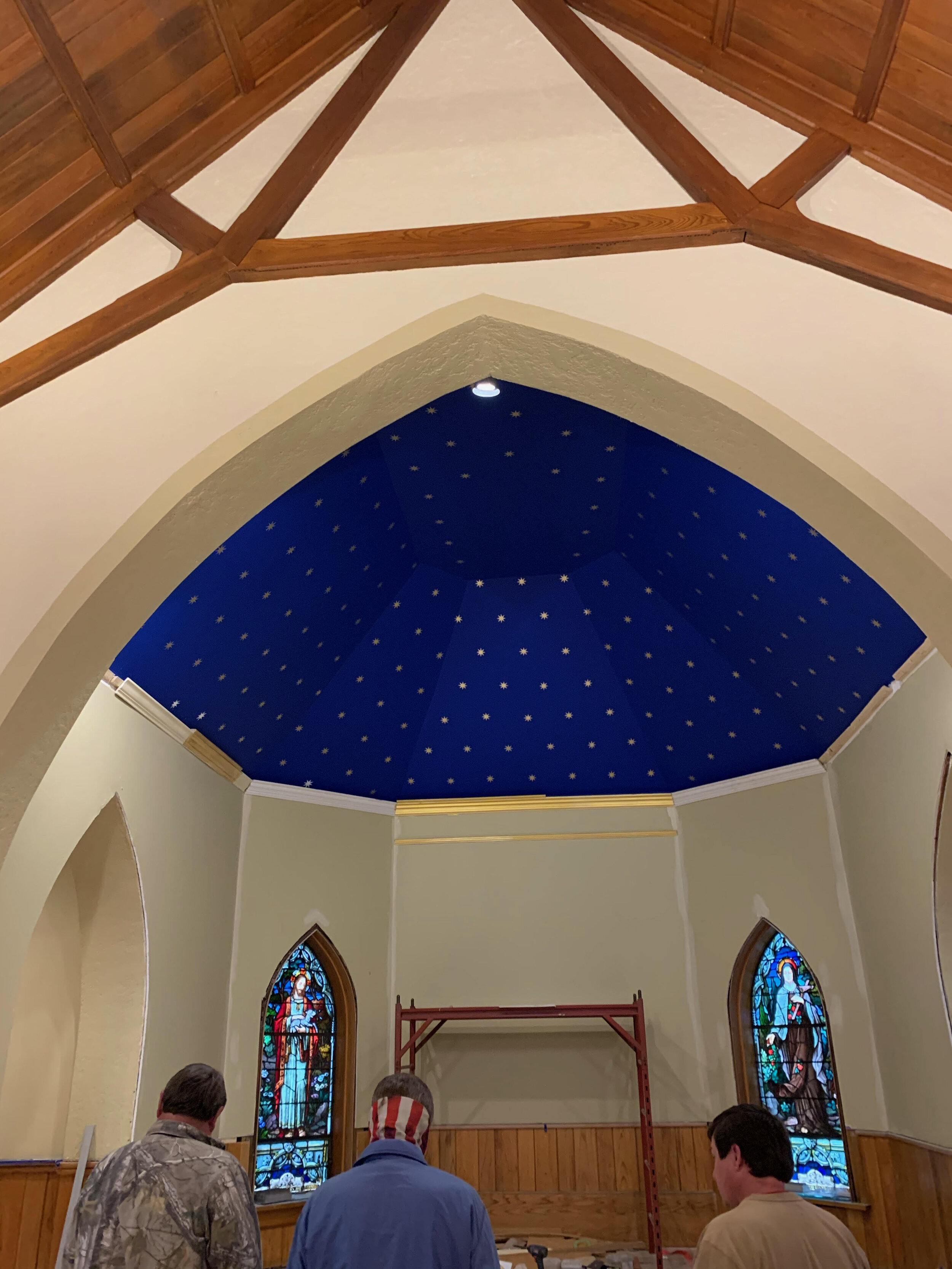
The new design, informed by photographs of the original interior yet not seeking to replicate it, includes a paint scheme in the sanctuary depicting a deep blue sky studded with golden stars and a dove representing the Holy Spirit surrounded by cherubim above the new altar, on which is depicted the Agnus Dei in the form of a relief sculpture made by ALBL Oberammergau. This entire image is a reminder that the liturgy joins us mystically to the life of the Trinity through the Paschal act of Christ made present by the Holy Spirit; an echo of the eternal heavenly liturgy. A painted scene was also considered for the high wall above the sanctuary arch in between the beam timbers, but it was decided that the crucifix should be hung there, evoking the appearance of an English rood beam.
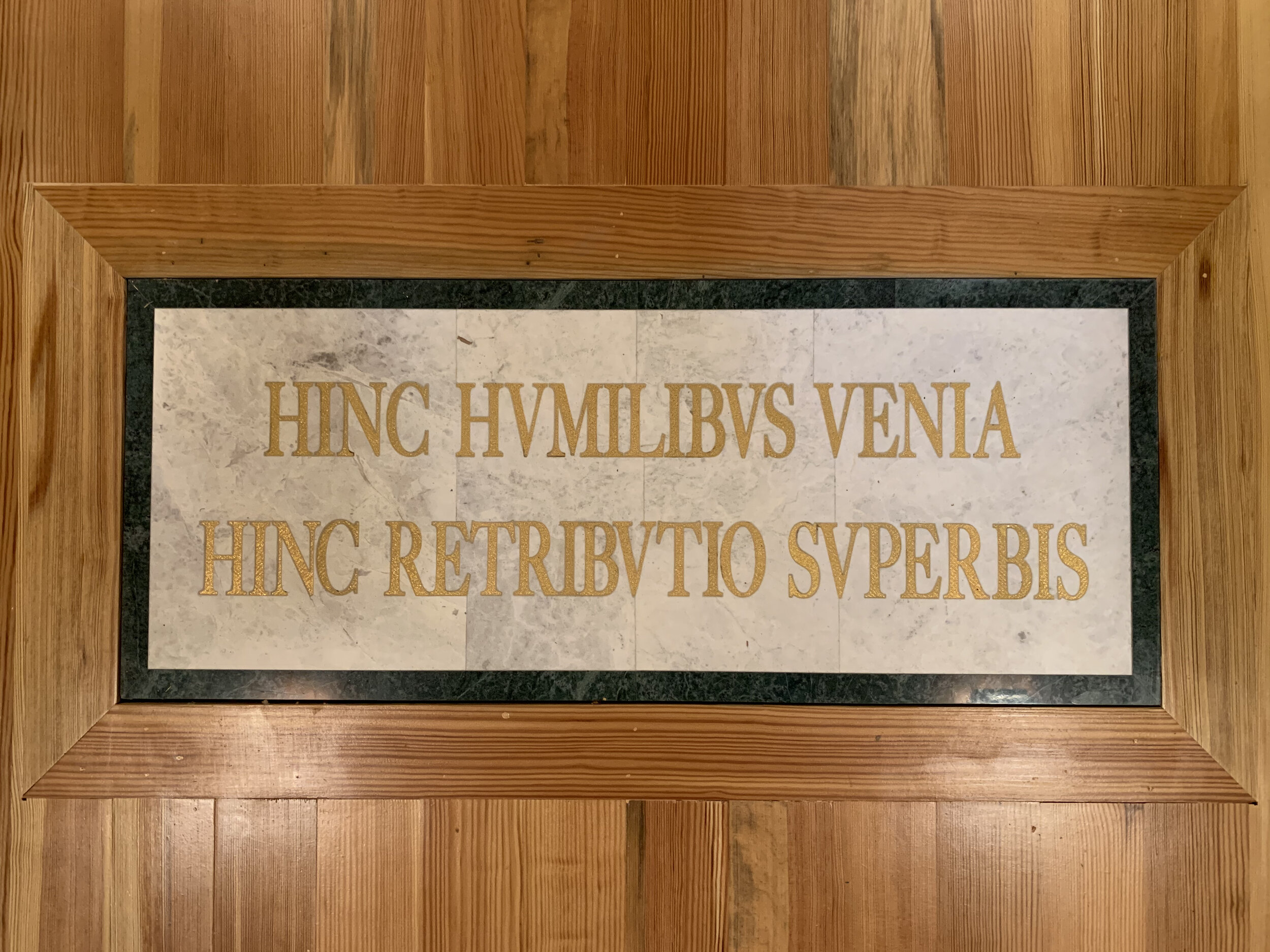
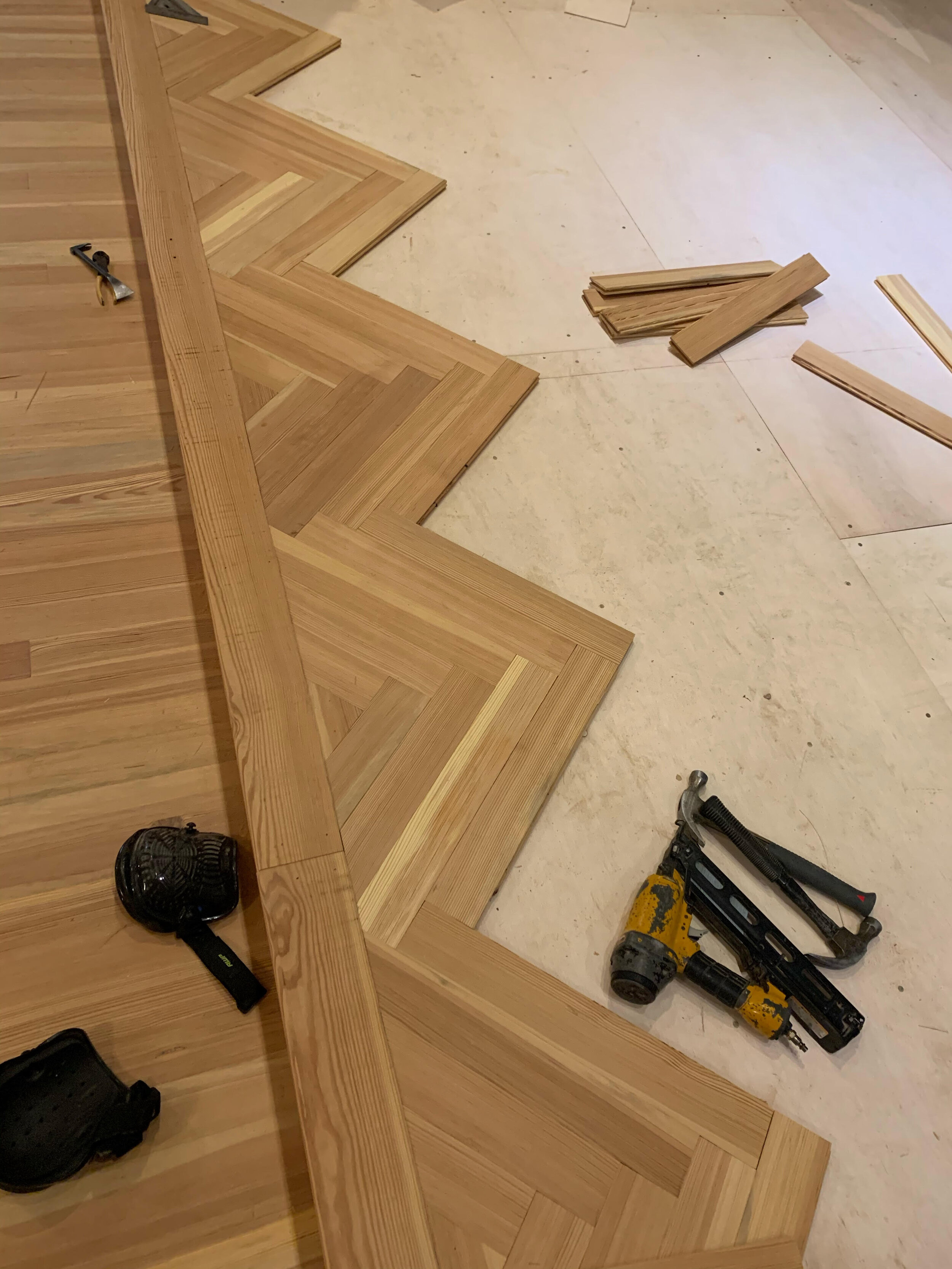
Reclaimed native heart pine flooring runs throughout the church, laid lengthwise in the nave and in a herringbone pattern in the sanctuary to reflect its liturgically elevated place as the threshold between heaven and earth. An inlaid band of green, gold, and cream-colored marbles surrounding the altar, and a marble altar stone the full size of the mensa, further emphasize the dignity and sacrificial nature of the liturgy through material hierarchy. The same marble floor inlay in the baptistry around the font visibly joins it to the altar and marries the two to the architecture as the most important elements within, speaking to the permanence of place for liturgical actions as opposed to loose furniture that can be moved or separated from the dignity of the holy temple. A simplified version of the marble inlay is also located at the back of the nave near the entrance doors in the form of an inlaid floor plaque.
The elevated chalice-style ambo and adjacent full gated communion rail are two of the most readily noticeable changes. In addition to the practical purpose of providing the option of receiving Holy Communion while kneeling, the reintroduction of the rail works in conjunction with the elevated material hierarchy in the sanctuary to serve as a permeable veil to the Holy of Holies; the heavenly throne room that lies beyond, as typified in the Jewish temple of the Old Testament. Locating the ambo as a slight extension of the sanctuary into the nave is also not without significance. While done in part due to the relatively limited space around the altar, it also makes sense liturgically: whereas prayers and sacrifice are offered up to God behind the rail, the Word is proclaimed to the faithful and the homily delivered from a place still clearly delineated, yet prominently in their midst.
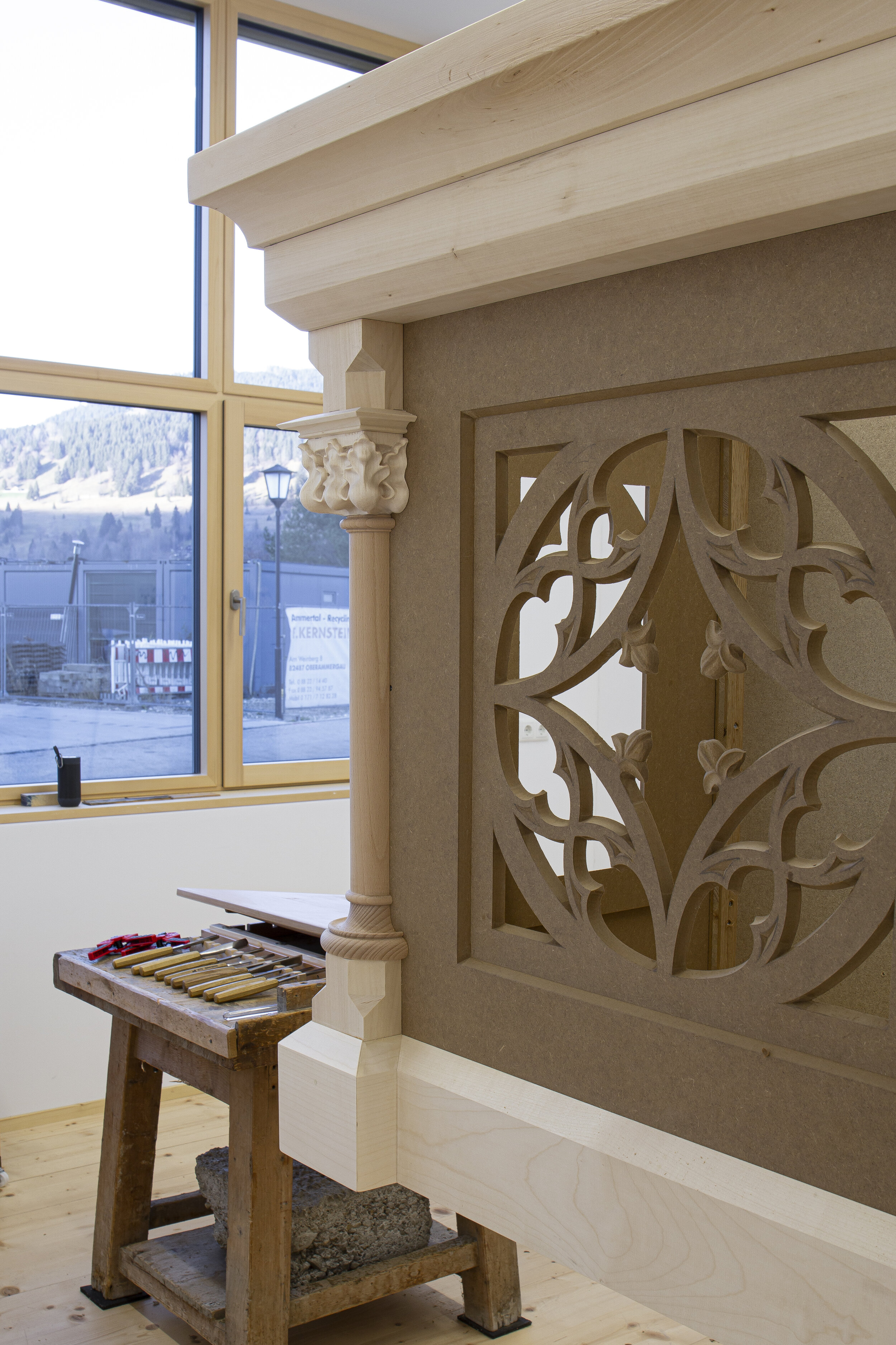
All furniture is made of quartered white oak with a distinctive quatrefoil and foiled arch lancet motif that draws inspiration from both original woodwork in the church and two salvaged antique period pieces: a wooden reredos donated and hand-refurbished by a craftsman who is a lifelong parishioner, and a restored wooden baptismal font. All other major furniture items are newly crafted, including the altar of sacrifice, ambo, communion rail, confessional, pews, presider’s chair and servers’ benches, and several interior door replacements.
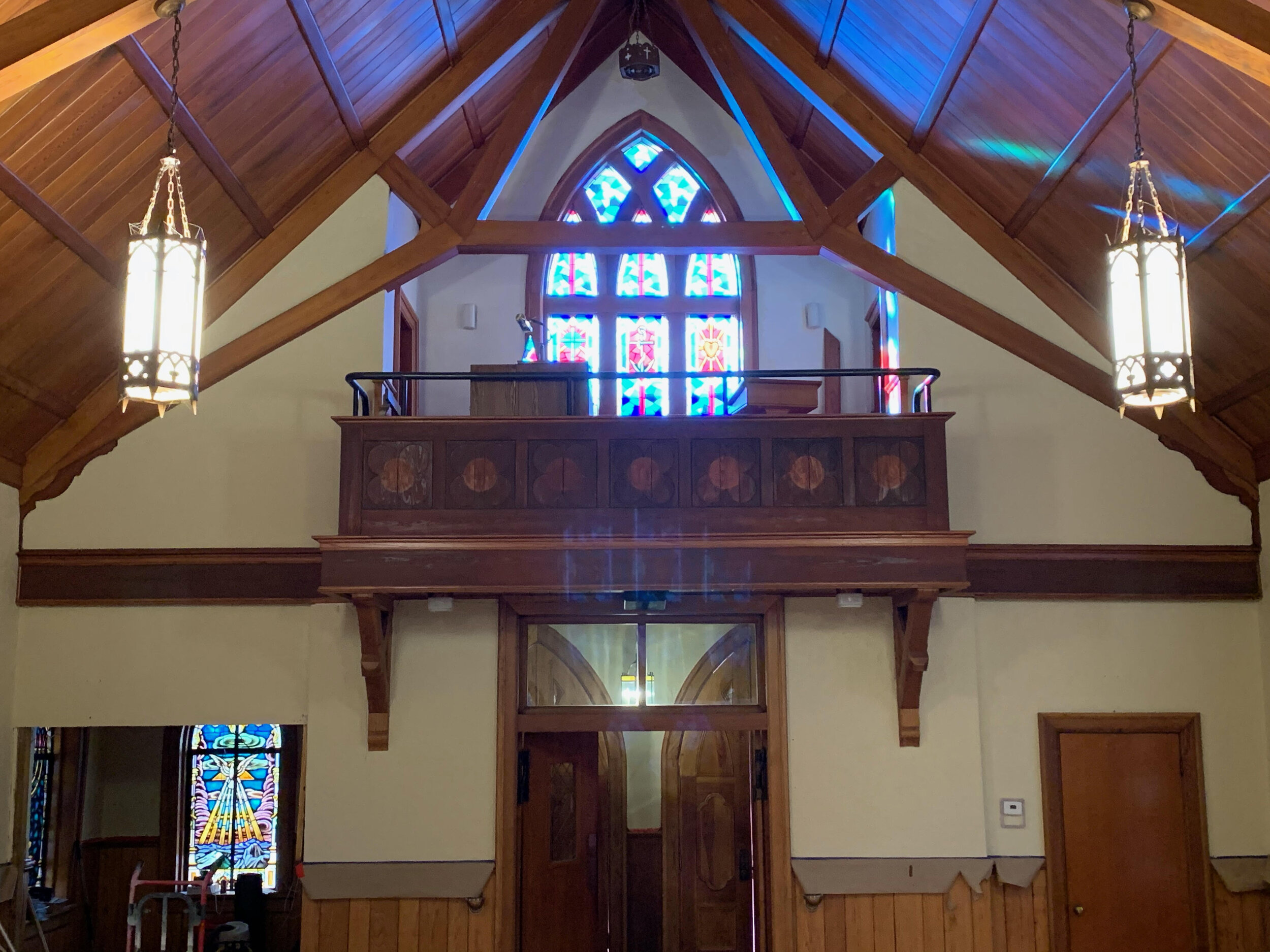
A subtle indicator of the titular saint is a newly added Latin inscription above the entrance doors on the frieze of the choir loft, which comes from a Christmas sermon given by Pope St. Leo the Great. Translated, it reads, “Remember, O Christian, your dignity.” A powerful reminder that the faithful share in God’s nature as a direct result of His sacraments just celebrated within, this is one of the last things a person sees when exiting the church and going back out into the world.
Indeed, even beyond the sanctuary, the entire church interior is meant to be a renewed expression of the glory of the Trinity and the dignity of God in man, and a sacramental to vividly nourish the human eschatological desire to dwell in the heavenly Jerusalem for eternity.

Work Progresses on New German Statuary for Historic Church
On July 29, 2019, a tragic fire took what was once the largest wooden structures west of the Mississippi River, months shy of its 125th anniversary.
On July 29, 2019, a tragic fire took what was once the largest wooden structures west of the Mississippi River, months shy of its 125th anniversary. The rebuilding effort began right away, beginning with assessment of the damages and early planning efforts as 2019 drew to a close, and a ceremonial groundbreaking allowed Bishop Joe Vásquez to affirm his commitment to rebuilding and bless the site the following September. As of early 2021, site construction is well underway, with an expected dedication in the spring of 2022.
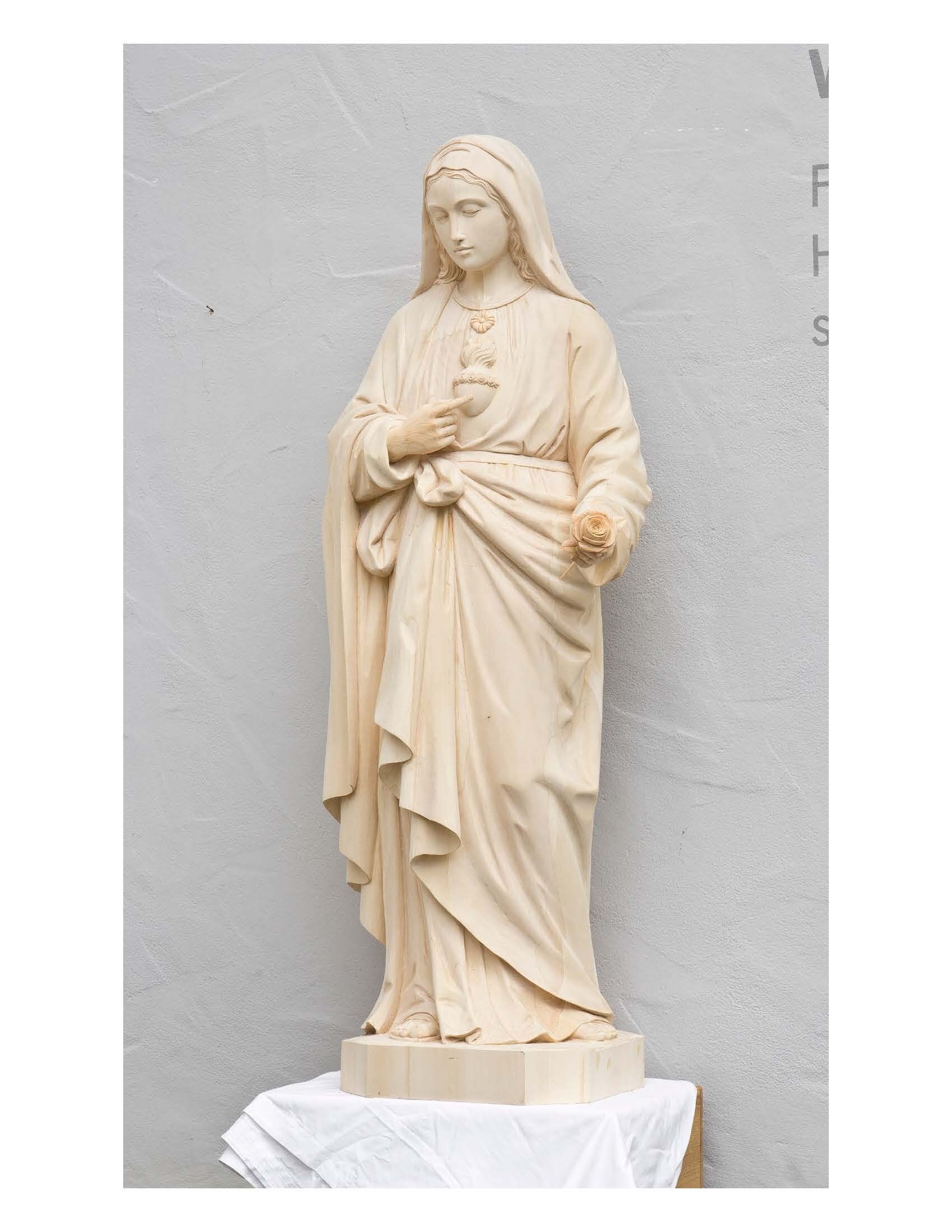
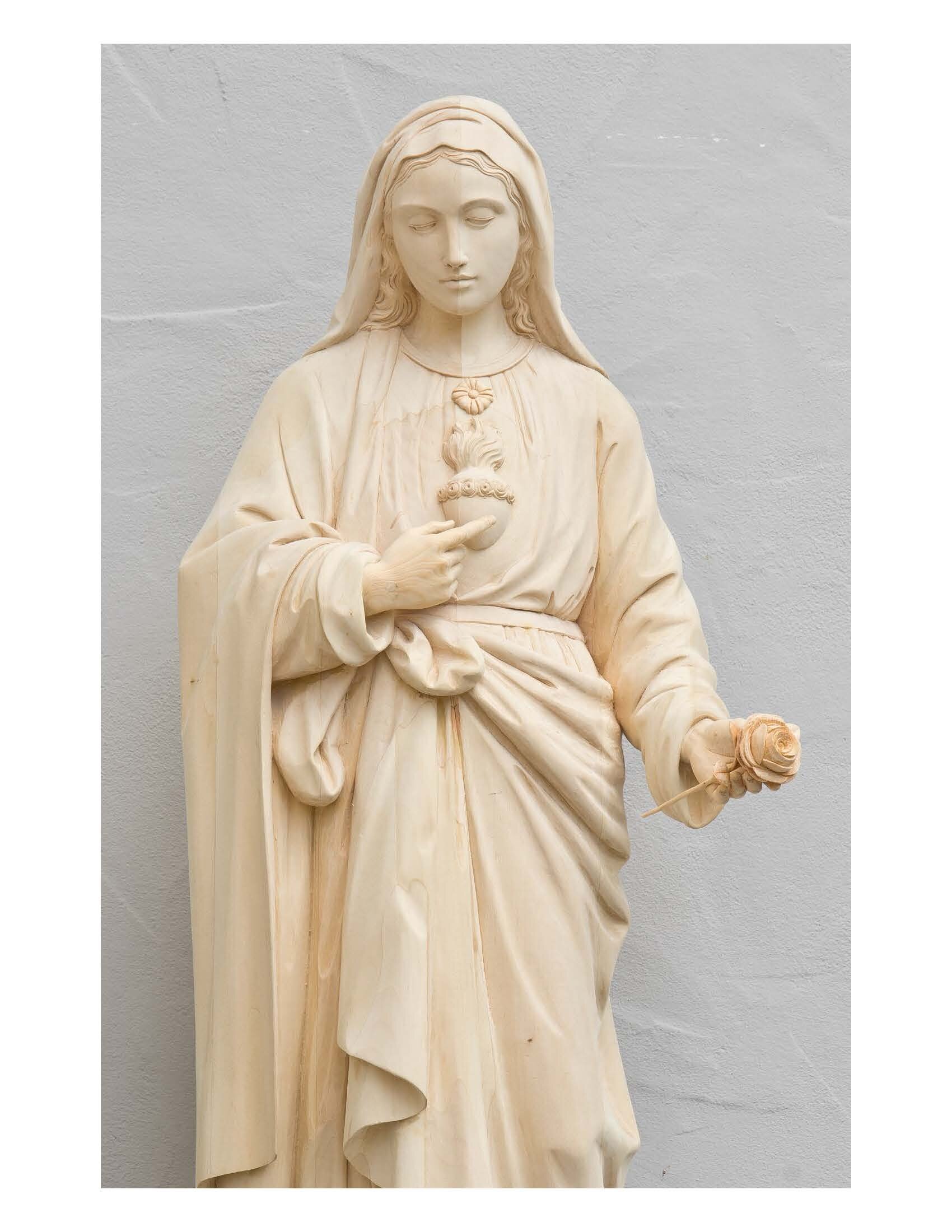
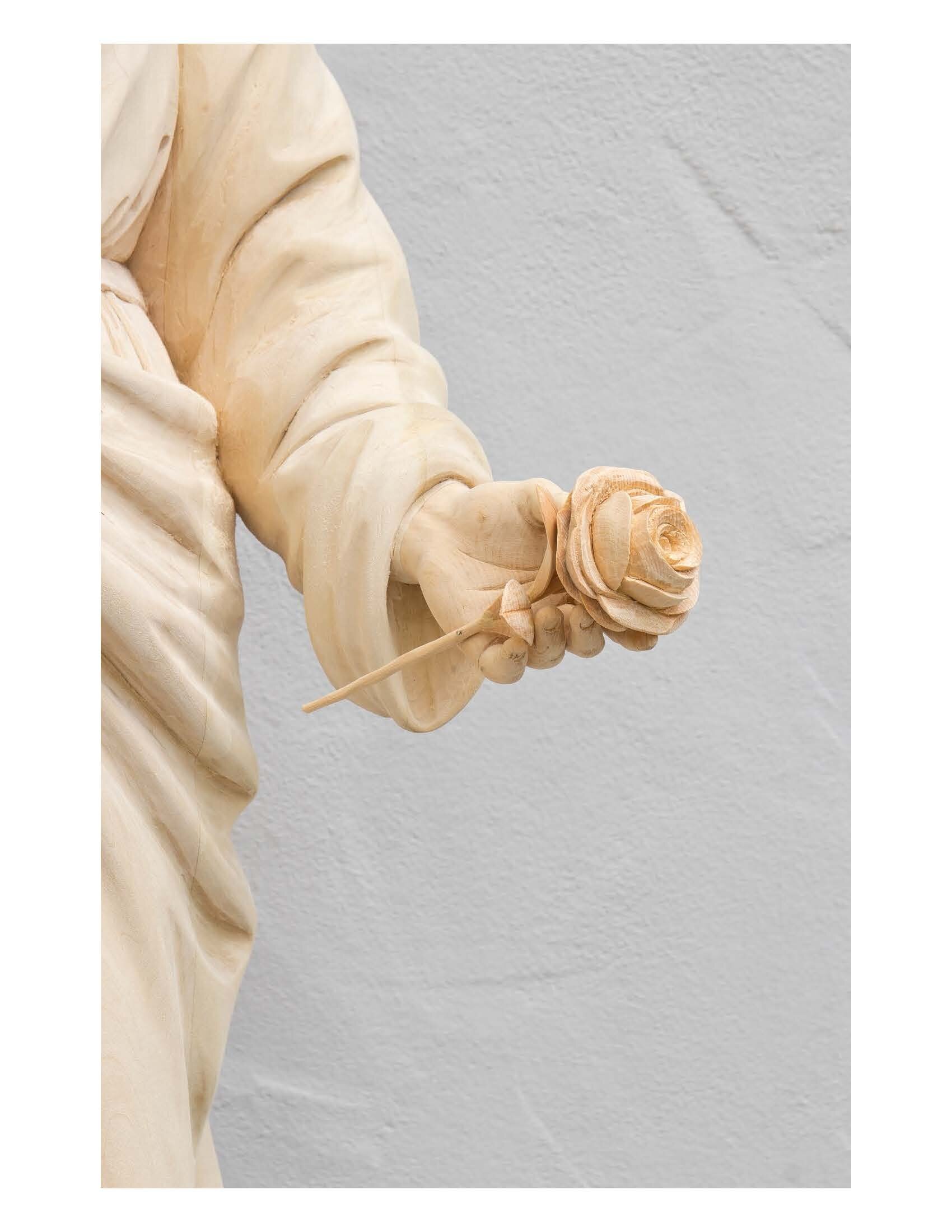
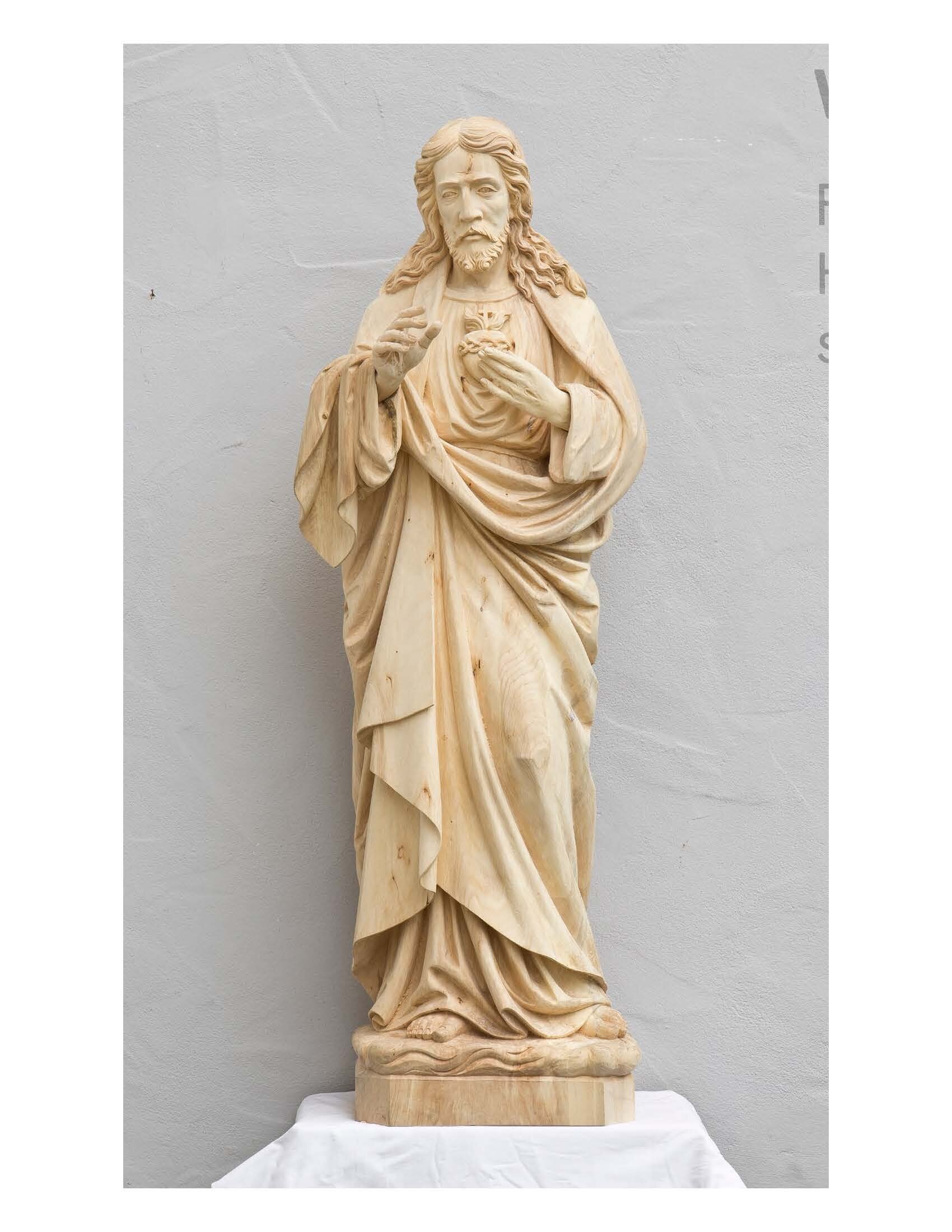
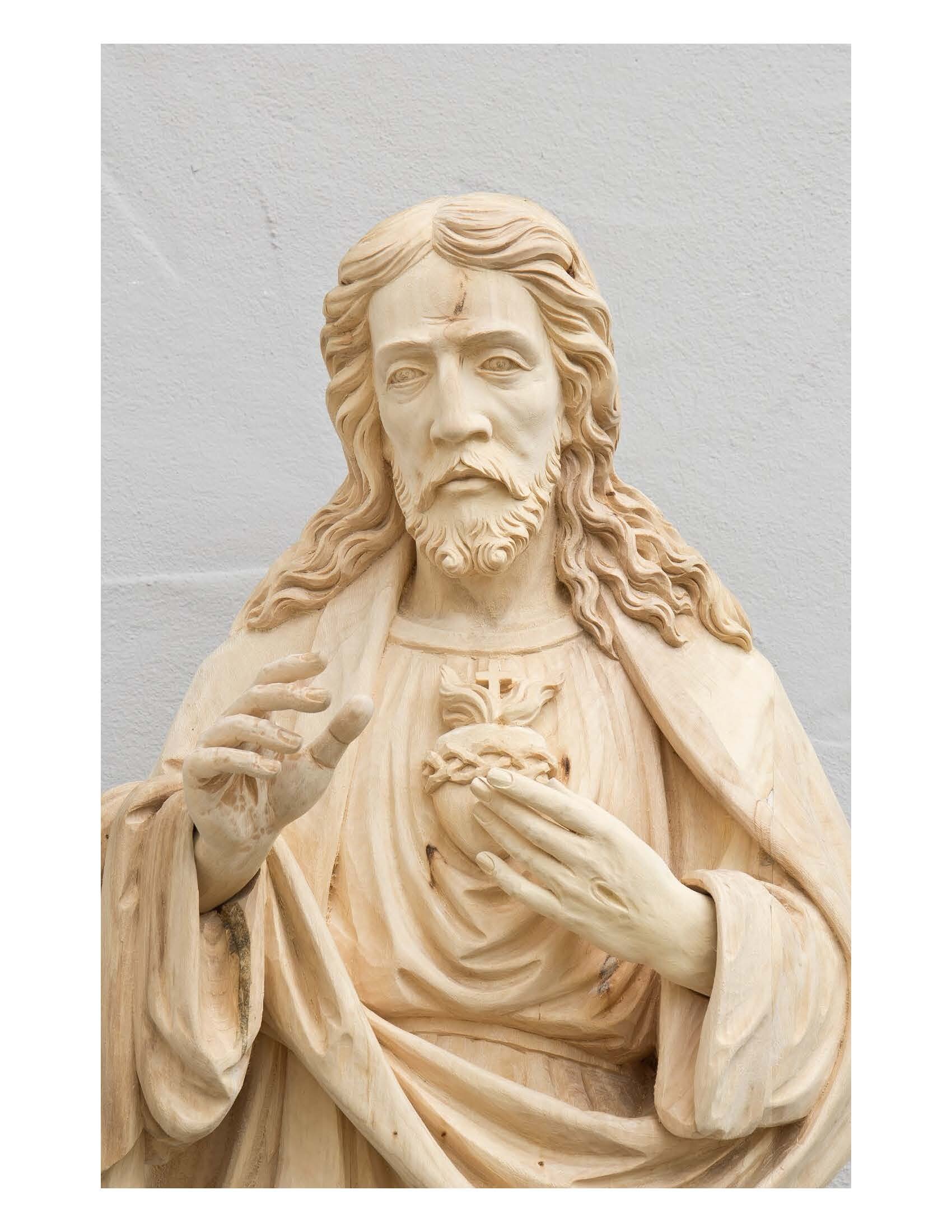
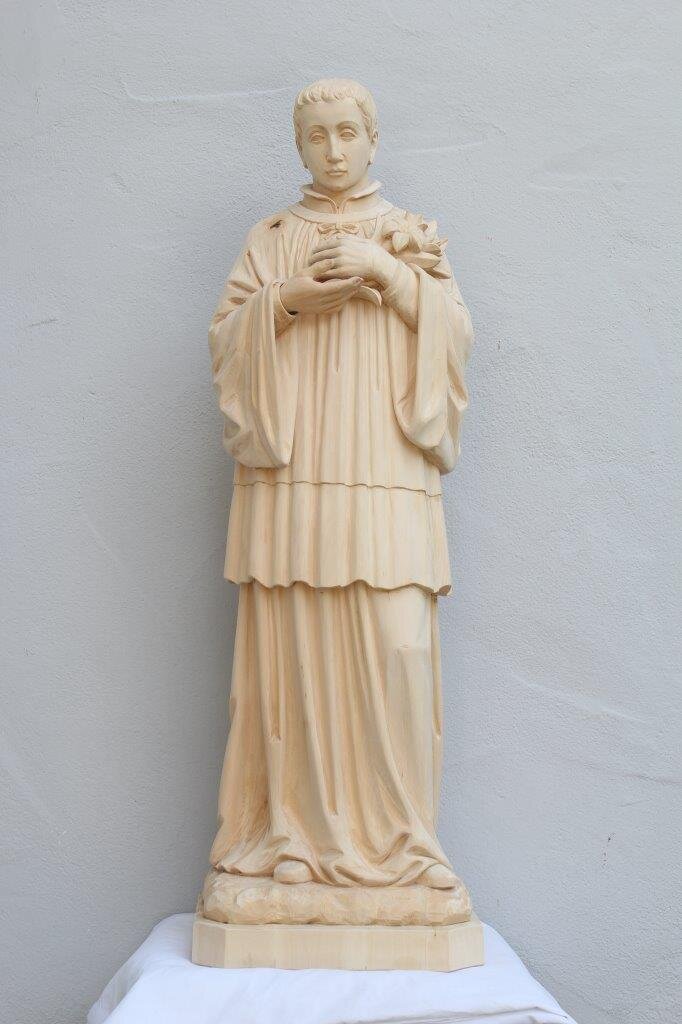
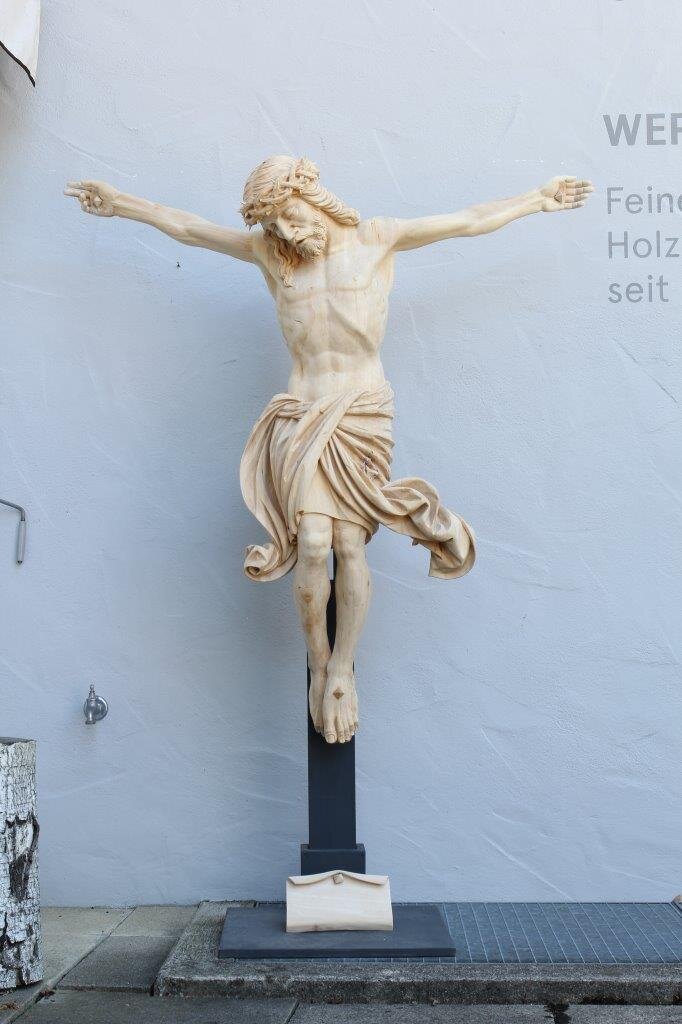
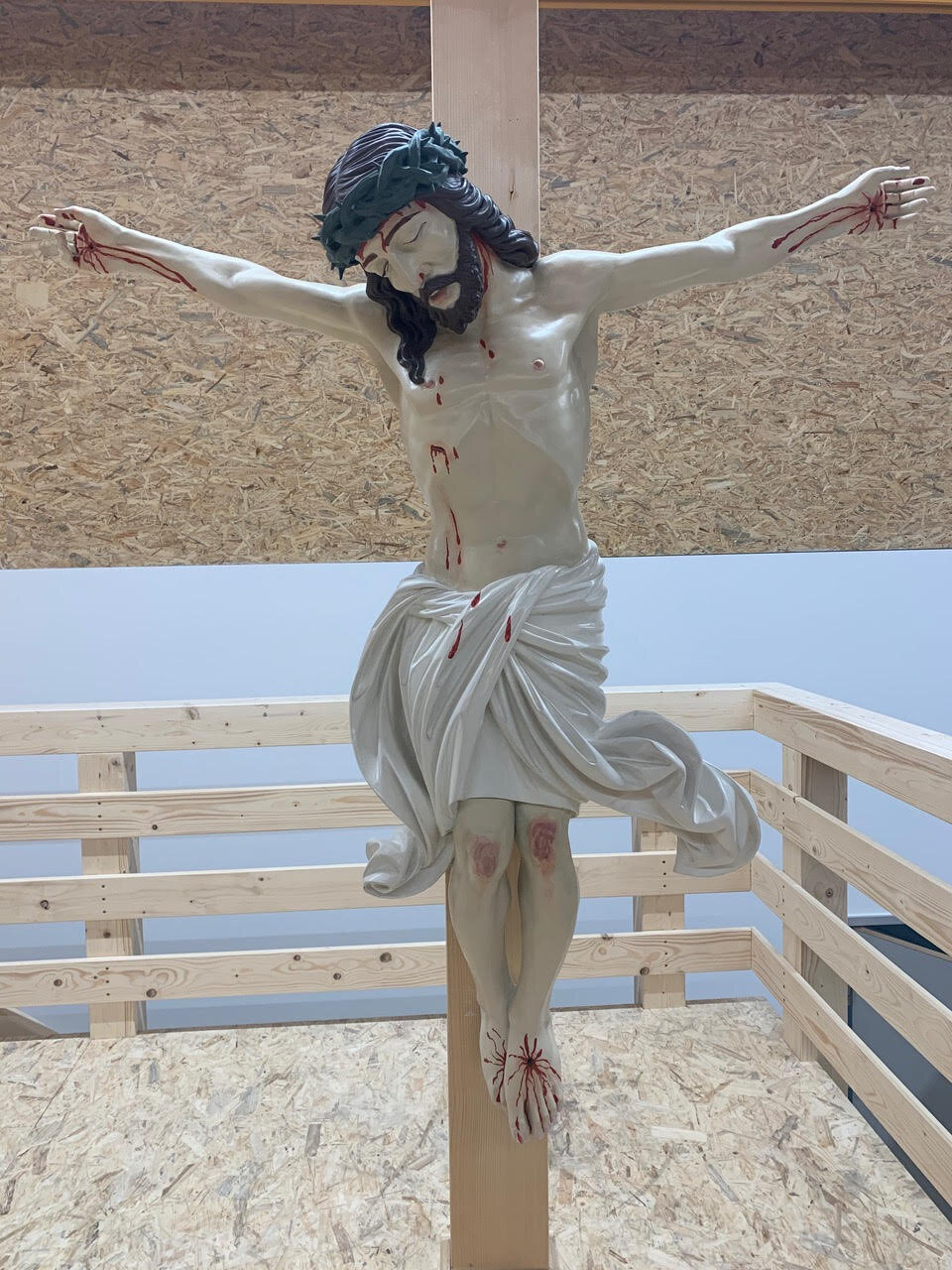
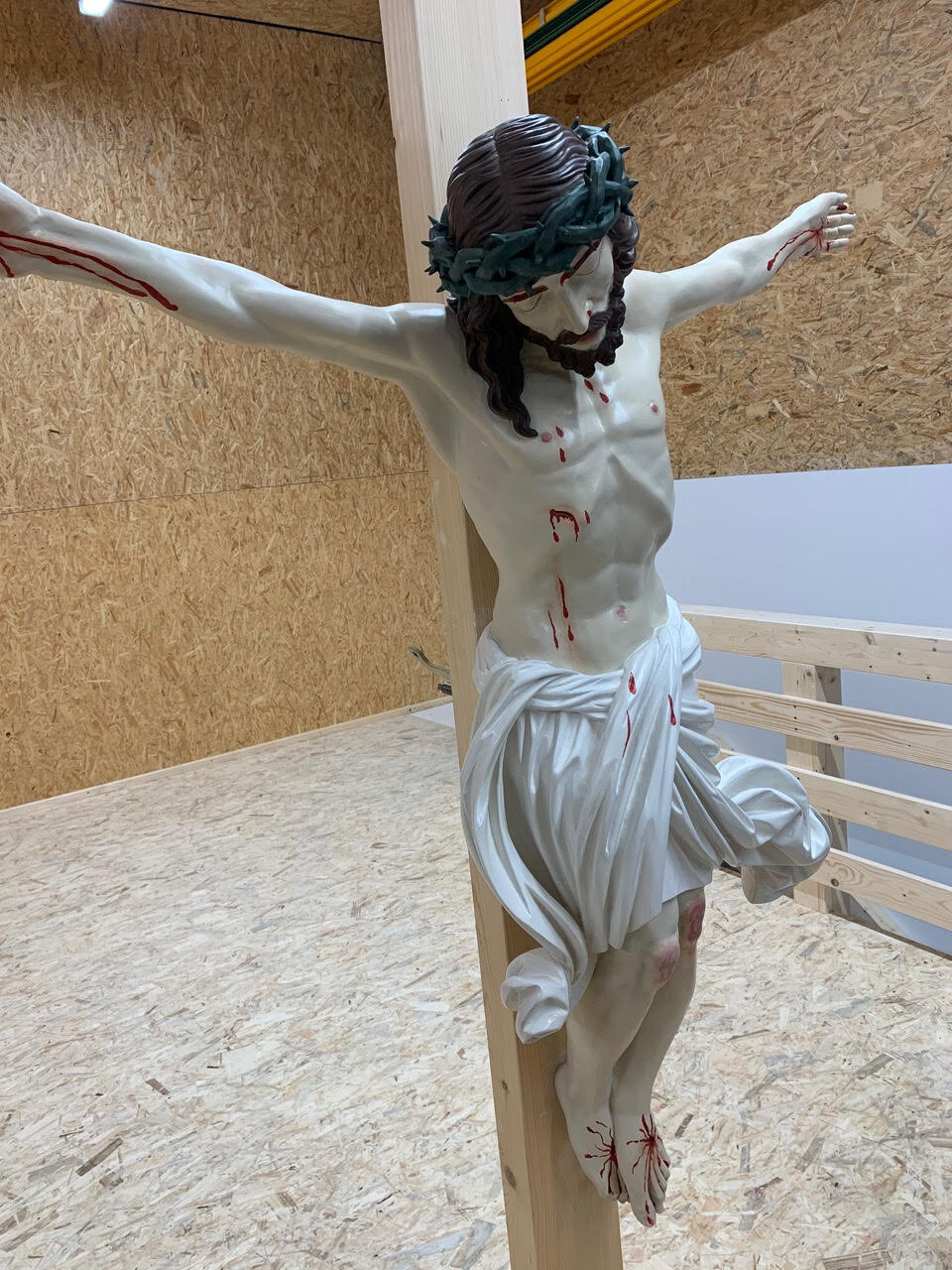
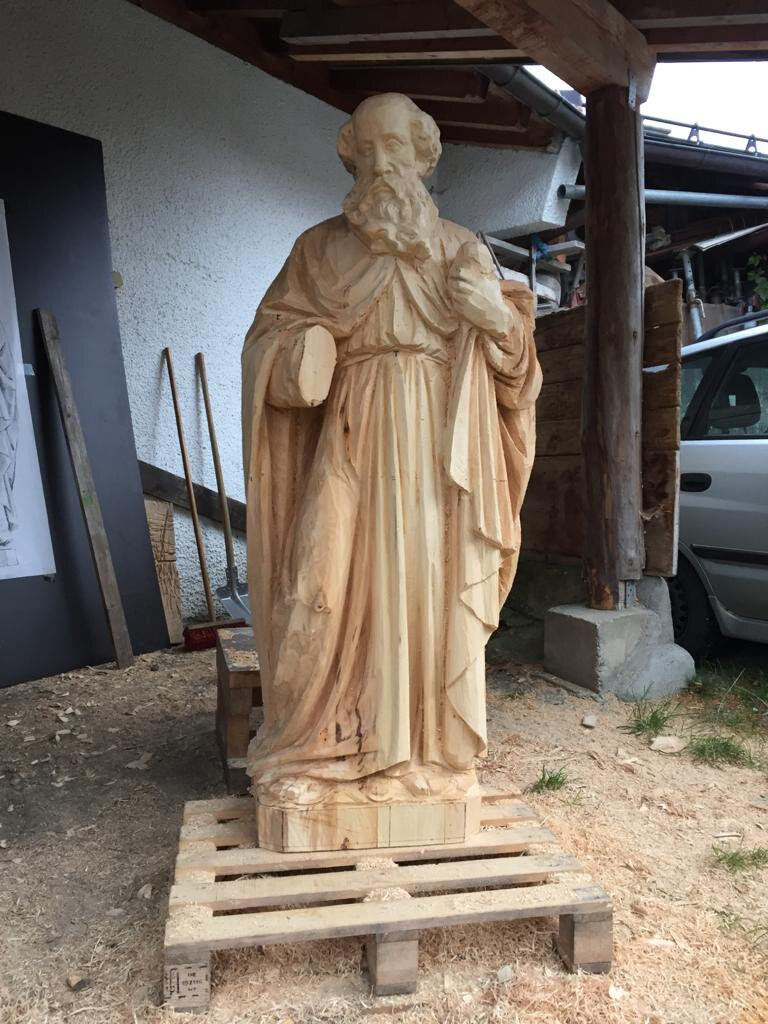
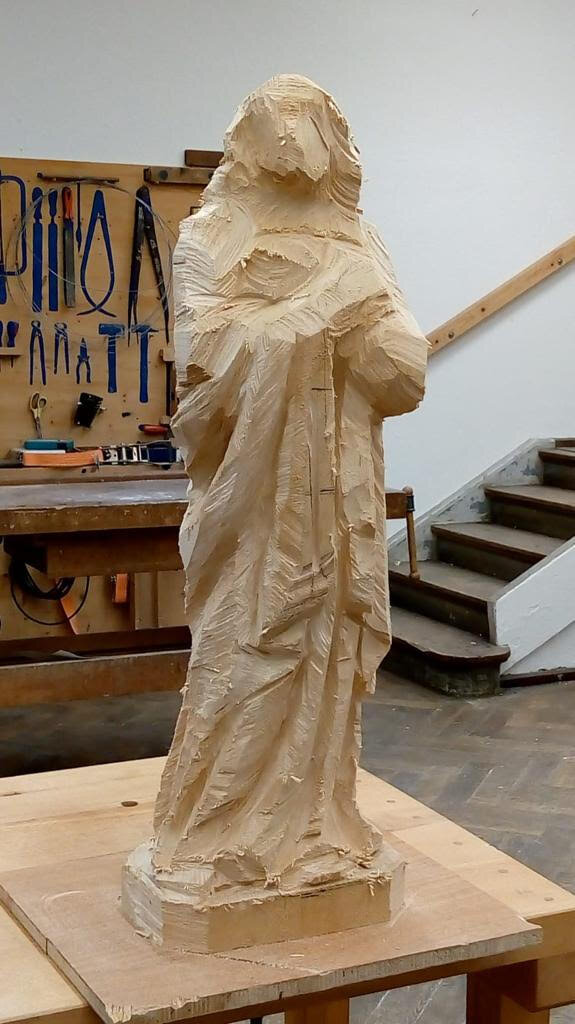
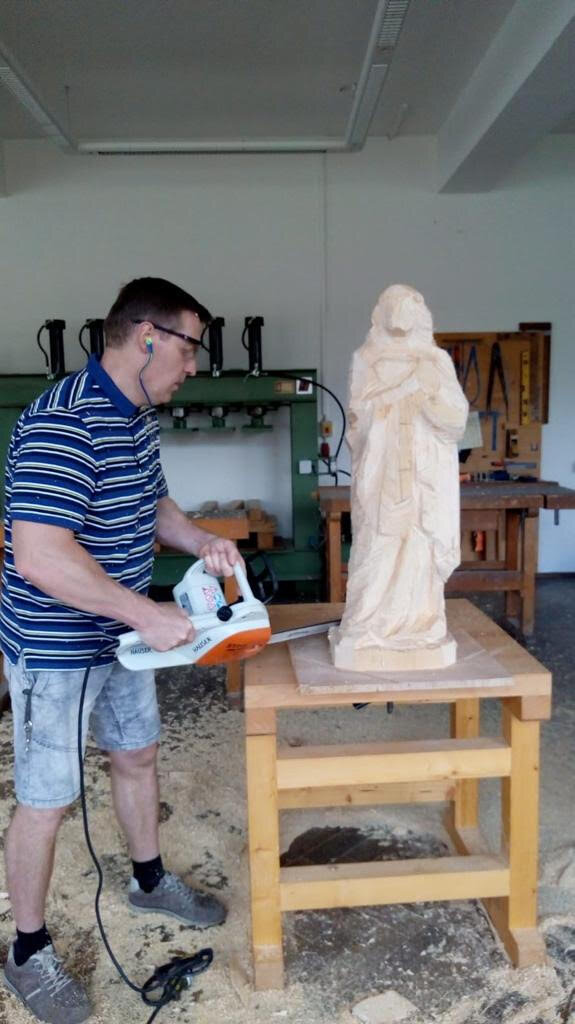
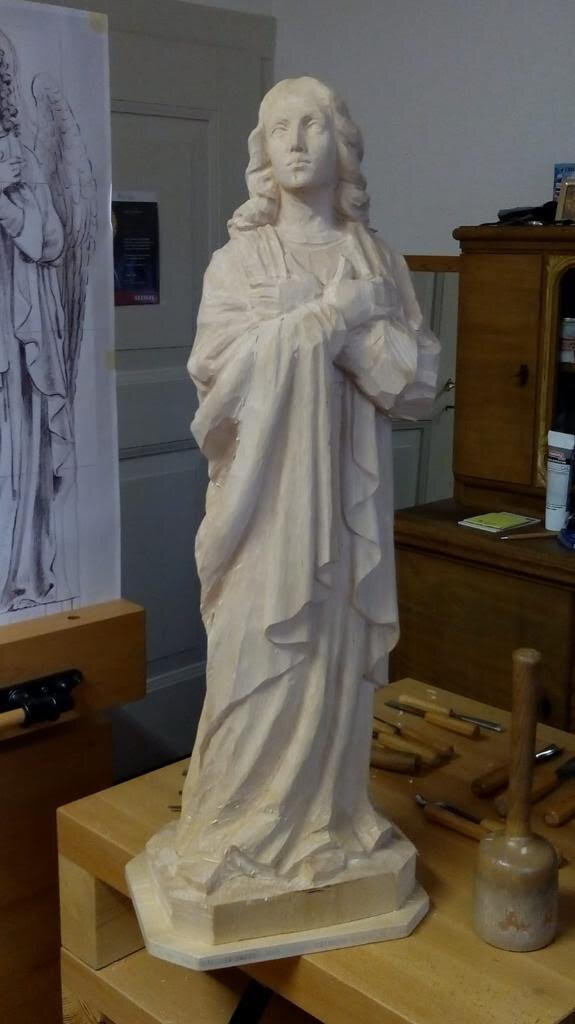
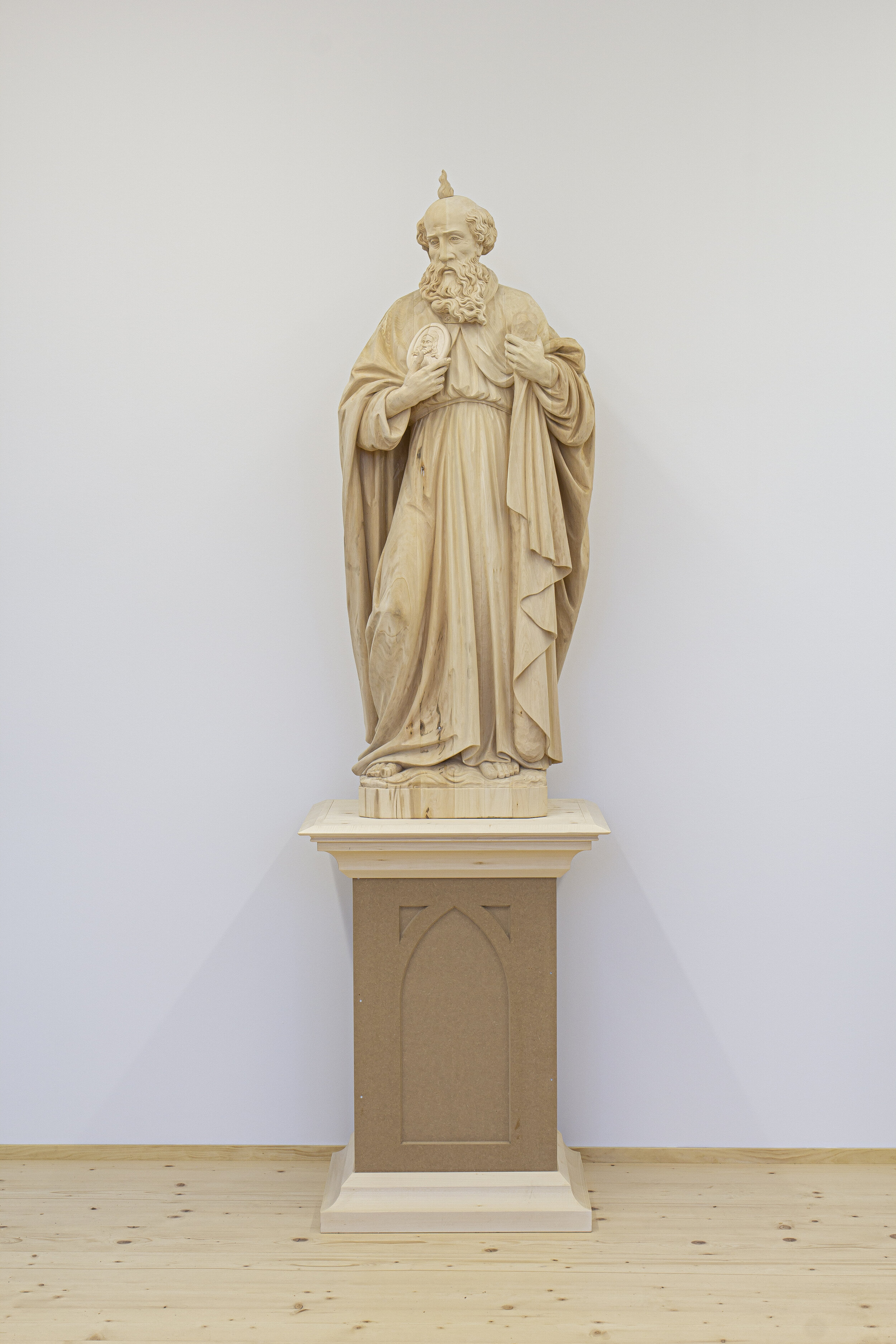
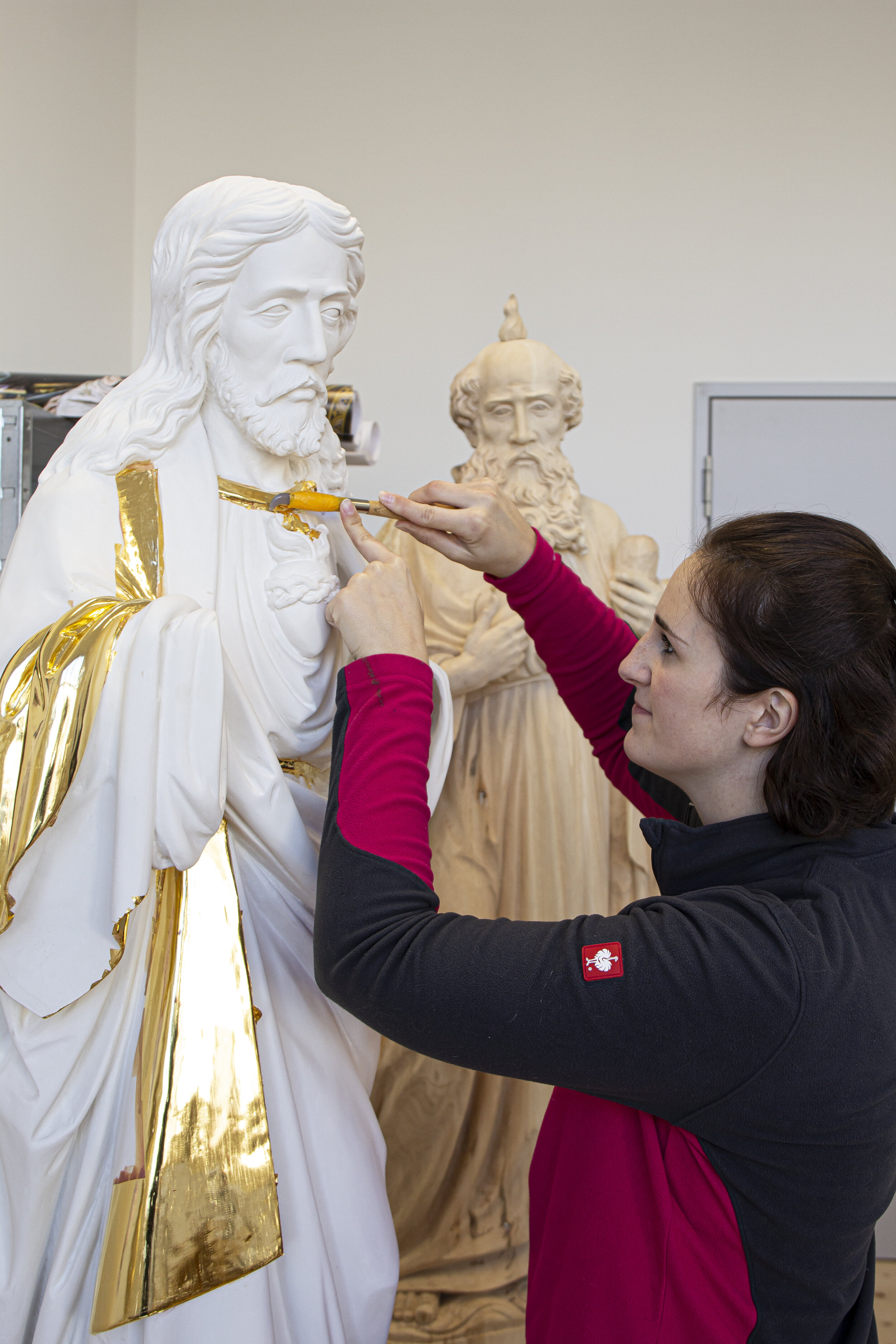
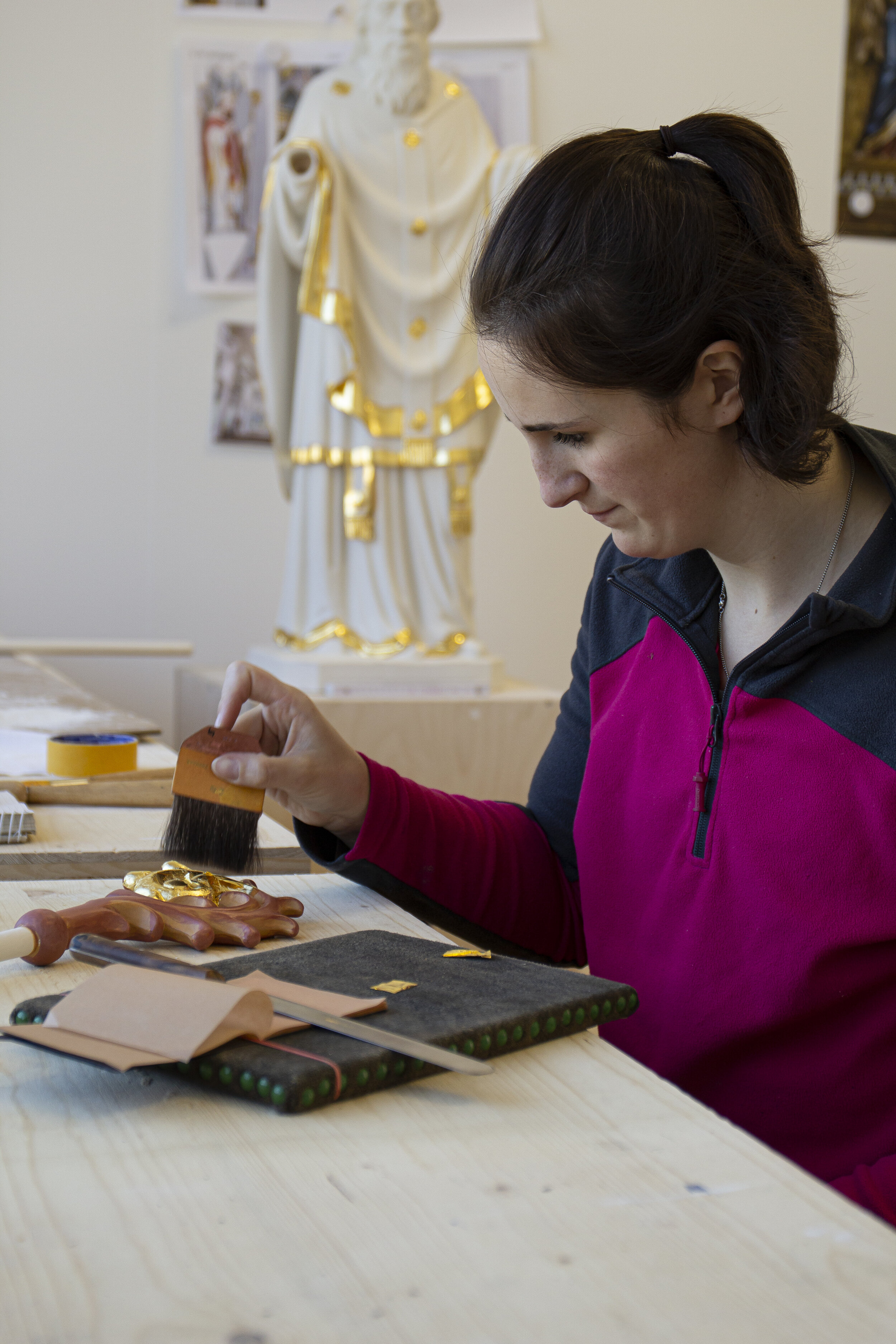
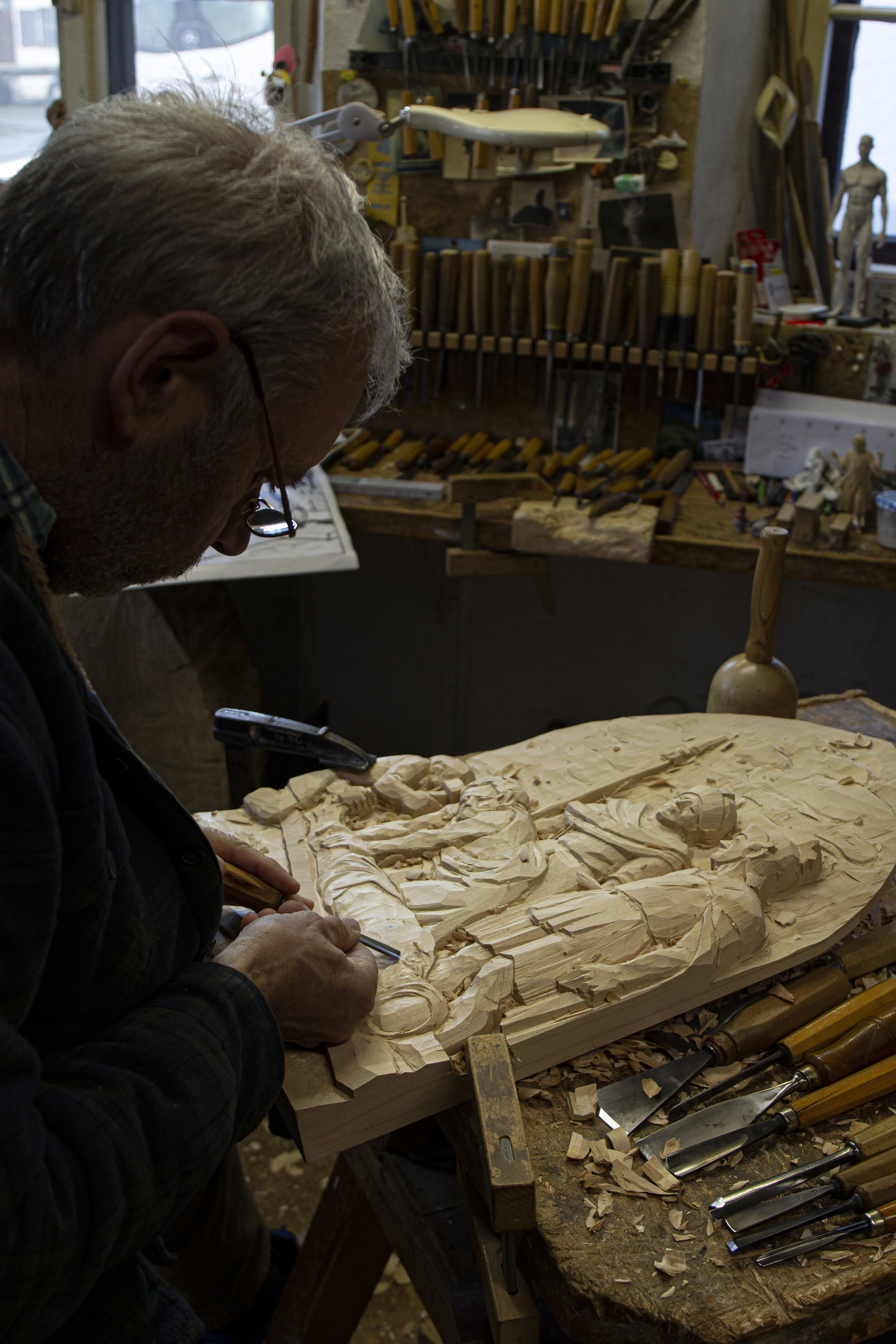
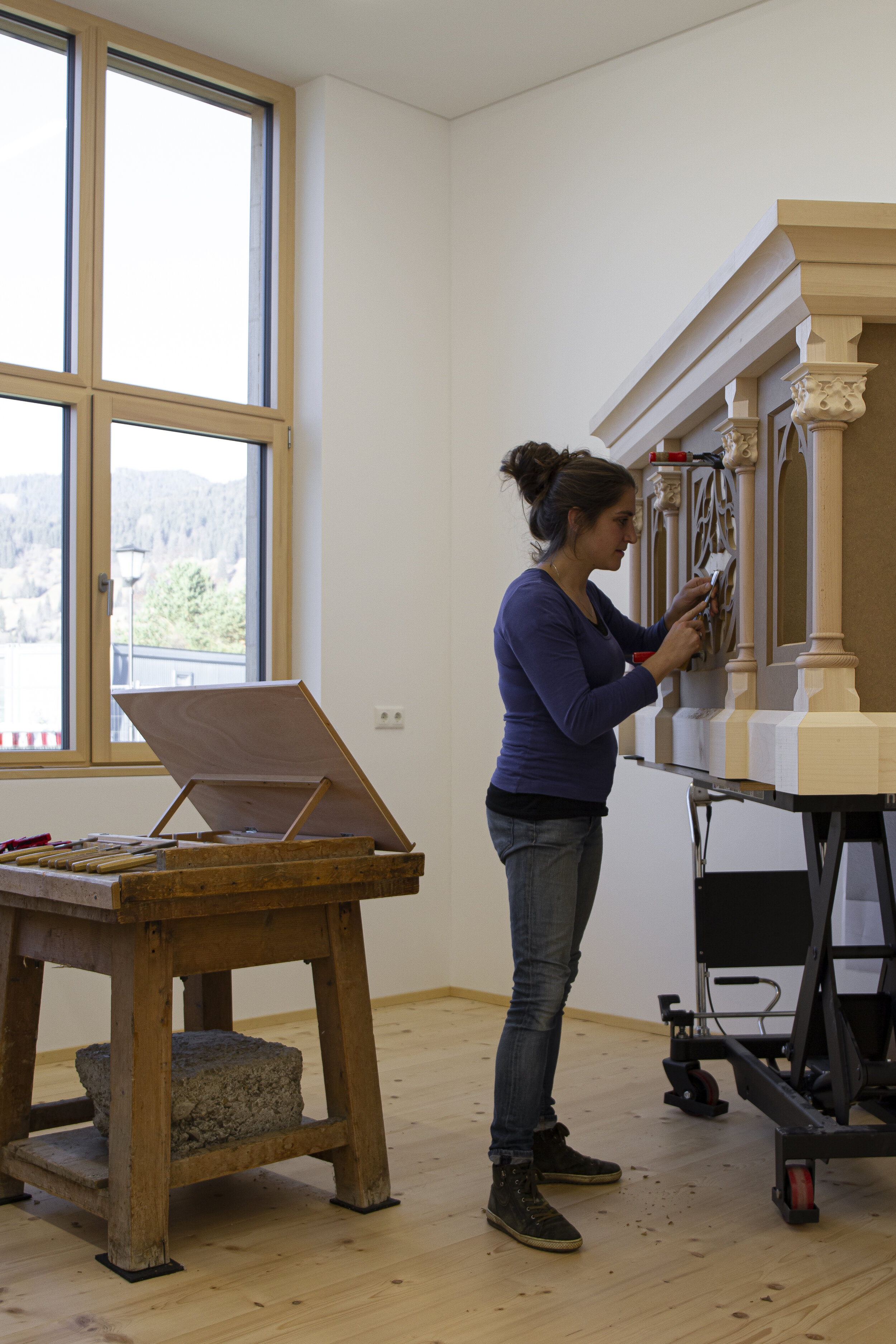
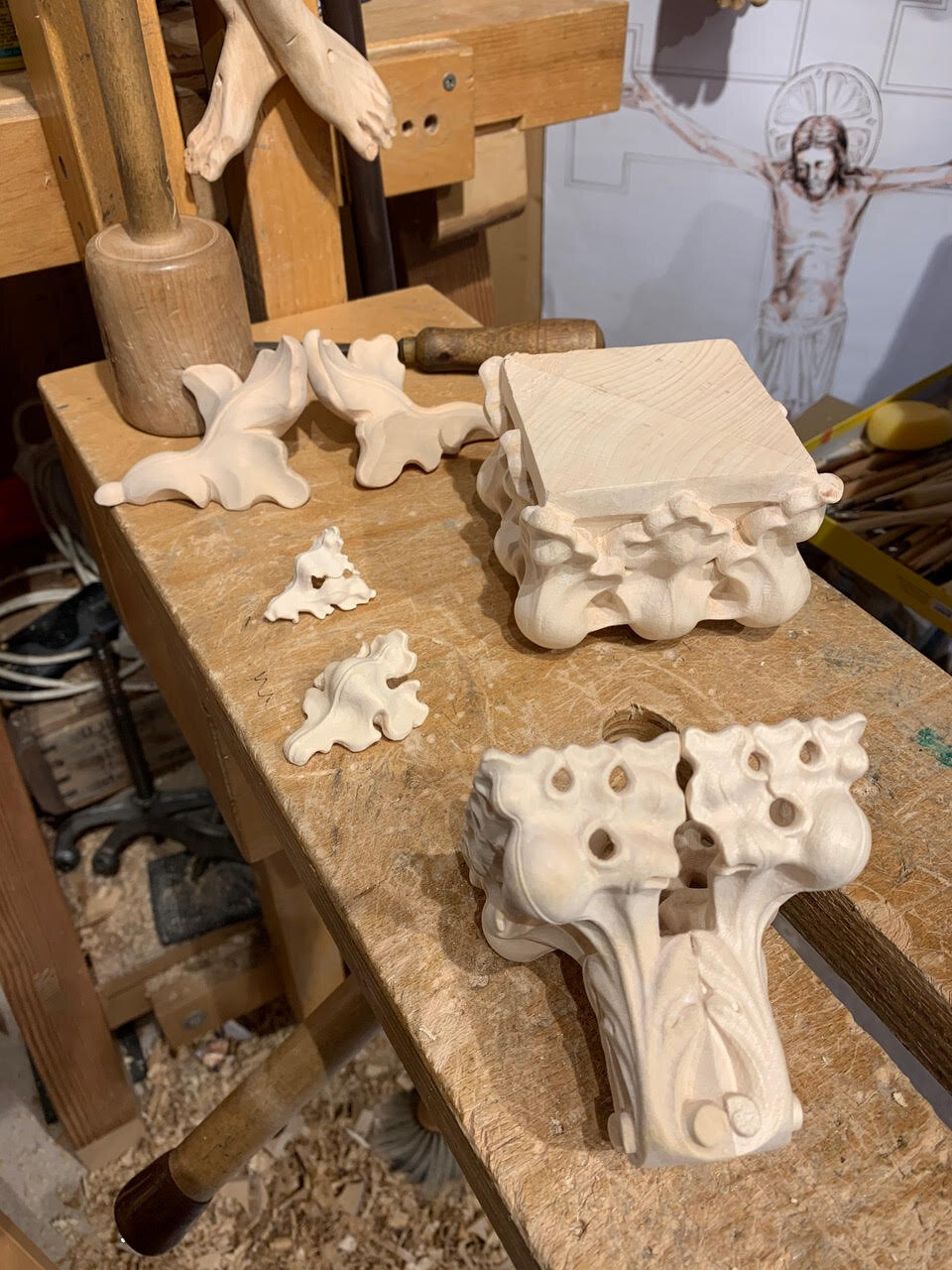
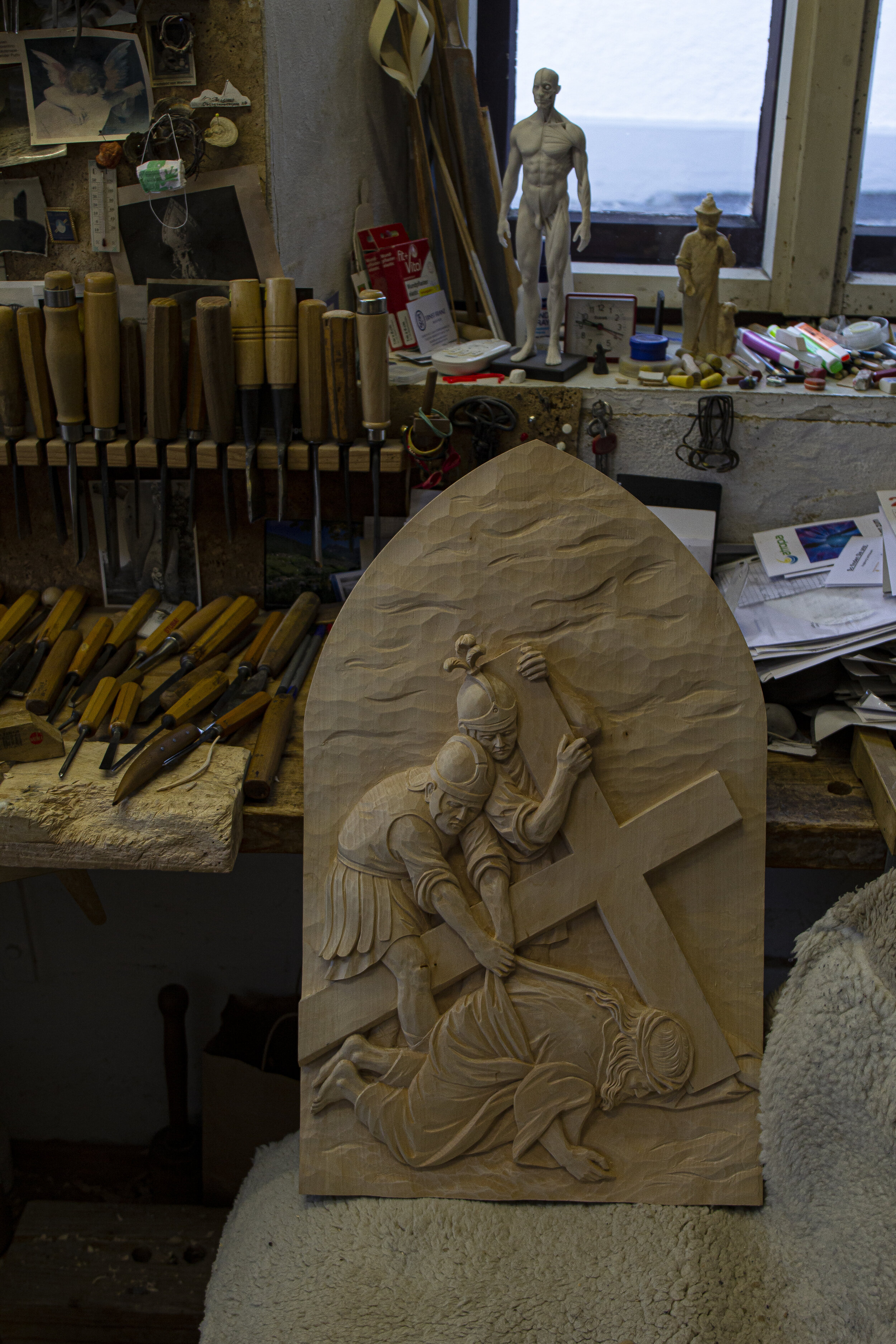
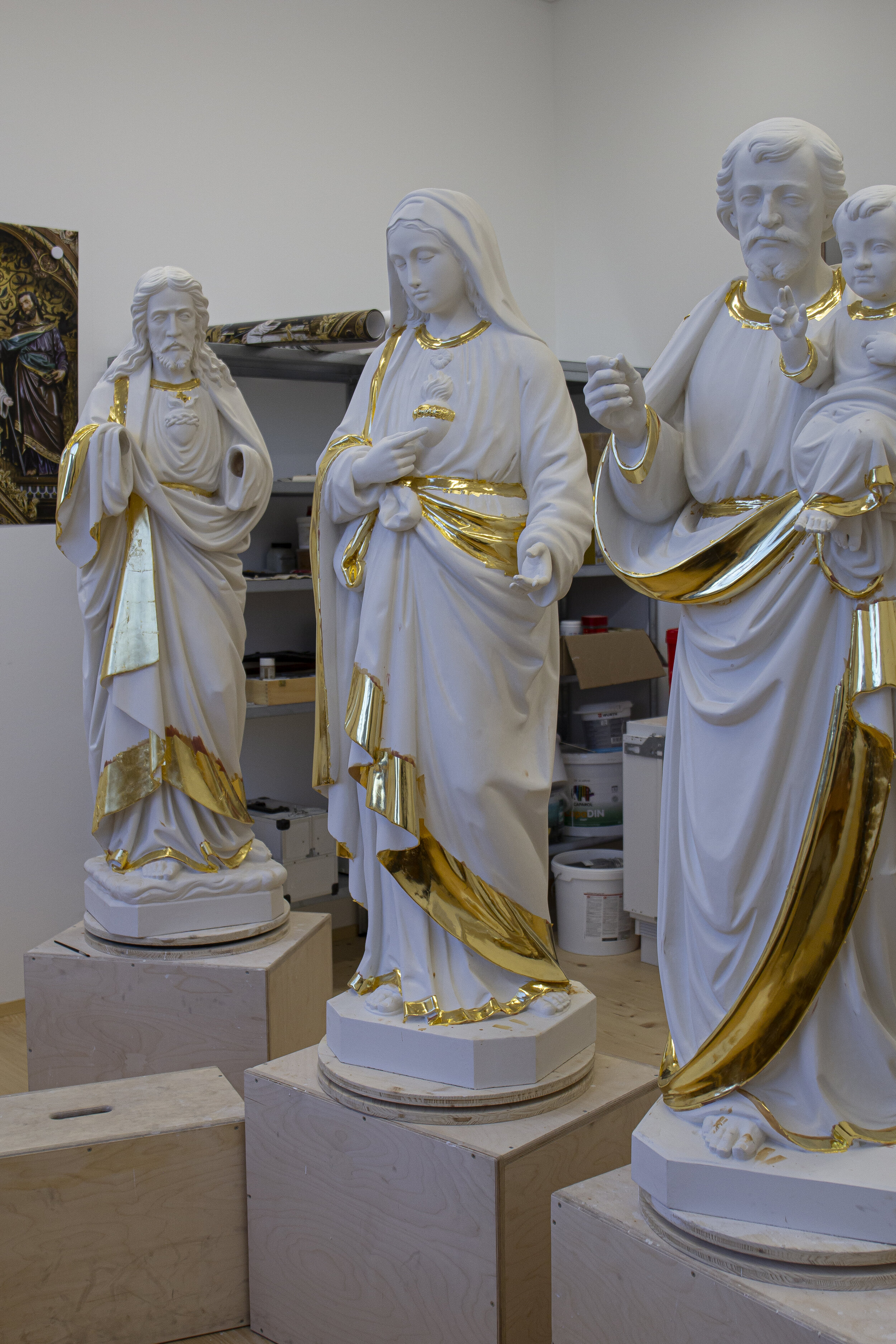
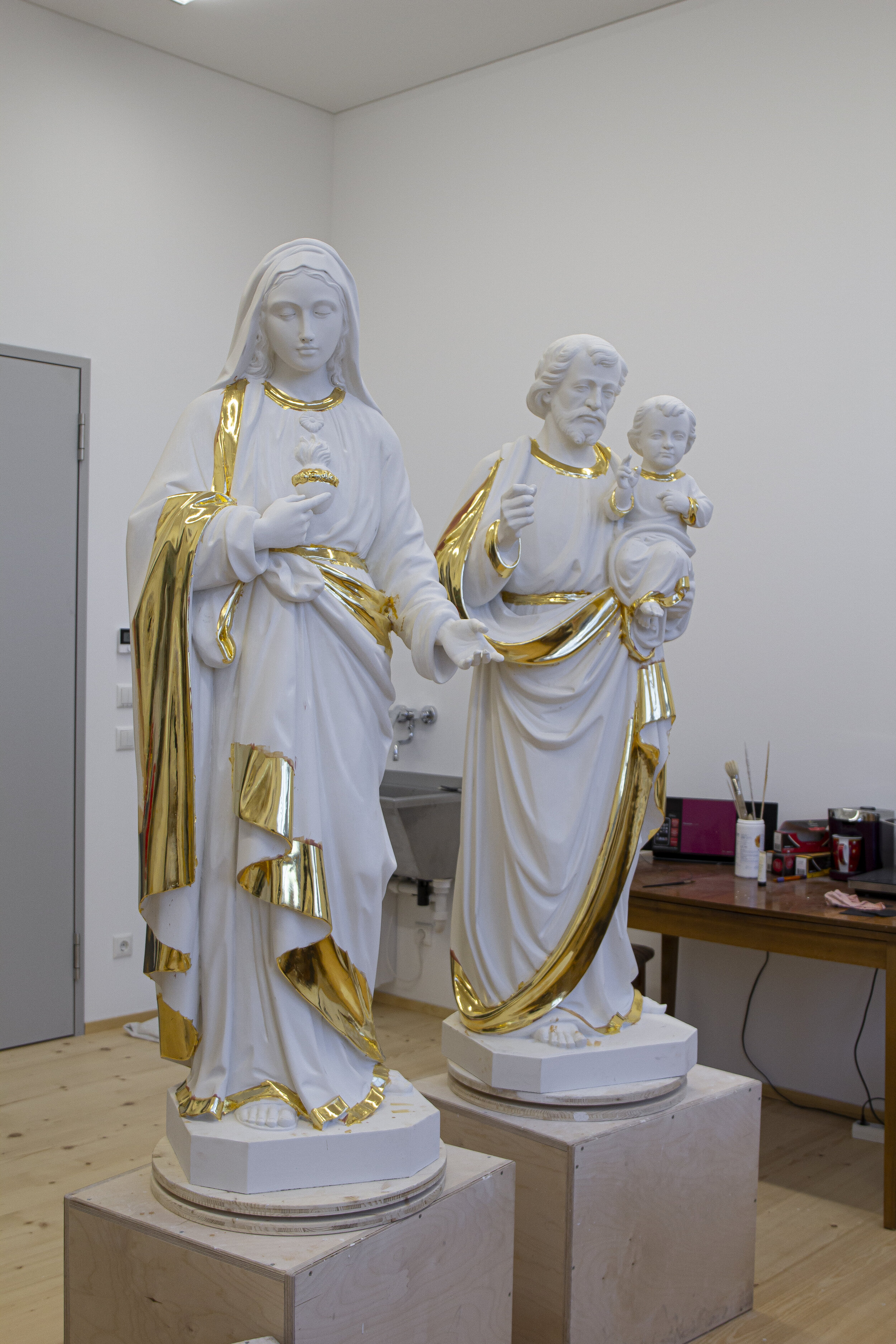
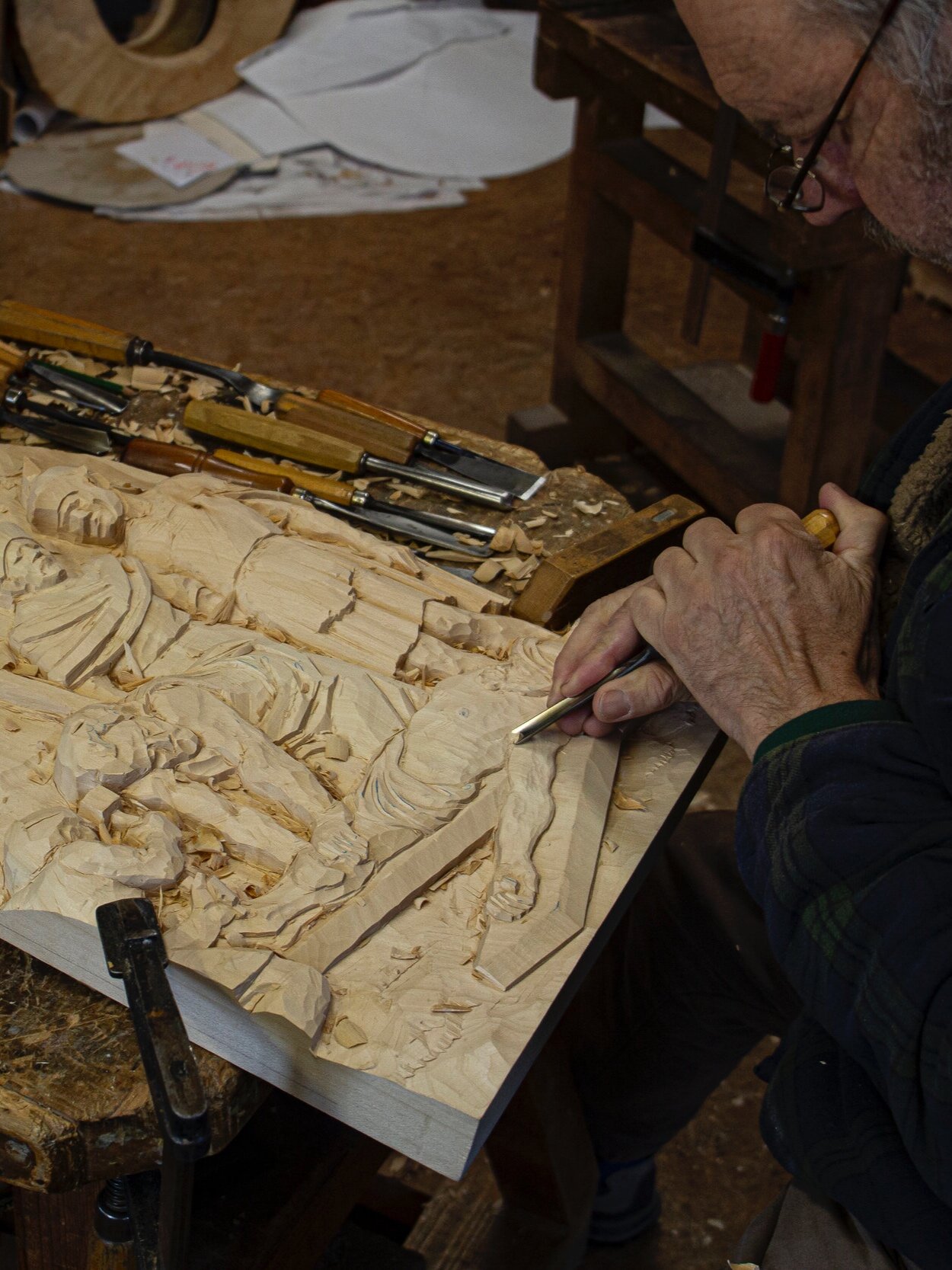
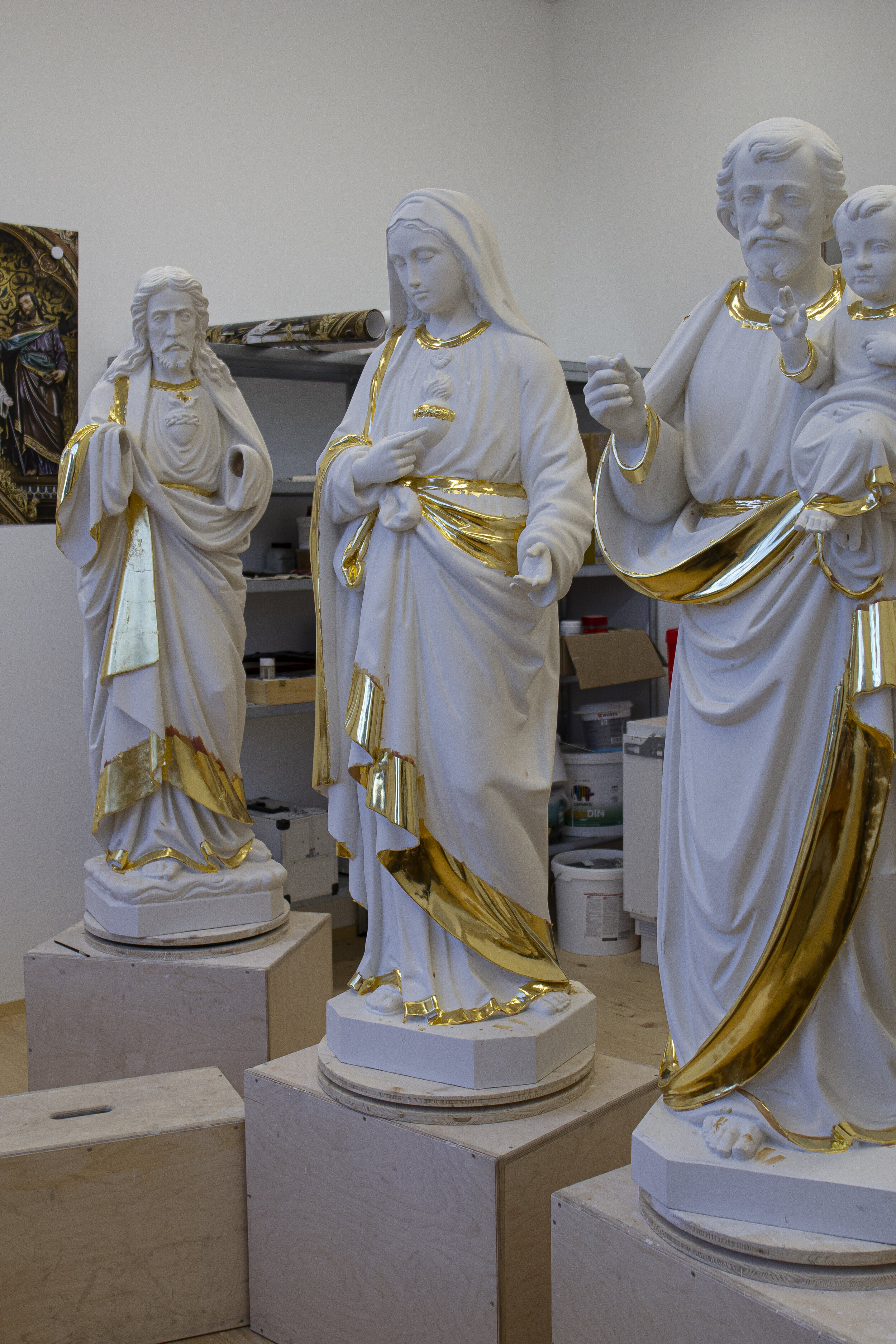
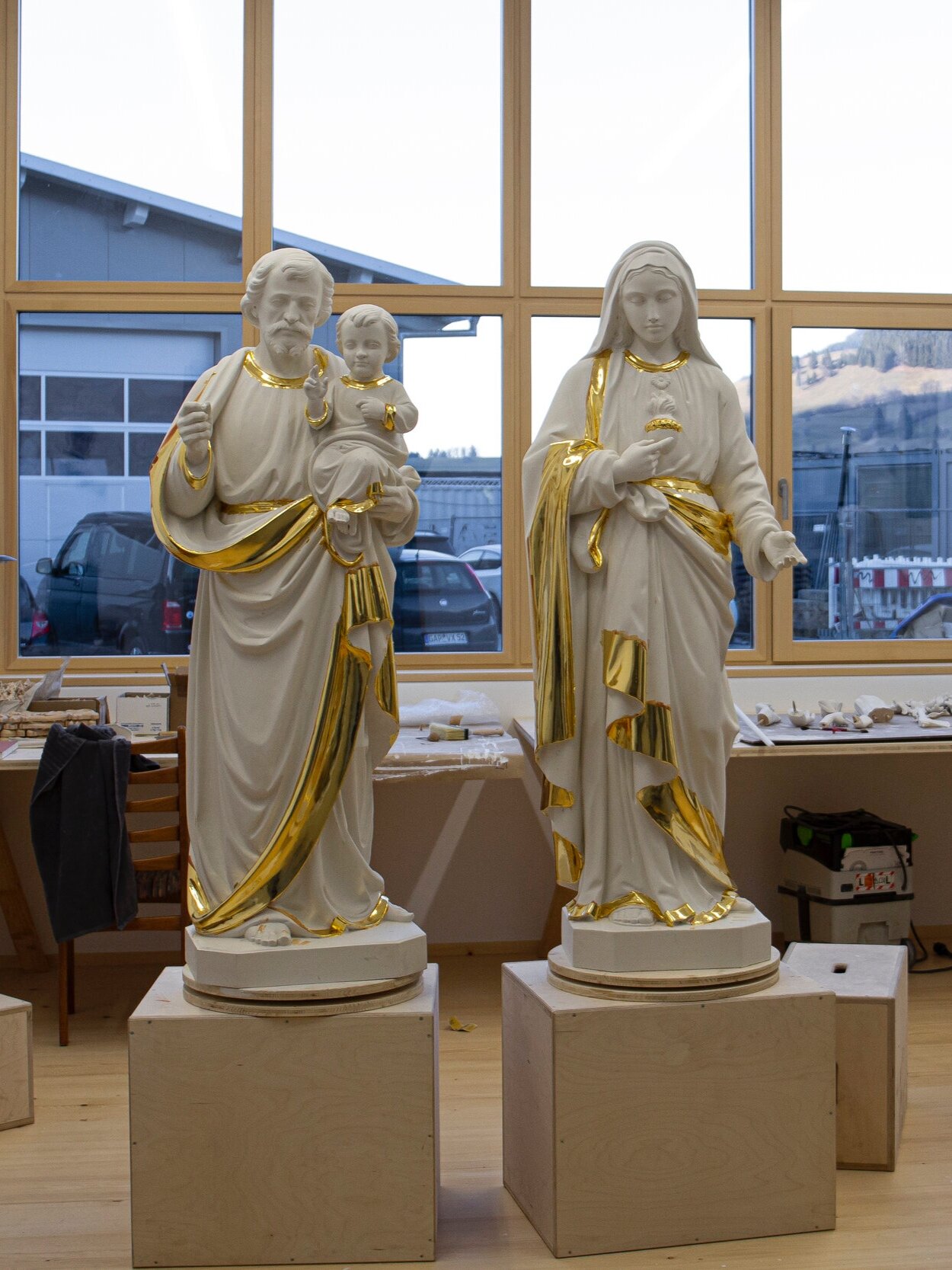
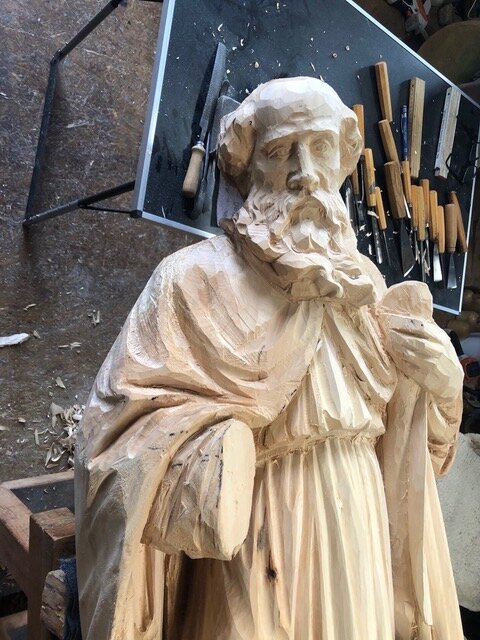
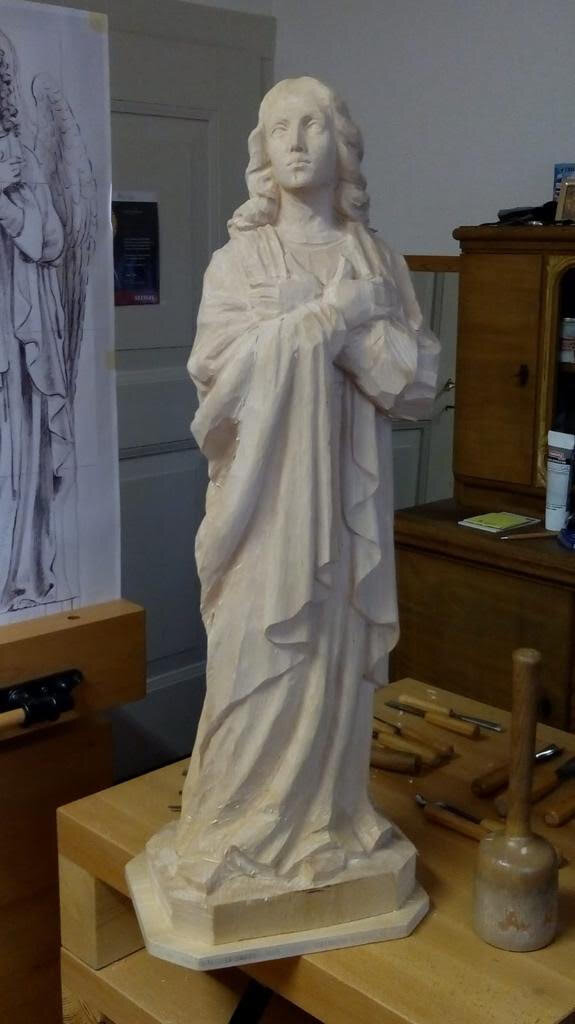
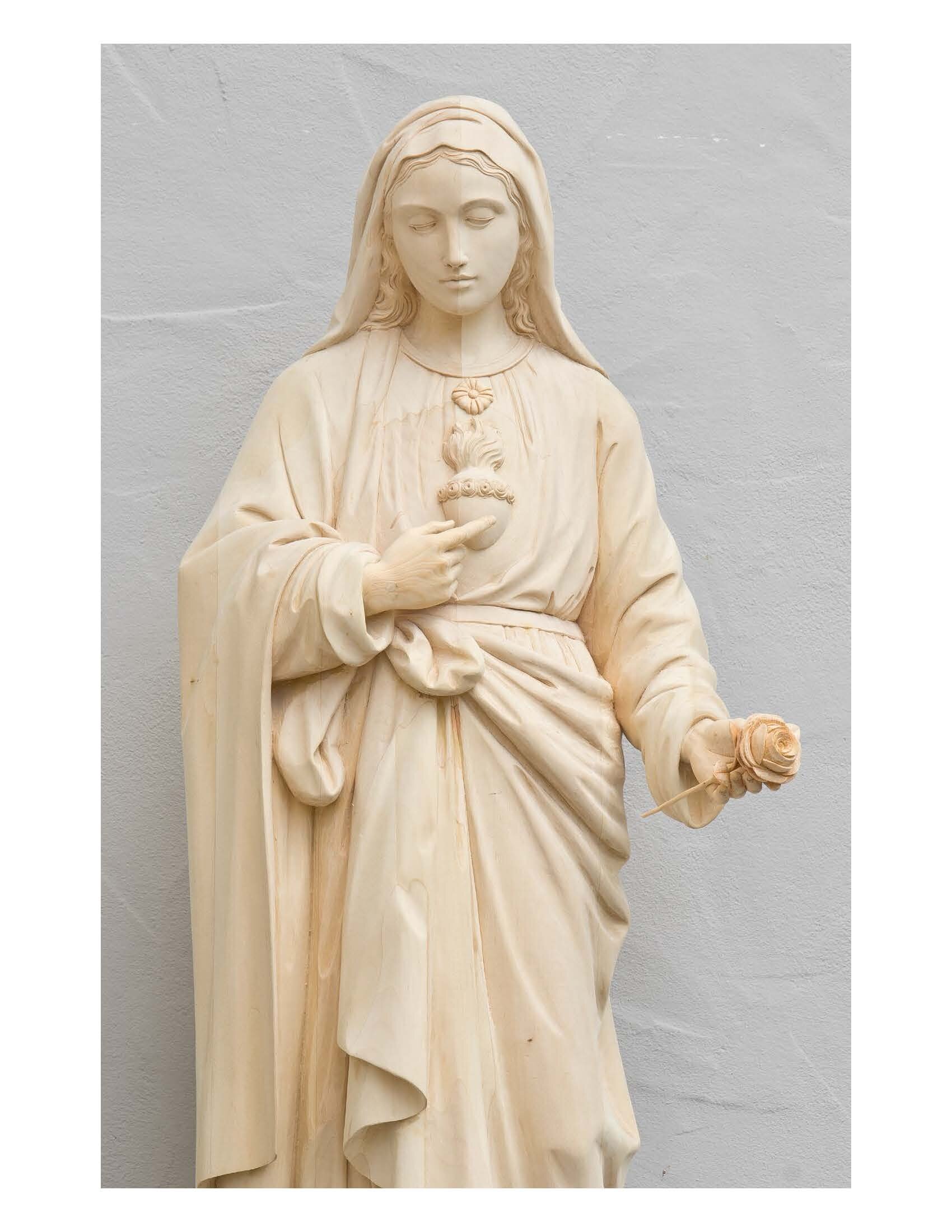
A major part of the loss was the building’s contents, ranging from German hand-carved altars and stations of the cross to Munich stained glass – common elements of churches in German-American settlements, especially in Texas. With 15 generations of German woodcarvers in their patrimony, Albl Oberammergau was the perfect fit to reconstruct the historic furnishings that were lost, while taking the opportunity for collaboration to design custom furnishings (altar of sacrifice, ambo, presidential chair, and font) to match. Albl went one step further, providing a generous offer to replace the previous plaster statuary (some 24 figures in total) with hand-carved, hand-painted, custom wood statues matching the originals from photographs. Below are some progress images from their work, which will draw to a close this fall as items are prepared to be shipped over and stored prior to installation. A special treat for the Christmas season of 2020/2021 was an early deliver of a replacement Nativity scene from Albl’s special collection, which brought joy and excitement for the next stages of the project.
Below are links to photos on the parish’s website, some of which are included in the gallery below. Please consider making a donation to assist with the building fund or contents (furnishings/statuary) here.

Nineteenth Century Alabama Church Undergoing Renovations
Last spring, St. Leo the Great Parish in Demopolis, AL embarked on plans for a full renovation of its small but stately nineteenth century neo-Gothic church
by Mike Tamara

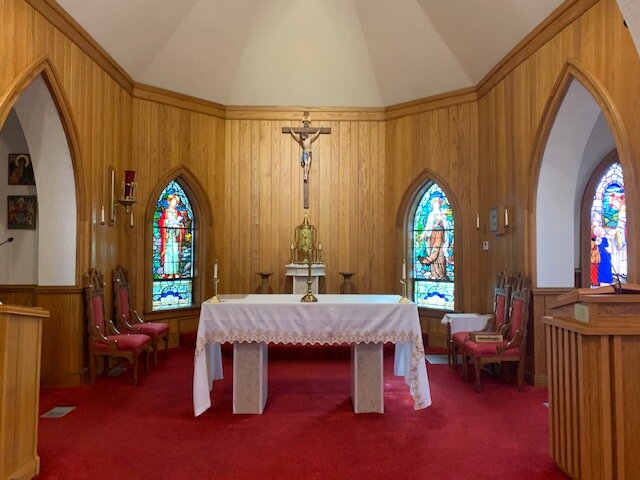
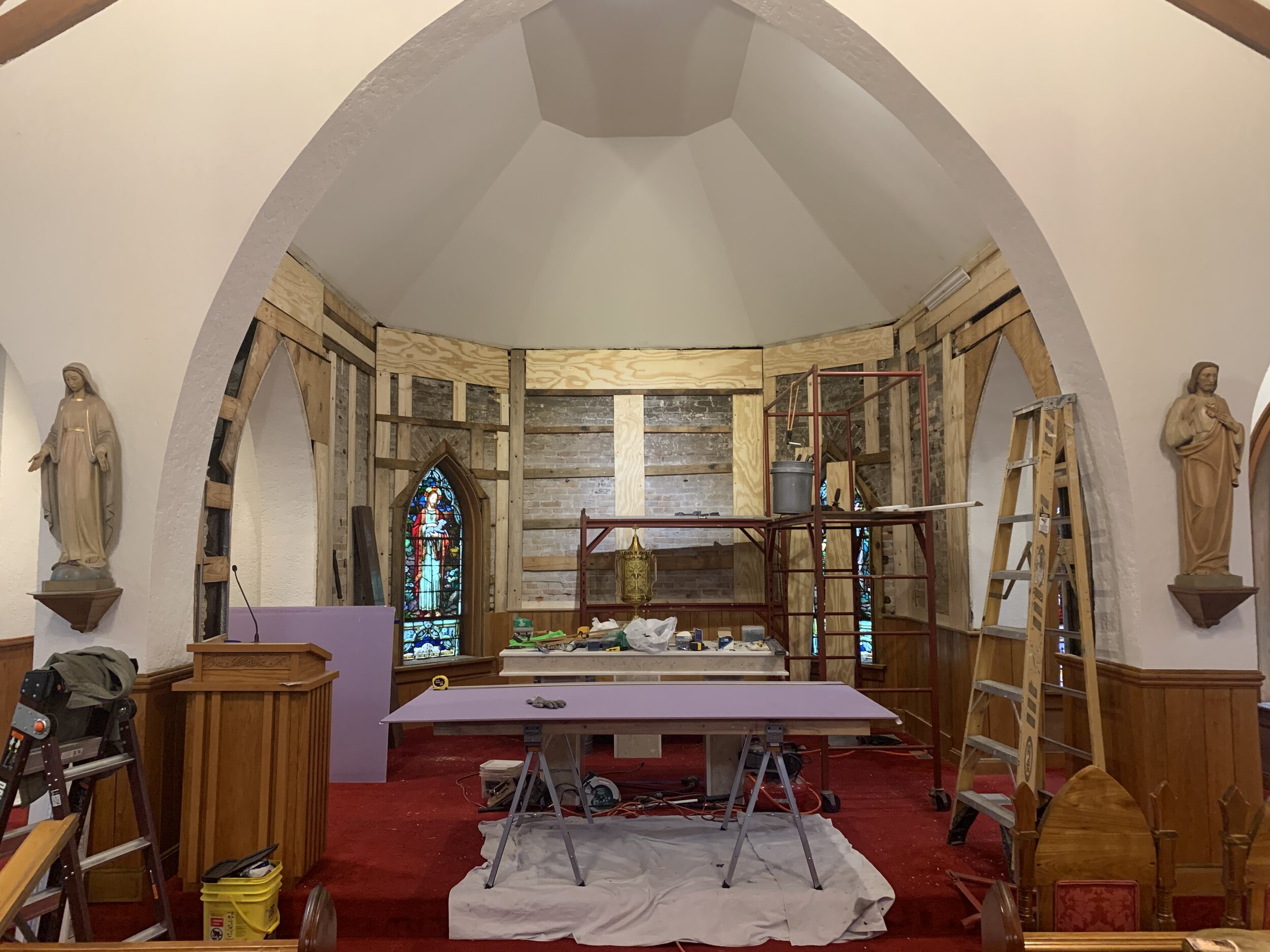
BEFORE

AFTER (Proposed Rendering)
Last spring, St. Leo the Great Parish in Demopolis, AL embarked on plans for a full renovation of its small but stately nineteenth century neo-Gothic church, entrusting Studio io with the design. Under the leadership of the Very Reverend Justin L. Ward, S.T.L., who is both the Parochial Administrator at St. Leo and the Vicar for Sacred Liturgy for the Diocese of Birmingham, a comprehensive interior renovation plan was developed.
Like many older churches, St. Leo had undergone numerous piecemeal alterations, subtractions, and rearrangements throughout the decades of the mid-to-late twentieth century, in addition to surviving a fire that gutted the original sanctuary. The primary goal was to restore a proper reflection of the heavenly realities of the sacred liturgy in the art and architecture of the church, while also accentuating and bringing back much of the Gothic detail that had been lost or obscured. While not a strict historic restoration, the new design is nevertheless heavily informed by the original interior, and indeed will appear that it might have been original.
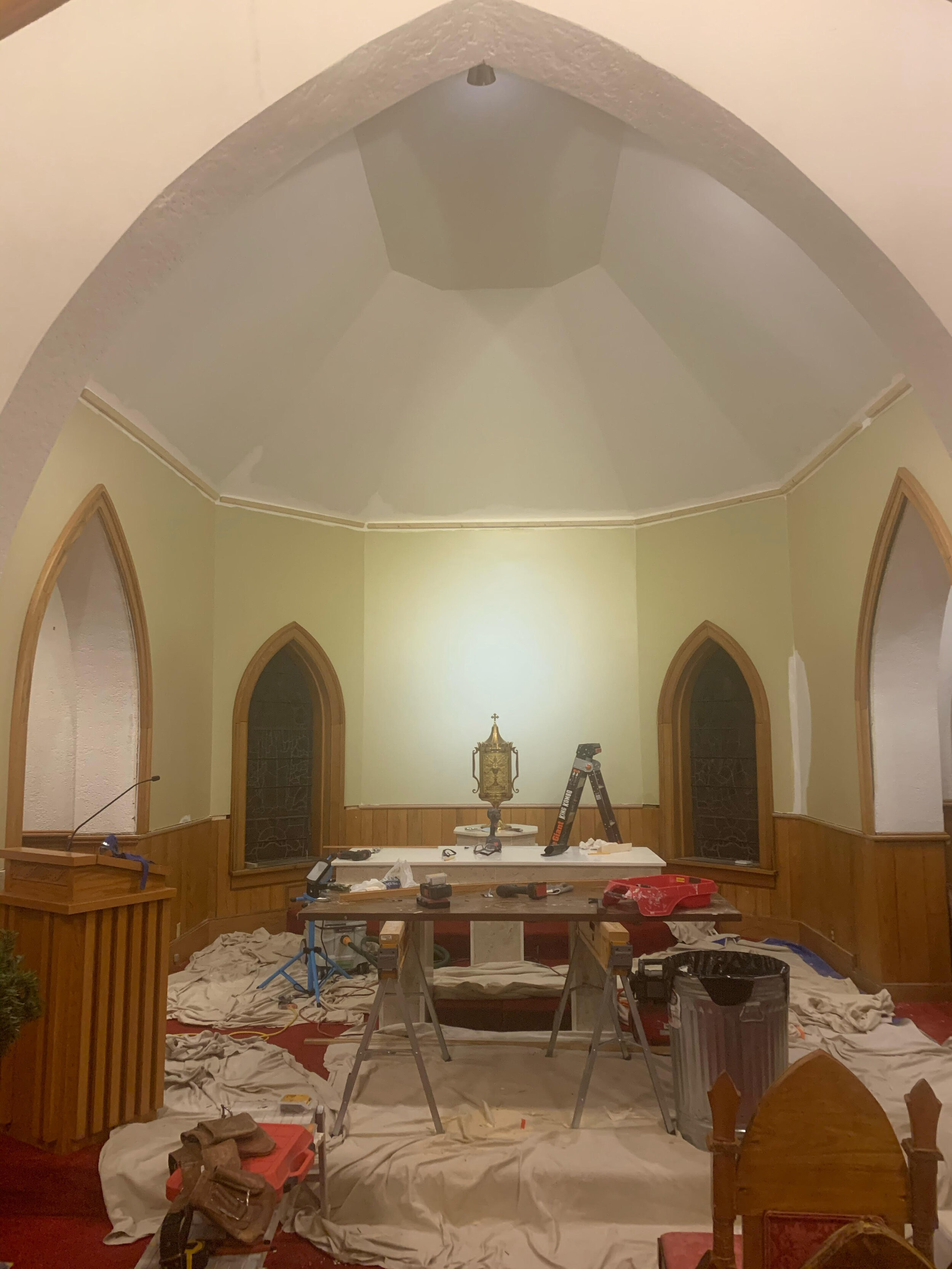
To that end, almost all of the wooden furnishings are being newly crafted by New Holland Church Furniture, with the exception of a vintage baptismal font and an antique reredos donated and refurbished by a parishioner with generational family ties to the parish. The new items include an altar of sacrifice, an elevated chalice-style ambo, a full communion rail with gate, a new confessional, a complete pew replacement, and numerous interior door replacements. Both the new and old are made of quartered white oak, with a distinctive quatrefoil and lancet pattern repeated throughout, and stain variations consistent with those already in the church.
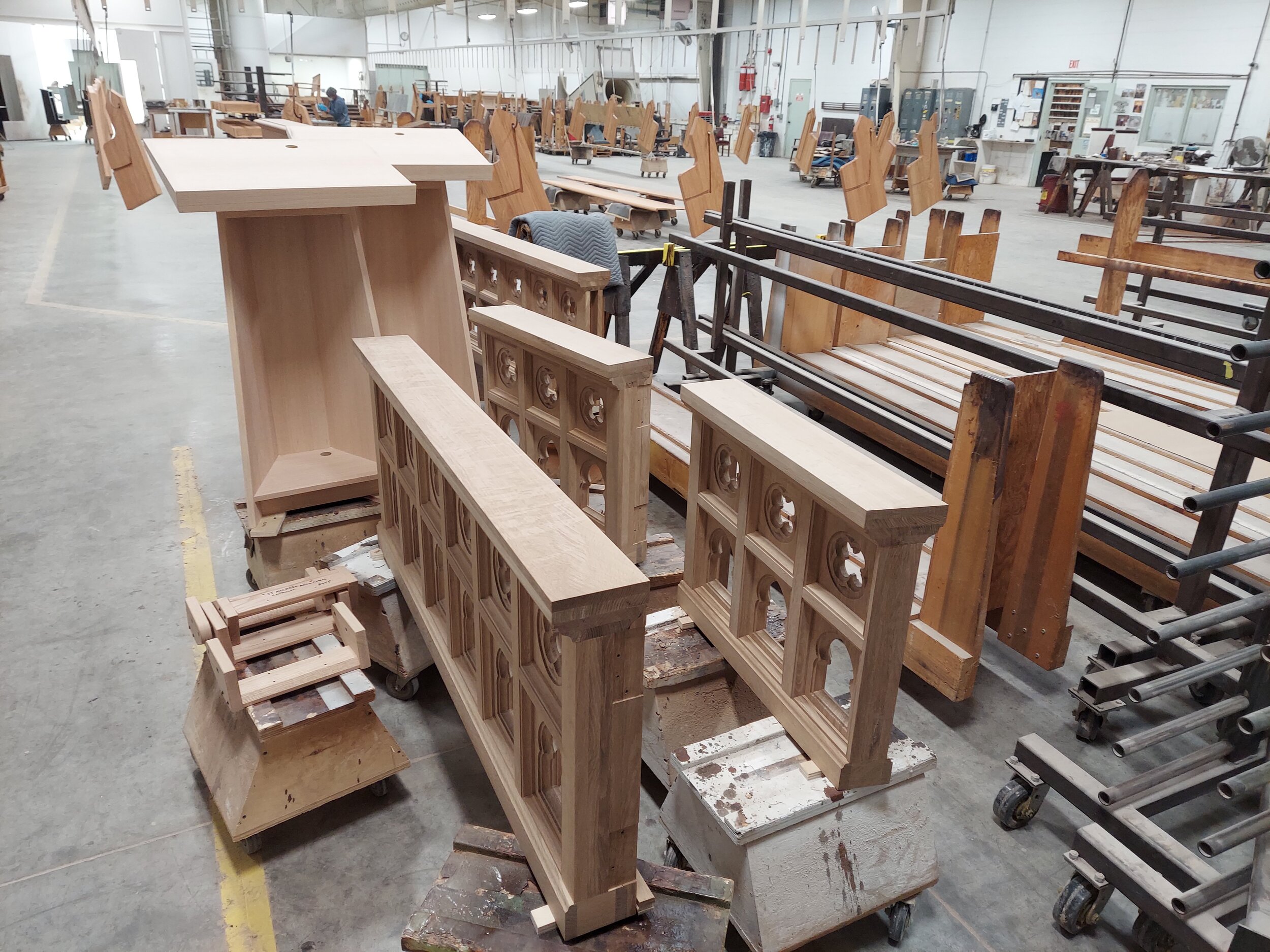
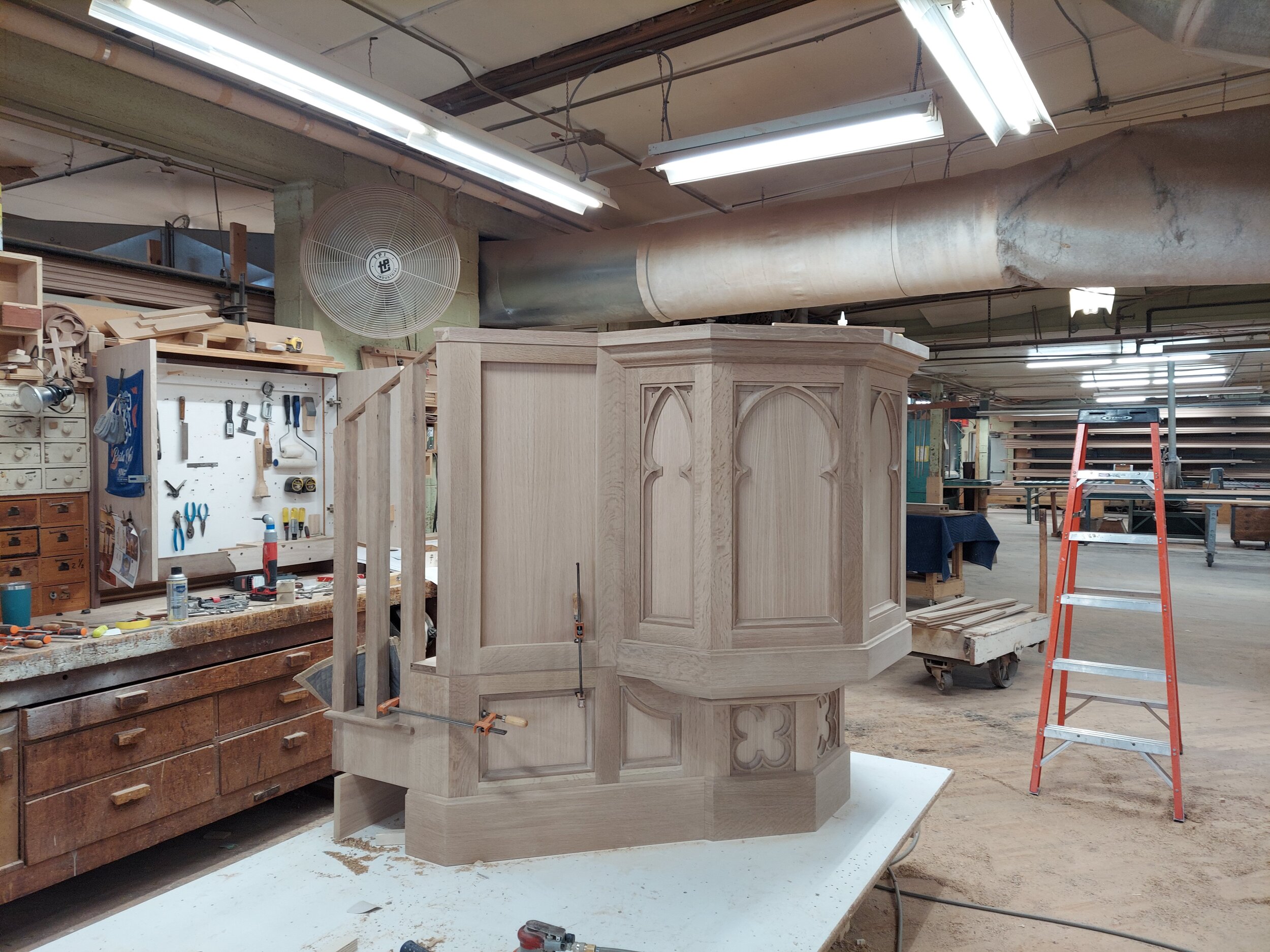
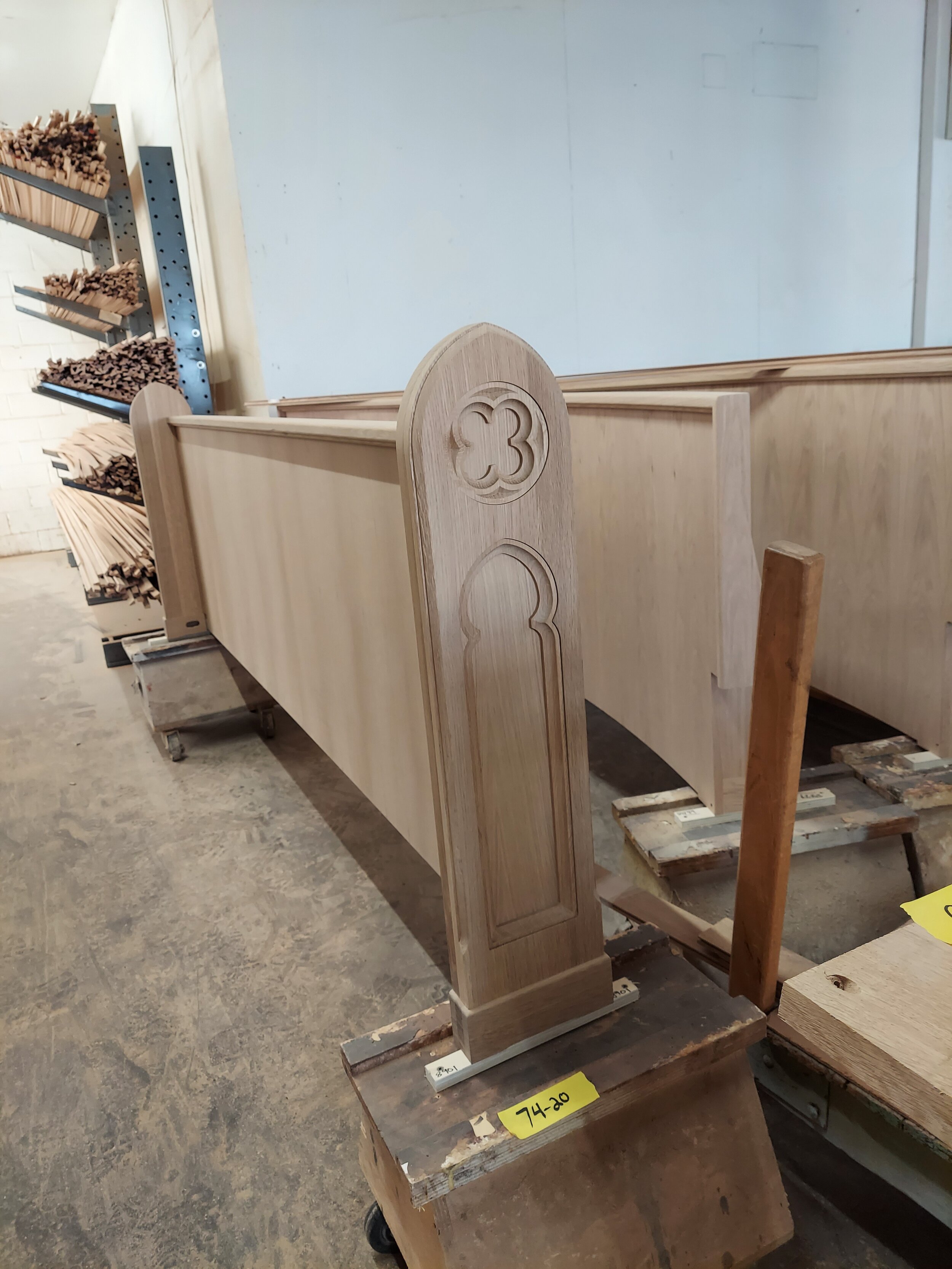
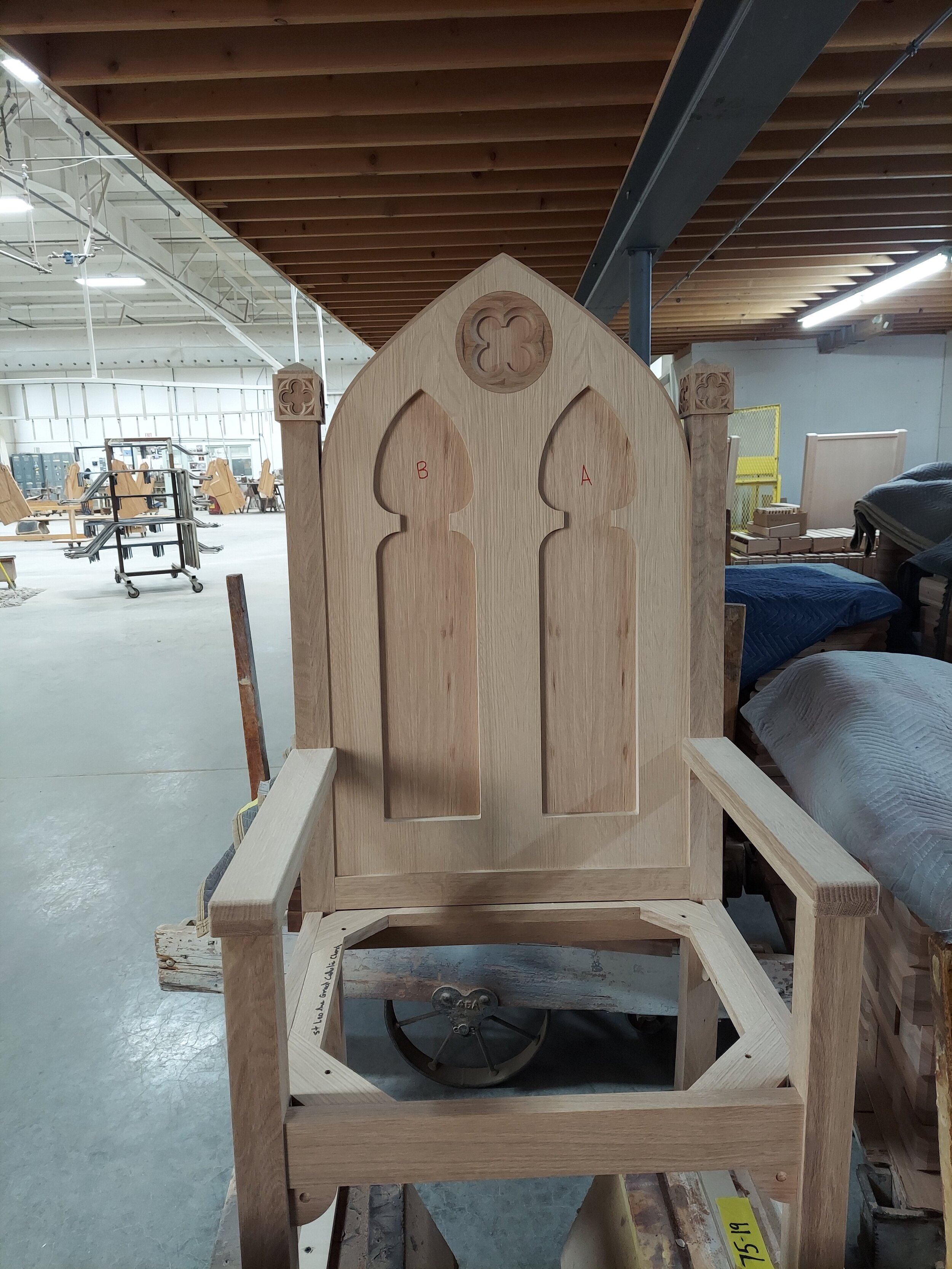
These furnishings will all be unified under foot by the installation of reclaimed heart pine flooring throughout the sanctuary and nave and overhead by a new decorative paint scheme undertaken by Murals by Jericho. The scheme is heavily focused in the vaulted sanctuary ceiling—where the Holy Spirit, depicted in the form of a dove, will be surrounded by a deep blue field studded with gold stars—and flows out more lightly into the nave in the form of a simple organic stencil pattern.
Work is progressing on schedule, and Fr. Ward expects the rededication of the church to take place in March.
2020: Year in Review
Our third complete year of business was one that most of us will not soon forget.
Our third complete year of business was one that most of us will not soon forget. In light of the difficulties, losses, and struggles endured by so many, we once again take the opportunity to reflect on the blessings this year has also brought, and to express our tremendous gratitude for the opportunity to continue to bring beauty to Catholic worship, building up the body of Christ in the world where it is needed most.
While 2019 saw many travels and project completions, 2020 – busy in its own way – has been a year of quiet progress largely made via remote communication and collaboration. Although economic uncertainty and lockdowns took a toll on giving in many parishes and indefinitely halted progress on several projects, we did see some big efforts receive a nod of approval to proceed.


The new church design for St. Mary’s Catholic Center in College Station, TX has been developing for almost a year with our friends at BRW Architects, and the planning is nearing completion with hopes for a potential spring groundbreaking. The 1,500-seat, Neo-Romanesque structure forges strong ties to the history of traditional Texas Catholic architecture, making powerfully present the invisible realities of the liturgy and evangelizing through beauty and a sacramental encounter. We are grateful to St. Mary’s and the Diocese of Austin for their commitment to the exciting vision of this project and reliance on the Lord’s guidance and provision.

Conceptual rendering of the St. Mary’s interior
During the spring, work commenced on a large statuary and furnishings package for Church of the Visitation in Westphalia, TX, an historic church that burned to the ground last summer. Albl Oberammergau is making great progress on a total of 24 hand-carved and painted statues, stations of the cross, and hand-carved reredos and side shrines along with matching principal sanctuary furnishings. Albl also delivered a replacement Nativity just in time for Christmas.
Last spring, St. Leo the Great in Demopolis, AL began planning an interior remodel of their historic church, on which construction began immediately following Thanksgiving. We are partnered with Murals by Jericho and New Holland Furnishings on the exciting renovation, with an expected mid-March re-dedication.

Conceptual Rendering of St. Leo the Great


Conceptual design for the new seminary chapel
In the midwest, multiple new projects also came online this year. St. John Vianney College Seminary in St. Paul, MN asked us to partner with local architect Finn Daniels to reimagine a chapel and residence addition initially conceived a few years prior. The chapel will seat around 200 people and provide accommodation for daily devotional prayer and Liturgy of the Hours. The building addition is designed in a Beaux-Arts revival style to complement the surrounding university campus buildings and other significant historic Catholic architecture in the Twin Cities. Exterior mosaic installations are planned to address a new monumental public entrance and adjacent major traffic and pedestrian thoroughfares.
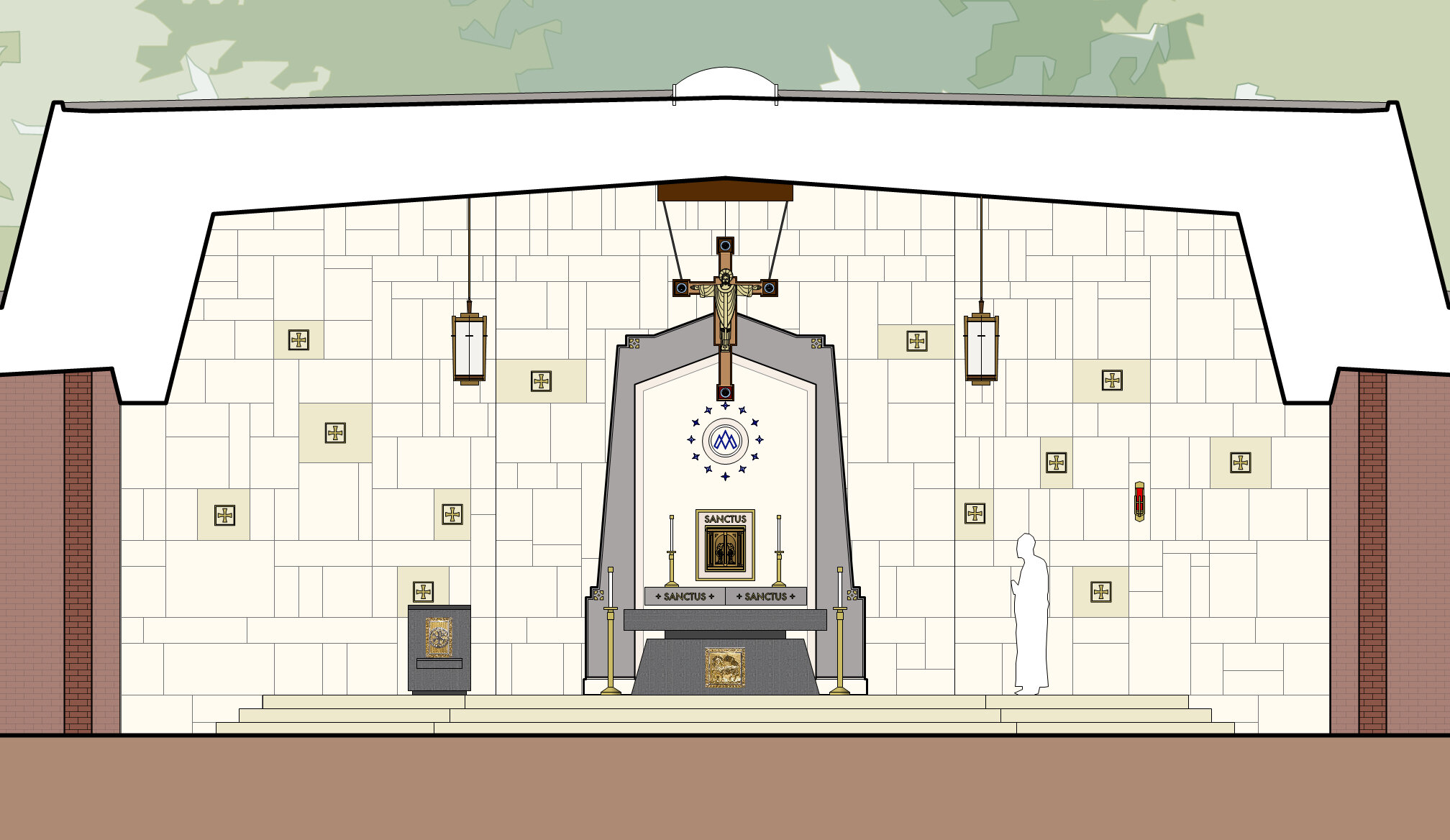
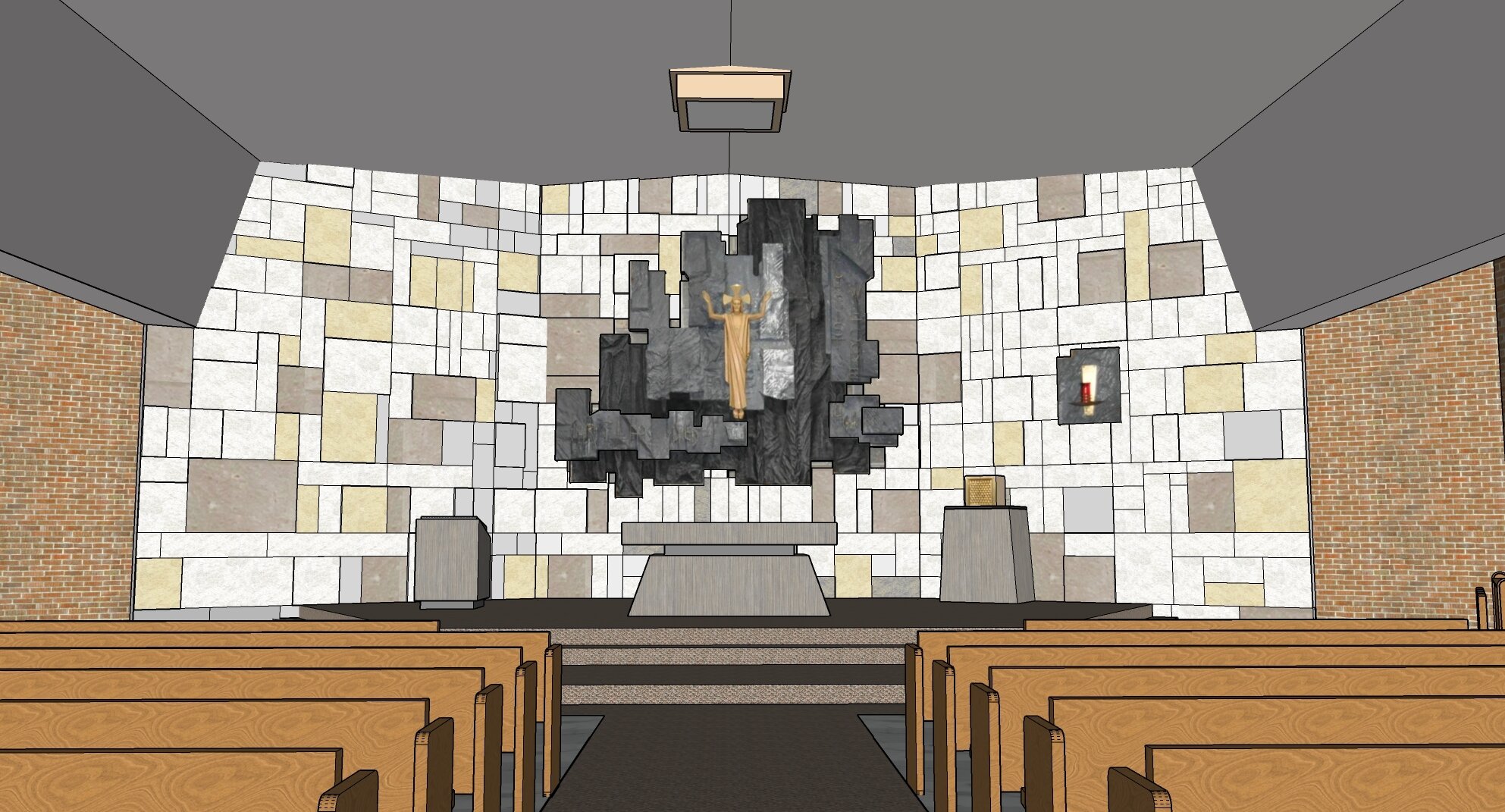
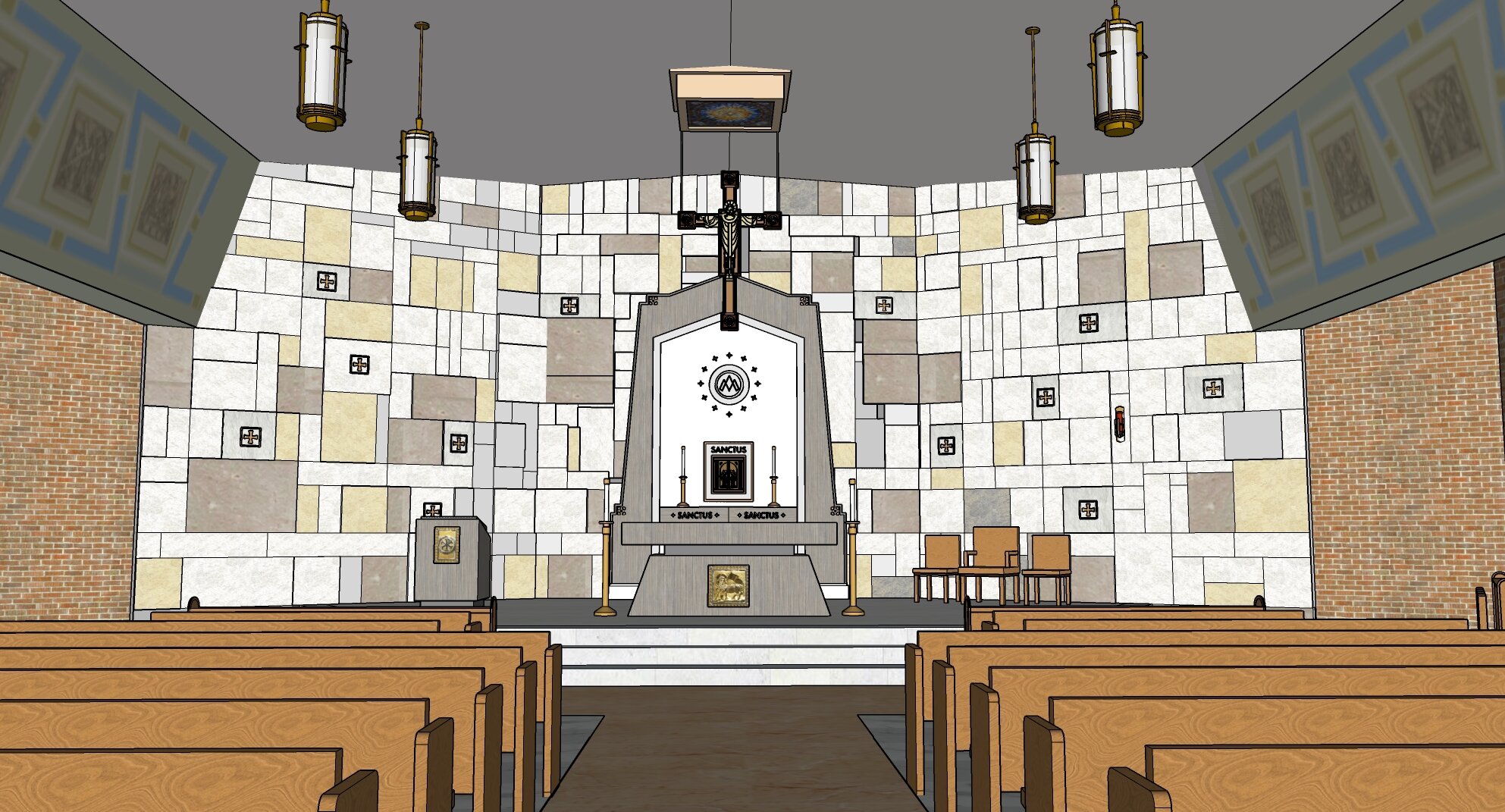
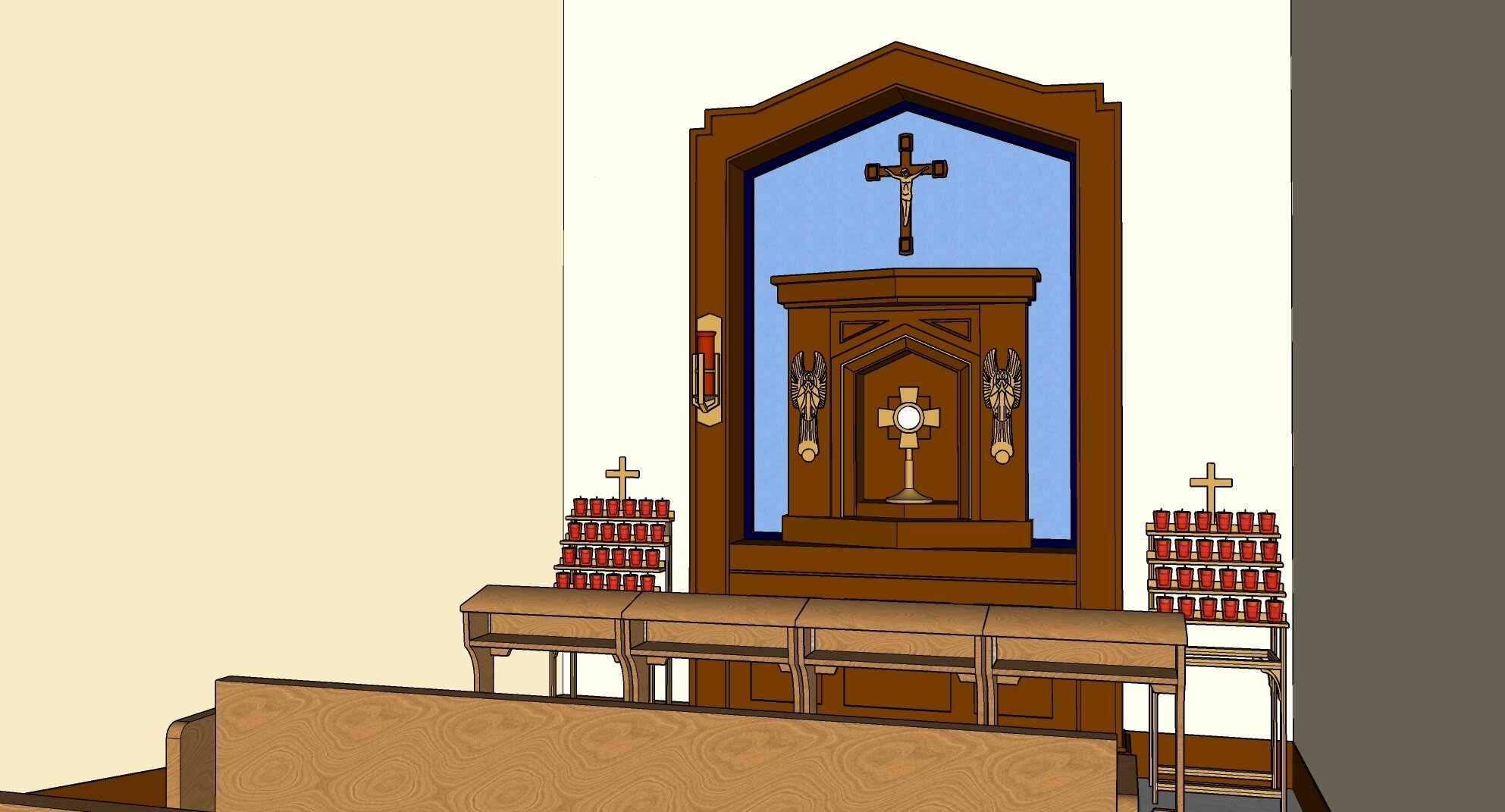
Holy Rosary Catholic Church in Medford, WI undertook planning for several campus projects, the centerpiece of which will be an interior renovation of the 1960s church. The focus will primarily result in a beautified and re-shaped sanctuary, including a new period-sensitive, mid-century-inspired reredos with central tabernacle, suspended crucifix below an existing skylight with new stained glass insert. Additional project components include new ecclesiastical pendant lighting, decorative paint featuring the mysteries of the Rosary, new reservation chapel for Eucharistic Exposition, and renovated narthex to add devotional elements, enhance the baptistry, and improve use by families with young children.

Michael and Hannah following their engagement
Michael Raia and his fiancée Hannah got engaged over the summer and, God-willing, will be married at St. Mary’s Cathedral in Austin in September. The two were busy during the second half of the year with wedding planning and sending out Save the Dates before the end of the year – difficult tasks with the uncertainties surrounding the pandemic! Nonetheless, all planning at this time is a wonderful opportunity to trust in the Lord’s timing and provision, and the coming months also offer time to prepare for the grace of the sacrament of matrimony.
Michael and Hannah were able to attend a beautiful marriage preparation retreat with the JPII Healing Center in the fall, and spent the Advent and Christmas seasons in prayerful preparation for the coming months and the joy of the holy union to come. They are deeply grateful for the loving support of their family and friends!
Michael continues his post-graduate studies in Sacred Arts and had the opportunity for two graduate-level guest lectures: St. Joseph’s College in Maine hosted an online Q&A for their MA in Theology students regarding liturgy and sacred architecture, and shortly thereafter, he presented on liturgy to MA in Sacred Music students at the University of St. Thomas in Houston. Both courses are being taught by good friends from his time at the Liturgical Institute, Brandon Harvey and Alexis Kutarna.

Katie Torvinen and boyfriend Jerome
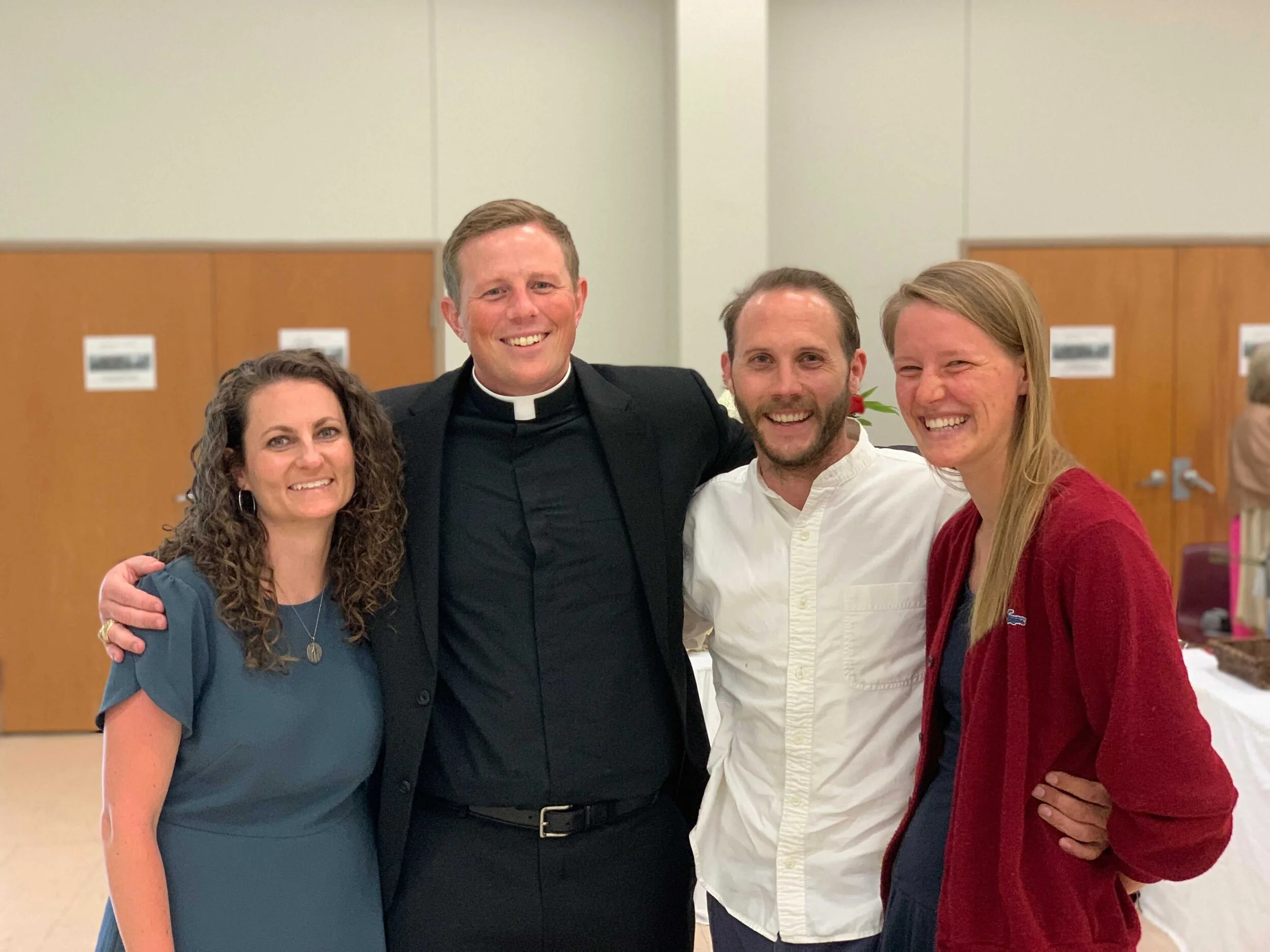
In May, Katie Torvinen traveled to Austin for the ordination of Deacon Callan Sweeney to the transitional diaconate for the Diocese of Austin and the Archdiocese for Military Services, joined by mutual friends who were married later in the year. Deacon Callan attended the youth ministry at Emmaus Catholic Parish in Lakeway, TX, where Michael served on staff and volunteered for many years, and the two remained in touch during Callan’s college years. Following a three-year waiting period to begin seminary while in the military, he finally began his formation for the priesthood. During a Confirmation retreat for Emmaus where the two were speaking to the students, they discussed Studio io, and it was then that Callan brought up Katie’s name as a potential team member – the rest is history. Thank you, Holy Spirit, for the gift of these wonderful connections in Christ! We continue to pray for Deacon Callan as he prepares for his priestly ordination in a few months.

Katie and Deacon Callan Sweeney with mutual friends following the ordination.
Mike Tamara and his wife Lauren and their three children moved into a beautiful new home in upstate New Jersey and welcomed their new dog Cooper to the family as well. A basement finish-out afforded Mike the space for a comfortable new office, which came at a great time given the amount of remote work (and at-home schooling) that was done this year!
Mike’s wife Lauren recently began a new job as Project Hope Clinical Team Leader for an agency called Access: Supports for Living, serving residents of Orange County, NY. She uses her background in bereavement counseling to help those affected by the pandemic and its ongoing effects, including those who have had Covid-19 themselves, lost loved ones or friends to the virus, or have been otherwise psychologically, spiritually, and/or economically impacted in adverse ways by the sociopolitical response.

Mike’s new home, ready for Christmas season

Cooper’s first encounter with snow.
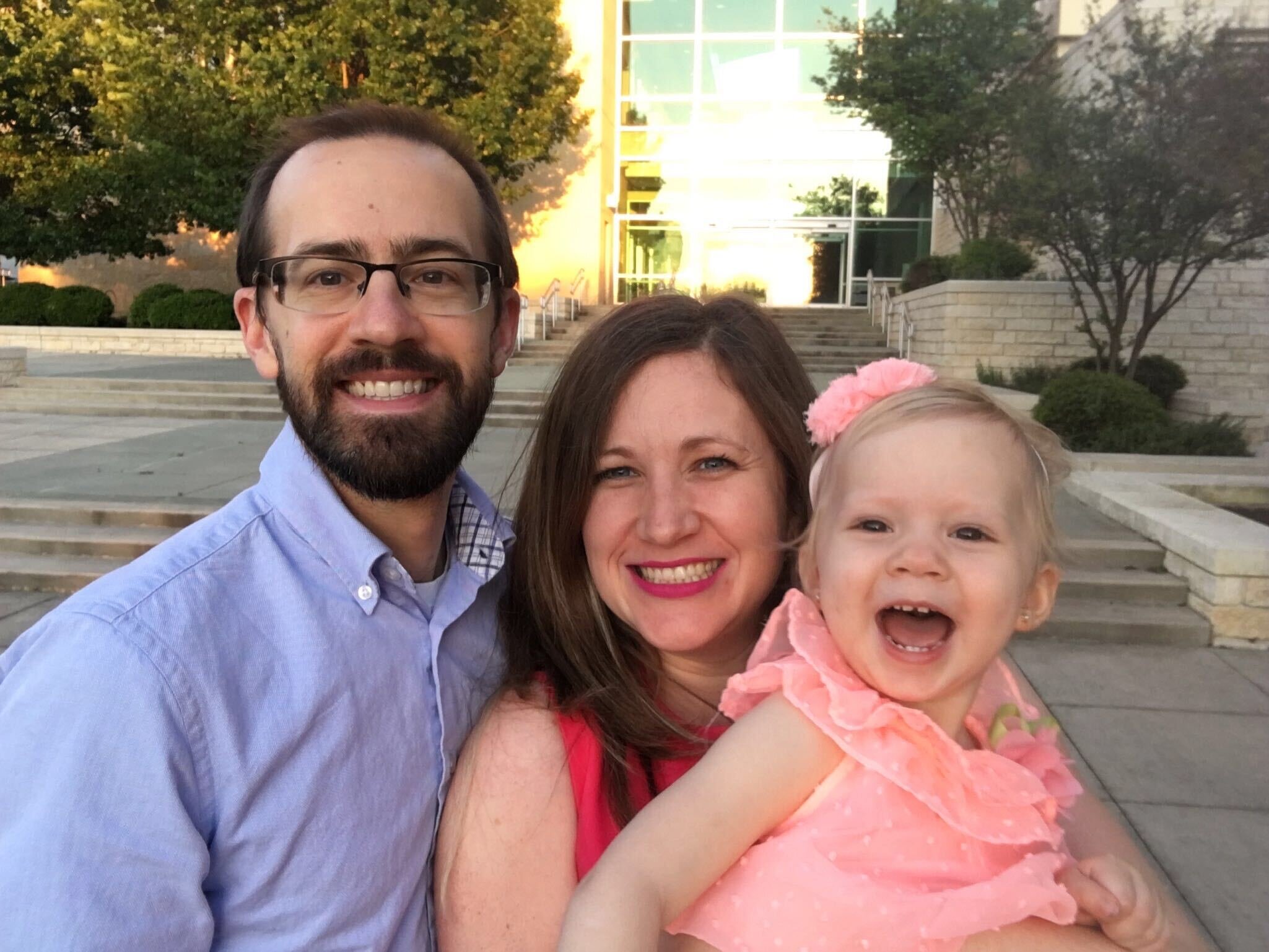
Elsa, Jeremy, and Natalia on Easter Sunday
Elsa Kosegarten and her husband Jeremy celebrated their daughter Natalia’s second birthday. They will be preparing to leave Texas later this year to move to Kansas, where Jeremy will be starting a new position as Assistant Professor of Biology at Benedictine College in Atchison. We are very grateful to Elsa for her valuable contributions to our team this year, juggling full-time mom duties.
Several exciting new projects are lining up for 2021 that are sure to bring us the blessing of more professional and personal growth as we strive to bring beauty to these bright spots in the Church amidst some very challenging times. Please join us in prayer for the Church and for all of these parishes, dioceses, priests, and bishops represented by our work. We also greatly appreciate your prayers for us, that we may continue to be formed and transformed as we strive to remain docile to the will of the Father and the work of the Holy Spirit in the Body of Christ.
Thank you for your enthusiasm for our mission and our work – our clients have sacrificed a great deal to undertake the difficult work of renewal by investing in beauty and formation. We pray that it may enrich all sacramental life and ministerial work, and that it may inspire each person who is affected by the work we do to be a faithful disciple and servant of Jesus Christ.

The Holy Name of Jesus
The proper reverence due the name of Jesus is something that that’s grown increasingly noticeable given the cultural dissonance from surging media consumption.
by Michael Raia
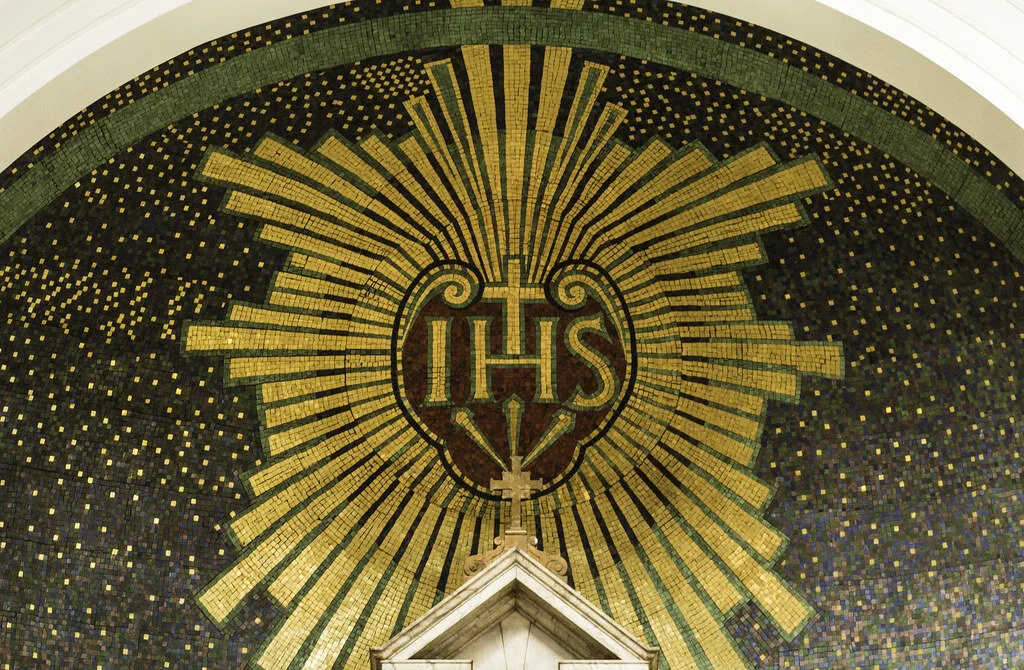
Photo Credit: Lawrence OP, High Altar of St. Aloysius, Glasgow
Lord, may we who honor the holy name of Jesus enjoy his friendship in this life and be filled with eternal joy in the kingdom where he lives and reigns for ever and ever. Amen.
(Litany of the Holy Name of Jesus)
This year the Feast of the Holy Name of Jesus fell on a Sunday, so many of us might have missed it. The proper reverence due the name of Jesus is something that that’s grown increasingly noticeable given the cultural dissonance that, at least to me, has become especially poignant with this past year’s surging media consumption. It’s an odd situation, given the equal surge of political correctness and avoiding offense – it seems the perfect time for Christians to reflect on the dignity of this sacred name and begin to rebuild the culture around reverencing it – beginning with our own personal prayer and corporate worship.
Many priests and some lay faithful and religious will know that the General Instruction of the Roman Missal directs the posture of liturgical worship, including a bow of the head in particular places. These include any mention of the name of Jesus, the persons of the Holy Trinity, the Blessed Virgin Mary, or the saint of the feast day being celebrated. In particular, this reverence shown to the Holy Name of Jesus is of great importance:
275: A bow signifies reverence and honor shown to the persons themselves or to the signs that represent them. There are two kinds of bows: a bow of the head and a bow of the body.
A bow of the head is made when the three Divine Persons are named together and at the names of Jesus, of the Blessed Virgin Mary, and of the Saint in whose honor Mass is being celebrated.
A bow of the body, that is to say a profound bow, is made to the altar; during the prayers Munda cor meum (Almighty God, cleanse my heart) and In spiritu humilitatis (Lord God, we ask you to receive); in the Creed at the words Et incarnatus est (by the power of the Holy Spirit . . . and became man); in the Roman Canon at the words Supplices te rogamus (Almighty God, we pray that your angel). The same kind of bow is made by the deacon when he asks for a blessing before the proclamation of the Gospel. In addition, the priest bows slightly as he speaks the words of the Lord at the consecration.
When I first came upon this directive and began observing the practice during Mass and the Liturgy of the Hours, observance felt an arduous task and admittedly seemed forced and overly mechanical. Not unlike many other new practices we might incorporate at this point in our lives, changing muscle memory for a seasoned adult Catholic can be a challenge. Case in point: the re-translation of the Mass in 2011 left many of us stumbling through previously rote prayers, which at the same time made a smooth celebration of the Mass more of a challenge and also offered a rich opportunity to think more deliberately through aspects of our worship and perhaps glean new insights and a deeper entrance into the Paschal mystery of Christ at the very heart of the liturgy.
Indeed, I have found that a prayerful posture is not only helpful, but almost essential for me personally to filter out the various distractions at any Mass to pray in a deliberate way at key times, particularly the Collect, the Universal Prayer or Prayers of the Faithful (Intentions), Preface to the Eucharistic Prayer, and Prayer after Communion. These prayers in particular are not static like most other portions of the Mass, so they are more easily missed, at least for me, if focus is not directed with greater effort. For more reading on the interior and exterior aspects of liturgical worship, see this prior post on the external dimension of posture and this one on the interior dimension of lifting one’s heart, or offering one’s self as a victim with Christ on the altar.
As this habit of head bows became more comfortable for me over many months and even years, two things happened: Not only was the richness of my participation in liturgical prayer deeper due to a greater ability to filter out surrounding distractions (still a mightily difficult task, to be sure!) and catch more of the proper prayers of the Mass (those previously mentioned which are typically specific to the day and/or liturgical season), but I also realize how frequently our culture abuses the Holy Name of Jesus. Clearly blasphemy and using the Lord’s name in vain are sins to be avoided, but in the positive sense, nurturing a true love and honor for this name is a worthy effort, and one that is sorely needed.
As we foster a greater devotion to the Holy Name, we become increasingly aware of its power – the power of the Word made Flesh, who has a name and a face: Jesus Christ. This name has the power to save, the power to heal, the power to make demons flee. It is little to ask a nod of the head for this most awesome form of speech in awareness of how often we use it casually, but what an even greater gift is the reminder of how powerful this name can be for us:
“God greatly exalted him and bestowed on him the name that is above every name, that at the name of Jesus every knee should bend, of those in heaven and on earth and under the earth, and every tongue confess that Jesus Christ is Lord, to the glory of God the Father.”
The Roman Catholic Church ordinarily celebrates the Feast of the Holy Name of Jesus on January 3.

Westphalia Prepares for Rebuilt Church
On Wednesday, September 9, Bishop Joe S. Vásquez blessed the site that will soon house a new church to replace one that burned down just a year prior.
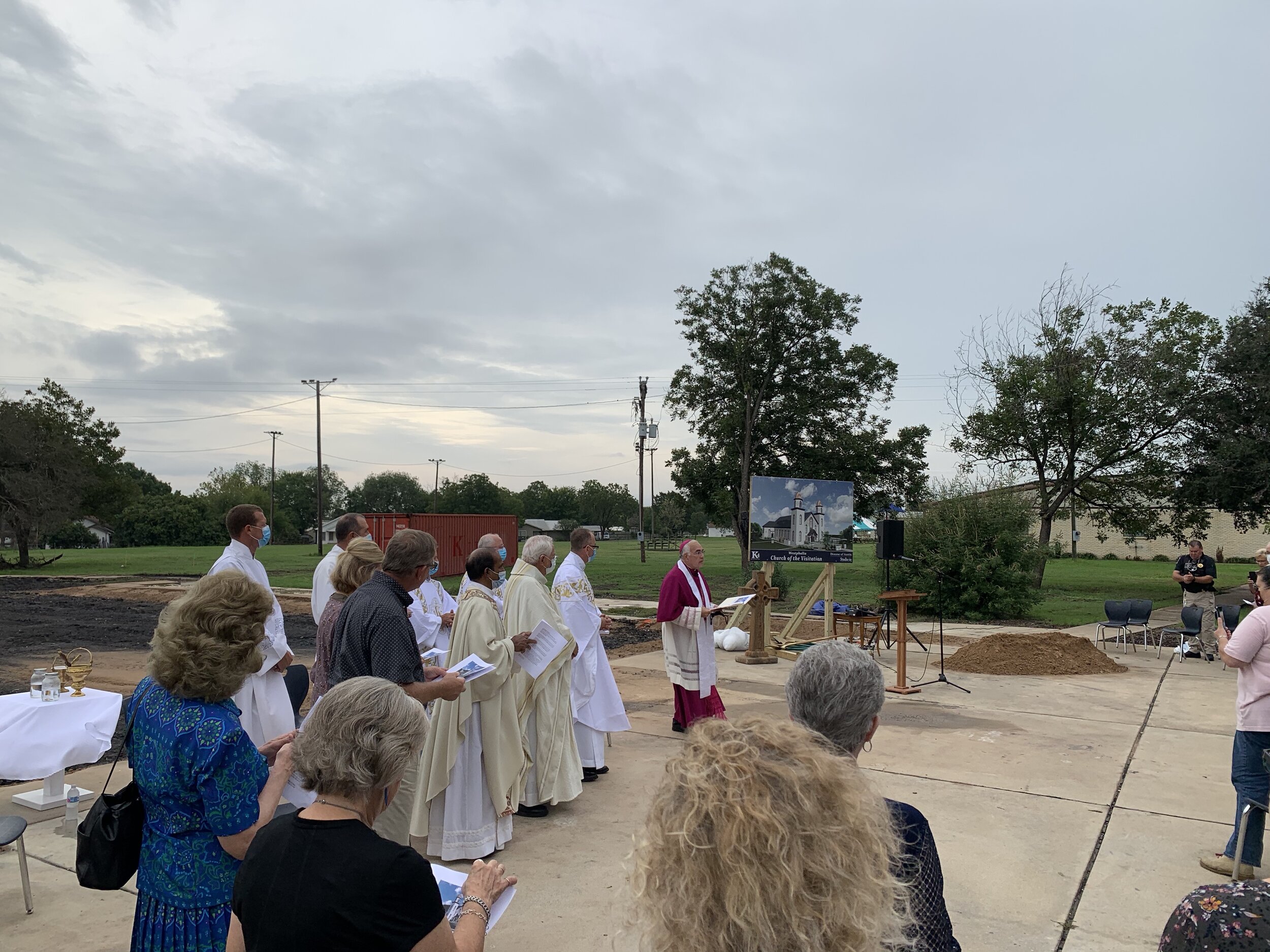
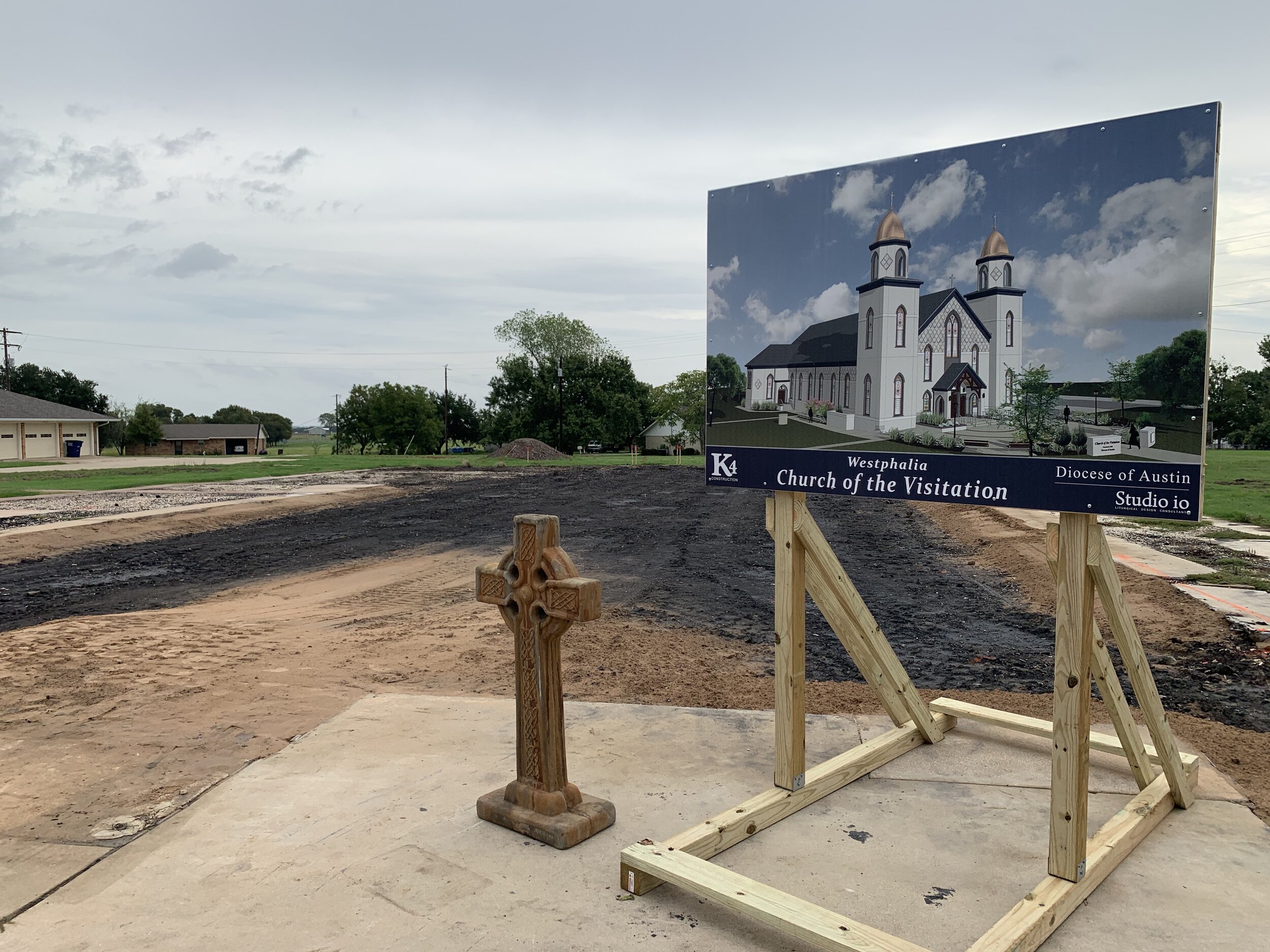
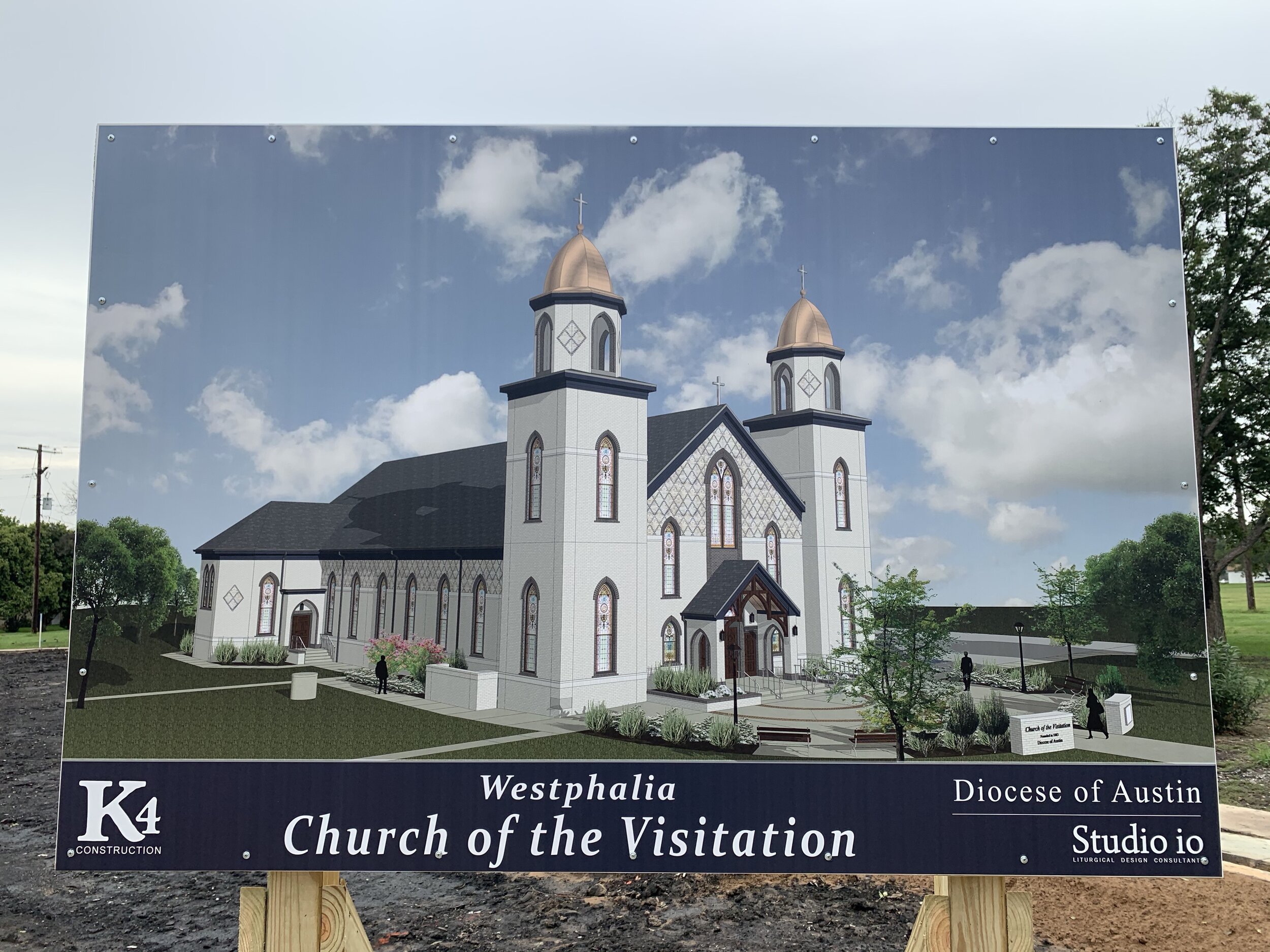
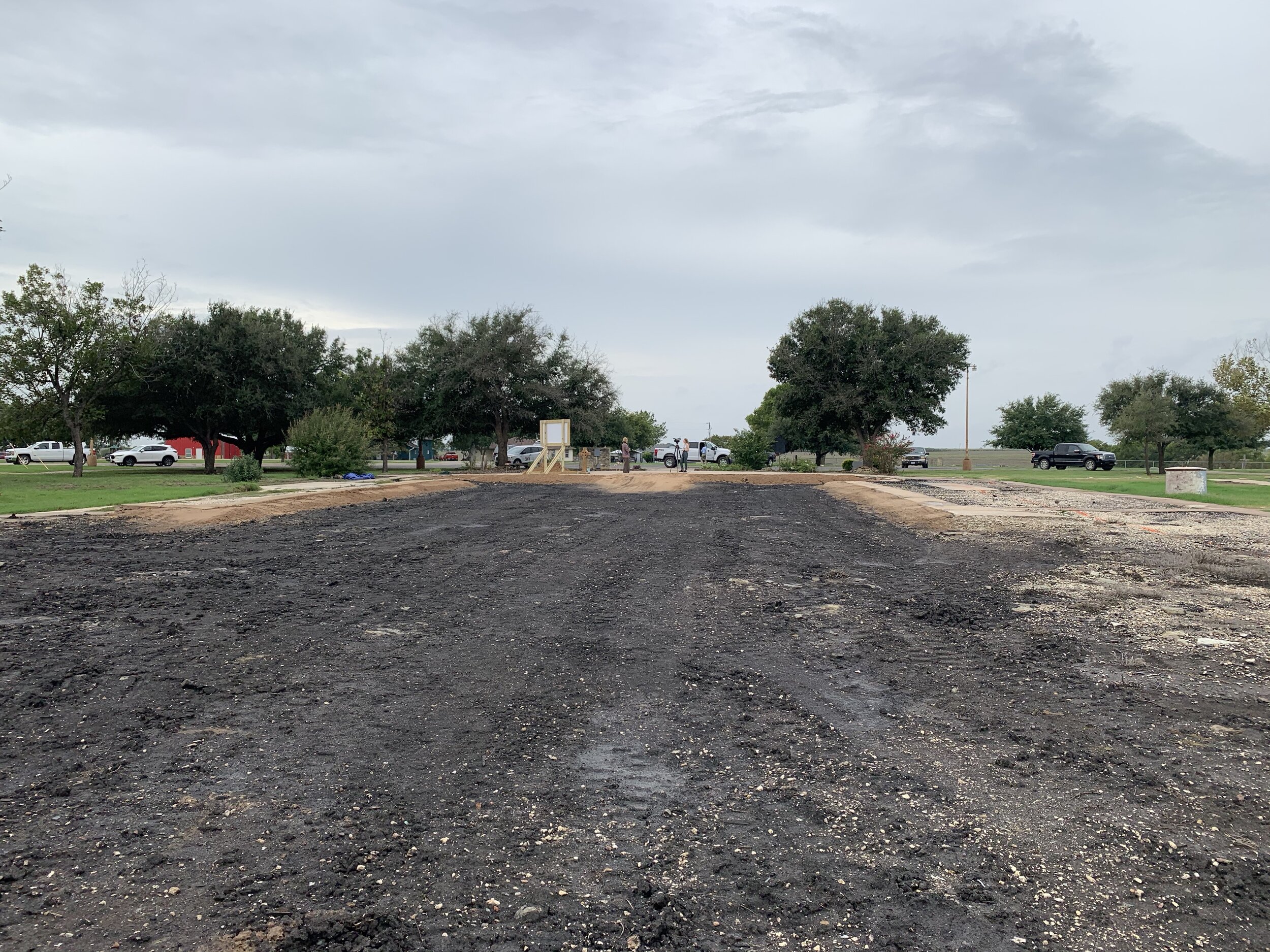
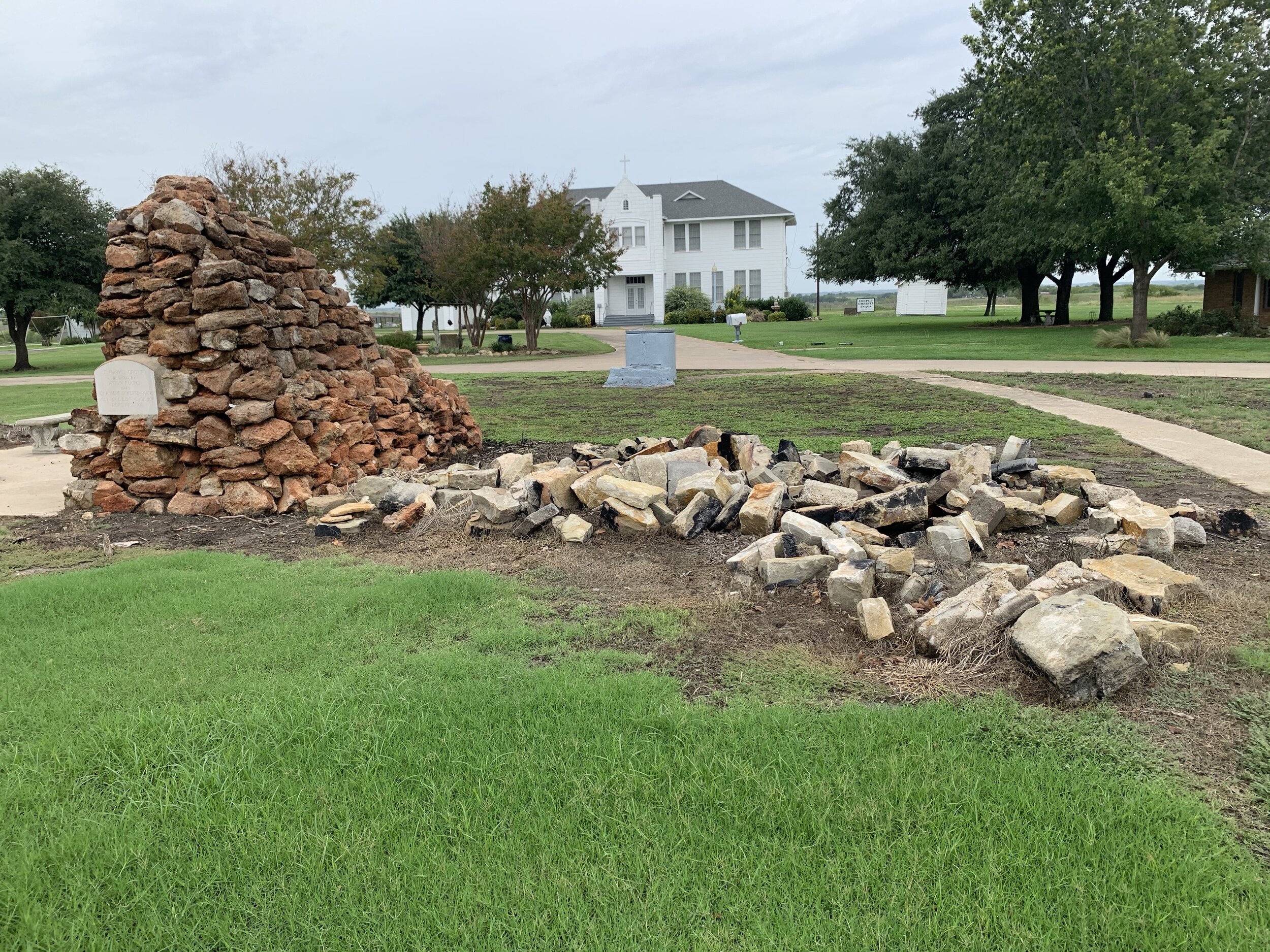
On Wednesday, September 9, Bishop Joe S. Vásquez blessed the site that will soon house a new church to replace one that burned down just a year prior. The Church of the Visitation in Westphalia, TX was one of the oldest and largest wooden churches in the state when it tragically caught fire and burned down on July 29, 2019. While the cause of the fire was officially listed as undetermined, speculation around old electrical equipment in the place of origin in one of the bell towers suggest this as a possible cause. The building itself and most of its contents were fortunately covered by insurance, at least replacement value.
As the parish received a new pastor, native son Rev. Darrell Kostiha, to lead the rebuilding project, Studio io was brought on board to assist the parish and Design/Build Contractor and Architect of Record K4 Construction determine what should be retained from the original design and reincorporated into the new plans, and what should be changed. The obvious changes include required upgrades such as a fire sprinkler system and on-site storage tank due to the church’s rural location, modern smoke detection, adequate restrooms and egress exiting to comply with modern building codes, and the like. The Diocese of Austin emphasized the need for a building to honor the prior church’s rich heritage to again be a place of beauty for the celebration of the liturgy, and also to have every consideration for a safe and functional modern building.
The Studio io process involved leading discussions around these tricky topics, assessing at each level considerations about liturgical use, symbolism, and aesthetics, as well as circulation and maintenance, addressing code requirements, and balancing an authentic treatment of tradition and the heritage with desires from some in the parish to make particular changes or upgrades. Some of the decisions were cost-natural, and others involve an assessment of what additional expense the parish might be able to bear incurring. Overall, the building is respectful of its predecessor and heavily inspired by the original, but does bear several changes that include an overall larger footprint to accommodate larger restrooms and support space, while keeping the seat count relatively in line with what it was before.
Among the most tragic aspects of what was lost in the fire were the stained glass windows from Munich, hand-painted plaster statuary and stations of the cross, and the ornate hand-carved wooden high altar and side altars. The stained glass will be replaced by Bryan / College Station artist Foster Stained Glass, mostly as reproductions of the original windows, although some windows that had been procured at a later date will be modified to incorporate particular saints corresponding to the religious communities to which the parish has contributed several vocations throughout its almost 125-year history. The high altar will be reproduced as a reredos and matched with a new altar of sacrifice, ambo, baptismal font, and chairs, and the side altars will likewise be reproduced as votive shrines – all using the same materials and techniques as the originals. German studio Albl Oberammergau, who are providing the furnishings, will also be producing higher-quality wooden statues and stations of the cross, all designed to complement the church interiors and replica furnishings. Pews will be modifications based on the overall look of the originals, provided by New Holland Seating.
The only major item lost that was not covered by insurance was the pipe organ. The parish is working with an organ consultant and looking at options for used and new organs that might be appropriate to the church’s size and design. If you are interested in contributing to the project to offset the cost of additional expenses for the church project, please contact the Diocese of Austin’s office for Stewardship and Development.
Read the full story from KXXV News on the Groundbreaking here.